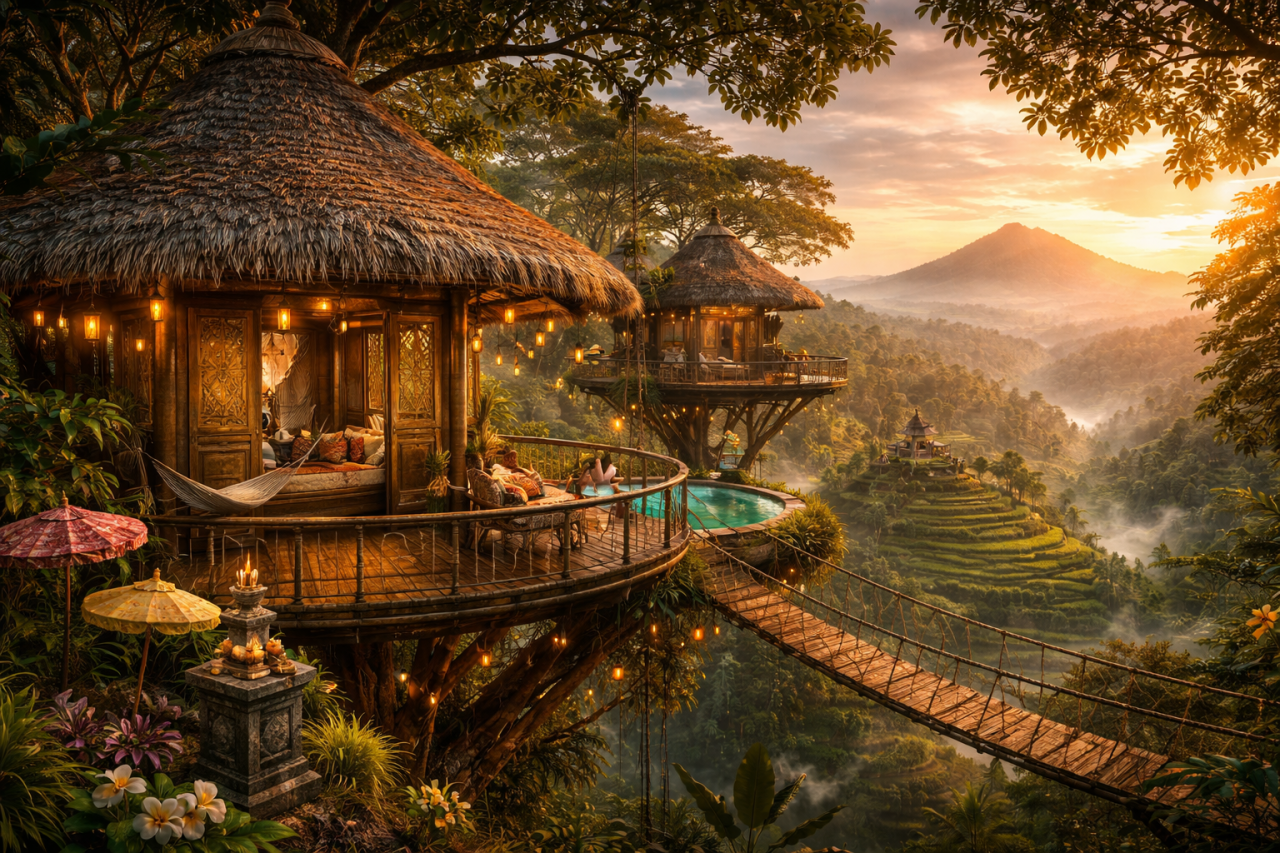
Bali has long been a magnet for adventurous travelers looking for sun-drenched beaches, emerald rice terraces, and vibrant temple rituals. Yet for those craving a different perspective—literally—treehouse stays elevate the island’s magic. In this article, I’ll take you through Bali’s most unique treehouse escapes, blending vivid storytelling with practical tips, and a little Dutch curiosity about local life. Think rice-field views, jungle sounds, and designer cabins perched above playful monkeys.
Why choose a treehouse in Bali?
Staying in a treehouse is more than novelty; it’s a slow-travel invitation. Waking to bird song, sipping kopi in a hammock, and feeling the breeze through timber walls makes you part of the landscape. For young explorers and culture-seekers, treehouses offer privacy, Instagram-ready views, and the chance to support small, creative hospitality projects.
How to pick the right treehouse for you
Consider location first: do you want jungle near Ubud, clifftop near Canggu, or rice-terrace serenity in Tegalalang? Check accessibility—some properties require navigating stairs or jungle tracks. Look for amenities that match your comfort level: private bathroom, mosquito nets, and Wi‑Fi can vary widely. Read recent reviews and ask about sustainability practices if that matters to you.
Treehouses around Ubud: rice terraces and spiritual calm
Ubud is Bali’s cultural heart and a hotspot for elevated stays among lush greenery.
Sungai Tinggi and the Tegalalang area
The Tegalalang Rice Terraces are famous for their intricate subak irrigation and photogenic steps. Staying in a treehouse nearby gives you early-morning access before the crowds arrive. You can search for it on Google Maps by typing: Tegalalang Rice Terrace.
- Pro tip: Visit at sunrise for soft light and cool air. After your walk, reward yourself with kopi at a local warung.
Jungle treehouses near Ubud centre
Many boutique properties sit within 20–30 minutes of central Ubud, offering the quiet of the jungle with easy access to the Monkey Forest and Ubud Palace. You’ll often find hammocks, bamboo décor, and locally crafted furniture that reflect Balinese artisanship.
- Visit: You can search for it on Google Maps by typing: Sacred Monkey Forest Sanctuary (Ubud Monkey Forest).
- Cultural note: Respect local customs near temples; dress modestly and follow temple signage.
North and West Bali: remote, wild, and wonderfully quiet
If you want fewer tourists and the sound of waves or rainforest to yourself, the north and west coasts offer remote treehouse experiences.
Near Pemuteran and Menjangan Island
Pemuteran sits on Bali’s northwest coast and is a base for snorkelling around Menjangan Island. A treehouse here can feel like a retreat between coral reefs and mountainous hinterland.
- Tip: You can search for it on Google Maps by typing: Pemuteran.
- Activity: Book a day trip to Menjangan Island for world-class snorkelling.
Munduk and the highland forest
Munduk’s cool climate and waterfalls make it ideal for a forest canopy stay. Expect coffee plantations, mossy paths, and dramatic mountain views—very different from Bali’s beaches.
- Visit: You can search for it on Google Maps by typing: Munduk, Bali.
- Local flavour: Try Bali’s highland coffee at a plantation nearby; the taste is robust and earthy.
Canggu and the south: surf, sunsets, and contemporary design
Canggu’s laid-back surf culture has inspired a wave of modern treehouse designs, often combining minimalist architecture with jungle vibes.
Clifftop and jungle hybrid stays near Echo Beach
Some designers have crafted treehouses that blend timber and concrete, perched near Canggu’s beaches like Echo Beach. These stays are perfect for combining surf sessions with stylish evening hangouts.
- Visit: You can search for it on Google Maps by typing: Echo Beach (Pantai Batu Mejan).
- Lifestyle tip: Explore the café scene in Canggu for healthy bowls and Dutch-inspired cafés—Bali has a surprising number of European-style bakeries.
Unique experiences to look for in Bali treehouses
- Eco-friendly construction: Look for reclaimed wood, bamboo, and natural finishes that reduce environmental impact.
- Local craftsmanship: Many hosts collaborate with Balinese artisans, so your stay supports local makers.
- On-site activities: Yoga decks, guided rice-terrace walks, and cooking classes deepen your connection to Balinese life.
- Nighttime ambience: The lack of light pollution in many treehouse spots makes for exceptional stargazing.
Practical tips for treehouse travellers
- Pack for humidity: Lightweight layers, quick-dry clothing, and insect repellent are essentials.
- Accessibility: Ask hosts about steps and pathways—treehouses often require climbing and uneven terrain.
- Respect wildlife: You may meet geckos, birds, and macaques; observe from a distance and don’t feed wild animals.
- Book early for high season: Treehouses are boutique properties with limited rooms—reserve ahead for July–August and December–January.
A day-in-the-life: sunrise in a Tegalalang treehouse
Imagine waking before dawn to the sound of roosters, stepping onto a balcony framed by bamboo, and seeing the terraces steeped in morning mist. You stroll down a narrow path to a local coffee stand, sipping kopi tubruk while farmers tend the fields. Midday is for a spa or temple visit; evenings bring slow conversations over nasi campur and a sky full of stars. That’s the intimacy Bali’s treehouses offer.
Recommended nearby sights and how to find them
- Tegalalang Rice Terrace — You can search for it on Google Maps by typing: Tegalalang Rice Terrace.
- Sacred Monkey Forest Sanctuary (Ubud Monkey Forest) — You can search for it on Google Maps by typing: Sacred Monkey Forest Sanctuary.
- Echo Beach (Pantai Batu Mejan) — You can search for it on Google Maps by typing: Echo Beach (Pantai Batu Mejan).
- Pemuteran — You can search for it on Google Maps by typing: Pemuteran.
- Munduk — You can search for it on Google Maps by typing: Munduk, Bali.
Sustainable stays and community-minded hosts
Many treehouse operators in Bali emphasize sustainability and community involvement. When booking, ask about their environmental policies, waste management, and whether they employ or source food from local communities. Supporting these initiatives helps keep Bali’s unique landscapes intact and benefits the people who call the island home.
Final thoughts: the Dutch curiosity meets Balinese warmth
From a Dutch perspective, Bali’s treehouses combine gezelligheid—the cozy, sociable feeling—with slow, tropical living. They invite conversations over coffee, exploration of local crafts, and appreciation for simple, beautiful design rooted in place. For young, adventurous travelers seeking authenticity, Bali’s treehouse stays are more than accommodations; they’re a way to live within the island’s rhythms for a few unforgettable days.
Happy exploring—and may your next Bali trip include a ladder, a hammock, and a sunrise you’ll never forget.

Comments (0)
There are no comments here yet, you can be the first!