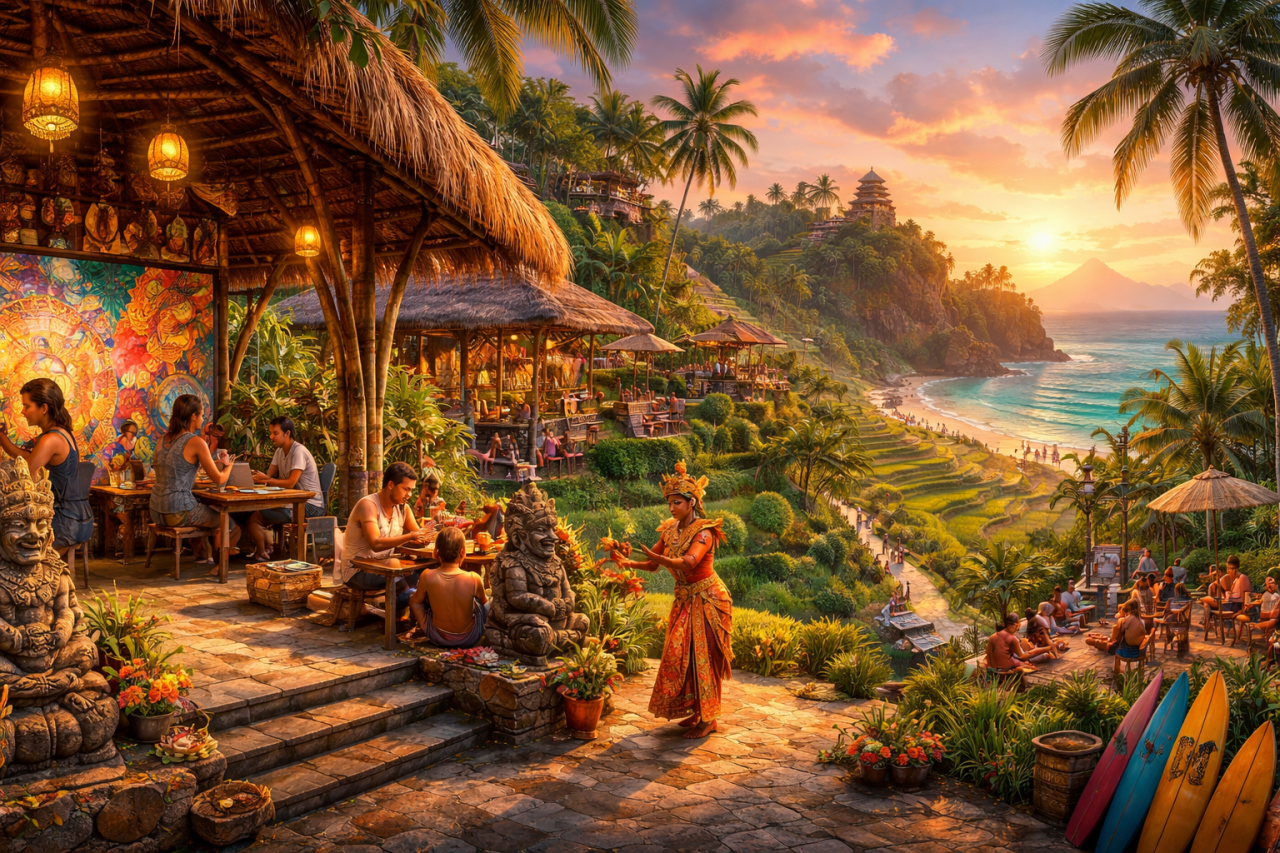
There is a sweetness to Bali that lingers like sea salt on the skin and the echo of a lontar leaf turning. Walking through its lanes feels like leafing through a living sketchbook—each village a different vignette of color, sound, and labor. In the spirit of Montenegrin hospitality, I invite you to wander slowly: to experience not only temples and beaches but the ateliers, co‑working spaces, and community hubs where Bali’s creative pulse is brightest.
Ubud: The Island’s Artistic Heart
Ubud has long been revered as Bali’s cultural nucleus, where painters, dancers, and poets converge beneath a canopy of jackfruit trees. The town’s galleries and craft workshops thread tradition into contemporary practice, making it essential for anyone seeking Bali’s creative soul.
- Ubud Palace (Puri Saren Agung): An elegant center for classical dance and ceremonial art; you can search for it on Google Maps by typing: Ubud Palace (Puri Saren Agung).
- ARMA Museum & Resort (Agung Rai Museum of Art): A graceful museum with an impressive collection of Balinese and Indonesian work; you can search for it on Google Maps by typing: Agung Rai Museum of Art (ARMA).
- Threads of Life and local textile cooperatives: Small workshops where ikat, songket, and natural-dye techniques are practiced. Visit local stalls in Ubud Market (Pasar Seni Ubud) to see artisans at work; you can search for it on Google Maps by typing: Ubud Traditional Art Market (Pasar Seni Ubud).
Ubud’s mornings are soft with rice‑field mist, and afternoons glow with ochre light for sketching. If you seek a deeper exchange, take a workshop in batik or carving—these hands-on experiences transform observation into belonging.
Canggu: Surfboards, Startups, and Street Art
Canggu hums with youthful energy: surf culture mixes with digital nomadism, and murals bloom on once-sleepy shopfronts. It’s a place where the informal co‑working café is as much a gallery as a studio.
- Deus Ex Machina (Deus Ex Machina – Bali): A creative hub for riders, surfers, and makers that often hosts exhibitions and music events; you can search for it on Google Maps by typing: Deus Ex Machina – Bali.
- Old Man’s and Echo Beach (Echo Beach / Pura Dalem): Popular surf spots and social hubs where local bands, pop‑up markets, and art events happen near the shore. Search: Old Man’s, Canggu and Echo Beach, Canggu on Google Maps.
- Dojo Bali: A well‑known co‑working space where creatives and entrepreneurs meet and collaborate; search for Dojo Bali on Google Maps.
Here you’ll find graphic designers sketching in cafés and muralists turning blank walls into tropical epics. Canggu’s evenings brim with a festival sensibility—food trucks, live music, and impromptu gallery nights.
Sanur and Denpasar: Traditional Craftsmanship Meets Contemporary Practice
East of the island’s tourist paths, Sanur and Denpasar keep craft traditions alive while embracing new forms of expression. Denpasar, in particular, is a treasure trove of artisan workshops.
- Bajra Sandhi Monument (Monumen Bajra Sandhi): A Denpasar landmark where you can learn about Balinese history and cultural resilience; search: Bajra Sandhi Monument on Google Maps.
- Le Mayeur Museum (Musée Le Mayeur): Housed in Sanur, a quiet house museum preserving the works of Adrien-Jean Le Mayeur and early Balinese modernism; you can search for it on Google Maps by typing: Le Mayeur Museum.
- Local silversmiths and woodcarving villages near Denpasar: Pasek and Mas villages (Mas is famed for woodcarving). Search: Mas Village (Mas, Ubud area) and traditional craft workshops near Denpasar on Google Maps.
These communities are quieter but no less vibrant—here, technique is revered, and the makers tend to invite curious visitors into their small, fragrant workshops.
Pererenan and Seseh: New Waves of Creative Farming and Design
Beyond the cafes and galleries, Bali’s creatives are reimagining agriculture and craft as collaborative design practice. Pererenan and Seseh show how landscapes become studios and rice paddies become classrooms.
- Green School Bali (Green School): An innovative eco‑educational campus that attracts global creative minds and hosts community events and workshops; you can search for it on Google Maps by typing: Green School Bali.
- Pererenan Surf and Rice‑field Walks: Small local initiatives combine surf culture with sustainable design pop‑ups. Search Pererenan on Google Maps for local events and spots.
Expect social enterprises, permaculture experiments, and design workshops where architecture students sketch alongside farmers. The result is a hybrid culture—part studio, part field, wholly imaginative.
Sidemen and Amed: Quiet Corners of Creative Ritual
For a meditative kind of creativity, head east to Sidemen and Amed. These villages offer an intimacy with ritual, textile arts, and slow processes that reward patient observers.
- Sidemen Valley: A landscape of terraces and textile weavers; you can search for it on Google Maps by typing: Sidemen Valley.
- Amed (including Jemeluk and Lipah beaches): A coral‑fringed coastline where snorkeling, black‑sand beaches, and sun‑bleached studios draw painters and photographers. Search for Amed Beach or Jemeluk Bay, Amed on Google Maps.
In Sidemen, warp and weft still tell stories in cotton and ikat. Amed’s light is crystalline, making it a favorite for photographers and seascape painters seeking solitude and clarity.
Bali’s Creative Hubs and Markets
Markets and community spaces are the arteries through which Bali’s creativity circulates. They are living archives of taste, trade, and technique.
- Sanur Night Market (Pasar Malam Sindu): An evening market where food, crafts, and music meet; search Sanur Night Market on Google Maps.
- Kumbasari Market and Badung Market in Denpasar: Busy markets where raw materials, textiles, and tools are traded; search Kumbasari Market and Pasar Badung on Google Maps.
- Local art festivals and cultural events (e.g., Ubud Writers & Readers Festival): Recurring events that gather global and local artists for conversation and performance. For dates and venues, search: Ubud Writers & Readers Festival.
Strolling these markets is like reading a collective diary—each stall a paragraph, each craftsman a living sentence. Bring curiosity and a light bag for treasures.
Where to Stay to Immerse Yourself
Choosing lodging is as much a creative decision as any other—opt for places that encourage lingering and exchange.
- Homestays in Ubud and Sidemen: Family-run homestays offer quiet mornings and the chance to share tea with artisans. Search for homestays in Ubud or Sidemen on Google Maps.
- Boutique guesthouses in Canggu: Many host open studios, communal dinners, and pop‑up workshops. Search boutique guesthouses in Canggu on Google Maps.
- Eco‑lodges near Green School or in the central highlands: Perfect for those who want regenerative design in practice; search for eco-lodges near Green School Bali on Google Maps.
Stay where conversations happen naturally—on verandas, at long communal tables, or after a temple ceremony when stories are easily shared.
Tips for Meaningful Creative Encounters
- Approach with respect: Ask before photographing people or workshops, and learn a few phrases in Bahasa Indonesia—basic greetings are received with warm smiles.
- Buy with intention: If you purchase handcrafted items, ask about materials and techniques. A small investment sustains entire families and their craft.
- Take a class: Even a single afternoon batik or carving lesson can change how you see the island.
- Time your visits: Early mornings or late afternoons offer softer light and quieter streets—ideal for sketching or contemplation.
These simple gestures transform tourism into stewardship.
Final Reflections: Carrying Bali Back with You
Bali’s creative communities are not merely attractive backdrops; they are living practices of care, memory, and reinvention. From Ubud’s ochre galleries to Canggu’s open‑air studios, from the patient looms of Sidemen to the experimental schoolyards of Green School, the island teaches a gentle lesson: creativity thrives where life and making are inseparable.
If you go, linger longer than your itinerary allows. Sit at a small warung, watch hands at work, and let the island’s rhythm recompose your own. In that slow exchange you will find Bali’s true vibrancy—not just an image to take home, but a story you will tell differently each time you remember it.

Comments (0)
There are no comments here yet, you can be the first!