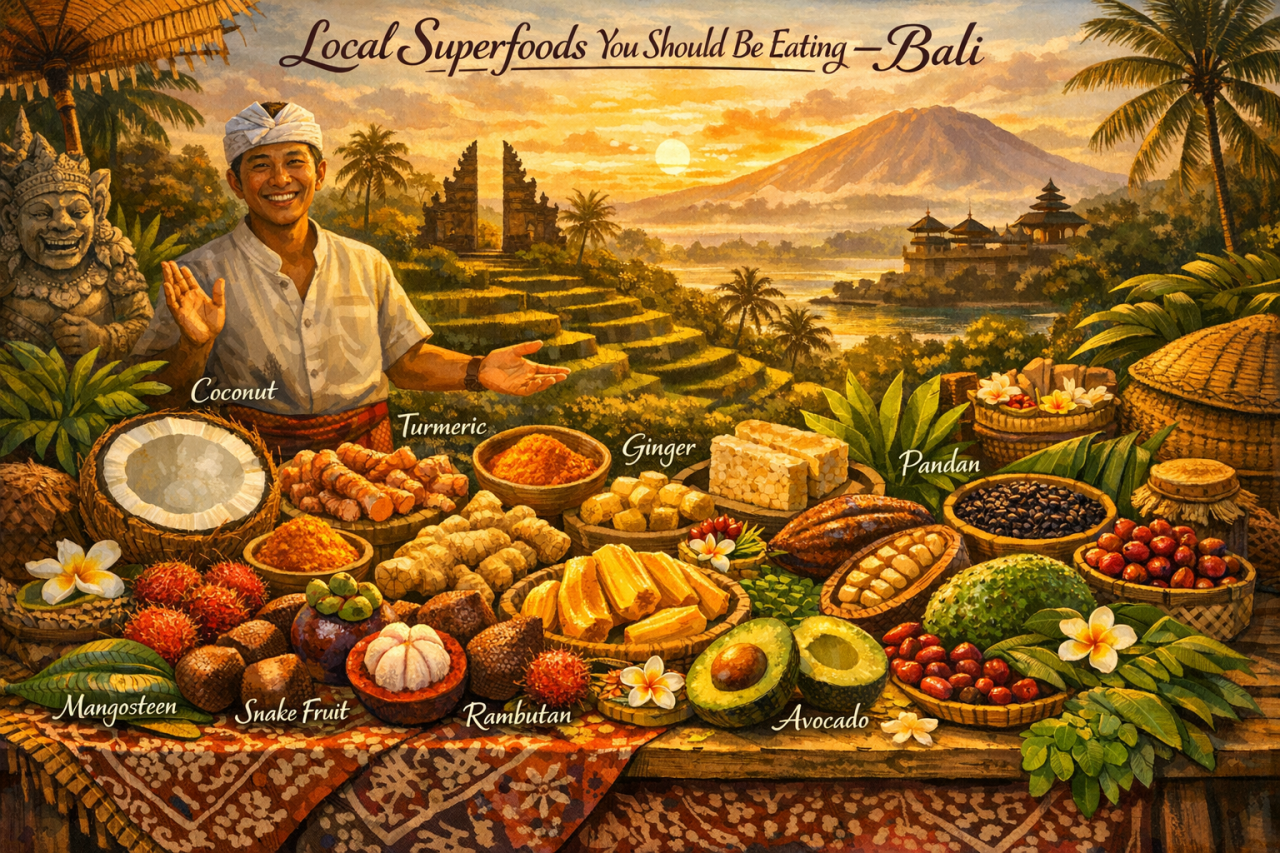
Bali is more than a postcard of rice terraces and temple sunsets — it’s a living pantry. The island’s kitchens, markets and seaweed farms serve flavors that are bright, bold and built on centuries of island know-how. As someone who loves getting my hands dirty in markets and swapping recipes with locals, I can tell you Bali’s superfoods are a raw, edible version of wanderlust.
Why Bali’s Superfoods Matter
Eating in Bali is a lesson in geography and culture; every bite is a story of soil, sea and ritual. From coconut groves on the coast to volcanic highlands that grow coffee and cacao, the island’s microclimates create intense, nutrient-rich ingredients. If you travel like I do — curious, slightly hungry at all times and happy to share a warung table — tasting these foods connects you to local life in a delicious way.
Top Balinese Superfoods to Try
Kelapa Muda (Young Coconut)
Kelapa muda, or young coconut water and soft meat, is Bali’s natural electrolyte drink. It’s refreshing after a sweaty scooter ride and gentle on the stomach when temple-day feasts go heavy. Look for vendors on beaches and near markets; locals drink it straight from the shell and it’s a simple, hydrating superfood.
You can search for it on Google Maps by typing: Jimbaran Beach (for beachfront coconut vendors) or Kelapa Muda vendors in Ubud.
Tempeh and Fermented Soy Foods
Tempeh is fermented, protein-dense and slightly nutty — a vegetarian’s dream. Balinese versions are often grilled or fried and appear in simple plates like nasi campur or vegetarian warung bowls. Fermentation brings probiotics and depth, and these foods have a long tradition across the archipelago, much like the fermented chutneys of my Sri Lankan travels.
You can search for it on Google Maps by typing: Sari Organik (Ubud) or try tempeh at local warungs around Ubud and Canggu.
Beras Hitam and Local Rice Varieties (Black and Red Rice)
Balinese black and red rice are earthy, chewy and higher in antioxidants than regular white rice. Cooked with coconut milk or used in desserts, these grains add color and a nutritional boost to any plate. I love ordering a plate of black sticky rice pudding after a long walk through rice terraces — it feels like a reward that’s also good for you.
You can search for it on Google Maps by typing: Tegalalang Rice Terrace or Pasar Ubud (Ubud Traditional Market) to find vendors with local rice.
Urap / Urab (Coconut Vegetable Salad) and Grated Coconut Dishes
Urap is a classic Balinese vegetable salad tossed in seasoned grated coconut; it’s fragrant, tangy and packed with healthy greens. Coconut provides healthy fats and flavor, while the mix of greens offers fiber and minerals. It’s an everyday superfood — eaten at ceremonies and on family tables — and it tastes like the island in one bite.
You can search for it on Google Maps by typing: Ubud Traditional Market (Pasar Ubud) or try urap at warungs in Ubud and central Bali.
Seaweed from Nusa Lembongan and Coastal Farms
Bali’s neighboring islands, like Nusa Lembongan, have vibrant seaweed farms where locals cultivate nutritious red and green seaweeds. Seaweed is an ocean superfood — rich in iodine, minerals and umami — and appears fresh in salads, snacks and local sauces. Visiting a seaweed farm gives you a front-row seat to sustainable coastal food production.
You can search for it on Google Maps by typing: Nusa Lembongan (seaweed farms) or Nusa Lembongan seaweed farms.
Jamu (Turmeric and Spice Tonics)
Jamu is Indonesia’s traditional herbal tonic, often made from turmeric, ginger, tamarind and palm sugar. These drinks are anti-inflammatory, warming and perfect after late-night nasi goreng runs. I remember sipping a turmeric jamu in Ubud and thinking of Sri Lankan golden milk blends — the same comforting warmth across islands.
You can search for it on Google Maps by typing: Jamu bars in Ubud or Jamu stall Ubud.
Bali Coffee and Small-Batch Cacao
Bali grows some excellent coffee and cacao in areas like Kintamani and the island’s eastern flanks. The highland microclimates give coffee and cacao floral and citrus notes that pair beautifully with Balinese spice. Small farms and agro-tours let you sample single-origin beans and bean-to-bar chocolate, giving context to every sip.
You can search for it on Google Maps by typing: Kintamani coffee plantations or Bali Pulina Agro Tourism.
You can search for it on Google Maps by typing: Pod Chocolate Ubud.
Jackfruit, Salak (Snake Fruit) and Tropical Fruits
These big, bold fruits appear everywhere: jackfruit in curries and chips, salak at morning markets, and papaya in breakfasts. They bring fiber, vitamins and that immediate tropical sweetness that wakes up the palate. Try fresh slices in the heat of the day or as part of a fruit-packed nasi campur.
You can search for it on Google Maps by typing: Pasar Badung (Denpasar) or Pasar Ubud (Ubud Traditional Market).
Sambal Matah and Fresh Herb Blends
Sambal matah — a raw shallot, lemongrass and chili sambal — is Bali’s punchy condiment that brightens everything from grilled fish to steamed vegetables. It’s full of raw aromatics that preserve nutrients and deliver a citrusy, spicy kick. Learning to make it from a local felt like learning the island’s sonic language: short, sharp and unforgettable.
You can search for it on Google Maps by typing: Warung or local restaurants in Seminyak, Ubud and Jimbaran.
Where to Taste and Experience These Foods
-
Sari Organik (Ubud) — a farm-to-table organic garden cafe where you can taste vegetables and tempeh straight from the soil.
You can search for it on Google Maps by typing: Sari Organik. -
Tegalalang Rice Terrace (Ubud area) — walk the terraces and taste local rice varieties with a view that sticks in your memory.
You can search for it on Google Maps by typing: Tegalalang Rice Terrace. -
Pod Chocolate Ubud — small-batch chocolate makers that showcase Bali cacao from bean to bar.
You can search for it on Google Maps by typing: Pod Chocolate Ubud. -
Bali Pulina Agro Tourism / Kintamani coffee areas — try local Arabica and learn about luwak coffee lore (ask questions about ethics first).
You can search for it on Google Maps by typing: Bali Pulina Agro Tourism or Kintamani coffee plantations. -
Nusa Lembongan seaweed farms — see seaweed cultivation and taste fresh seaweed salads and snacks.
You can search for it on Google Maps by typing: Nusa Lembongan. -
Ubud Traditional Market (Pasar Ubud) and Pasar Badung (Denpasar) — sensory overloads of spice, fruit and home-cooked dishes, ideal for discovering jamu and local rice.
You can search for it on Google Maps by typing: Ubud Traditional Market (Pasar Ubud) or Pasar Badung.
Practical Tips for Eating Like a Local
- Embrace the warung. Small, family-run stalls serve honest plates at low prices and are the best places to try tempeh, urap and sambal matah. Ask for “tanpa MSG” if you prefer simpler seasonings.
- Try jamu as a morning ritual to settle your digestion and boost immunity; buy from vendors who make it fresh.
- When sampling coffee and cacao, ask about sourcing — choose small farms and ethical tours. If you taste kopi luwak, verify ethical treatment of animals first.
- Carry hand sanitizer and be mindful of raw dishes if you have a sensitive stomach. Stick with cooked items and fresh fruits you can peel if in doubt.
Final Bite: A Traveler’s Food Philosophy
Bali’s superfoods aren’t boutique trends — they’re the island’s living pantry, passed down through ceremonies, kitchens and sea harvests. Eating them is a way to move beyond pictures and actually taste place. On my last trip I traded recipes with a Balinese farmer over a plate of urap and kelapa muda; it reminded me that food is how we map memory across islands, families and time.
If you feel adventurous, follow your nose to the nearest market at dawn, pick up a bunch of salak and a cup of jamu, and let Bali feed you in its generous, sun-drenched way.

Comments (0)
There are no comments here yet, you can be the first!