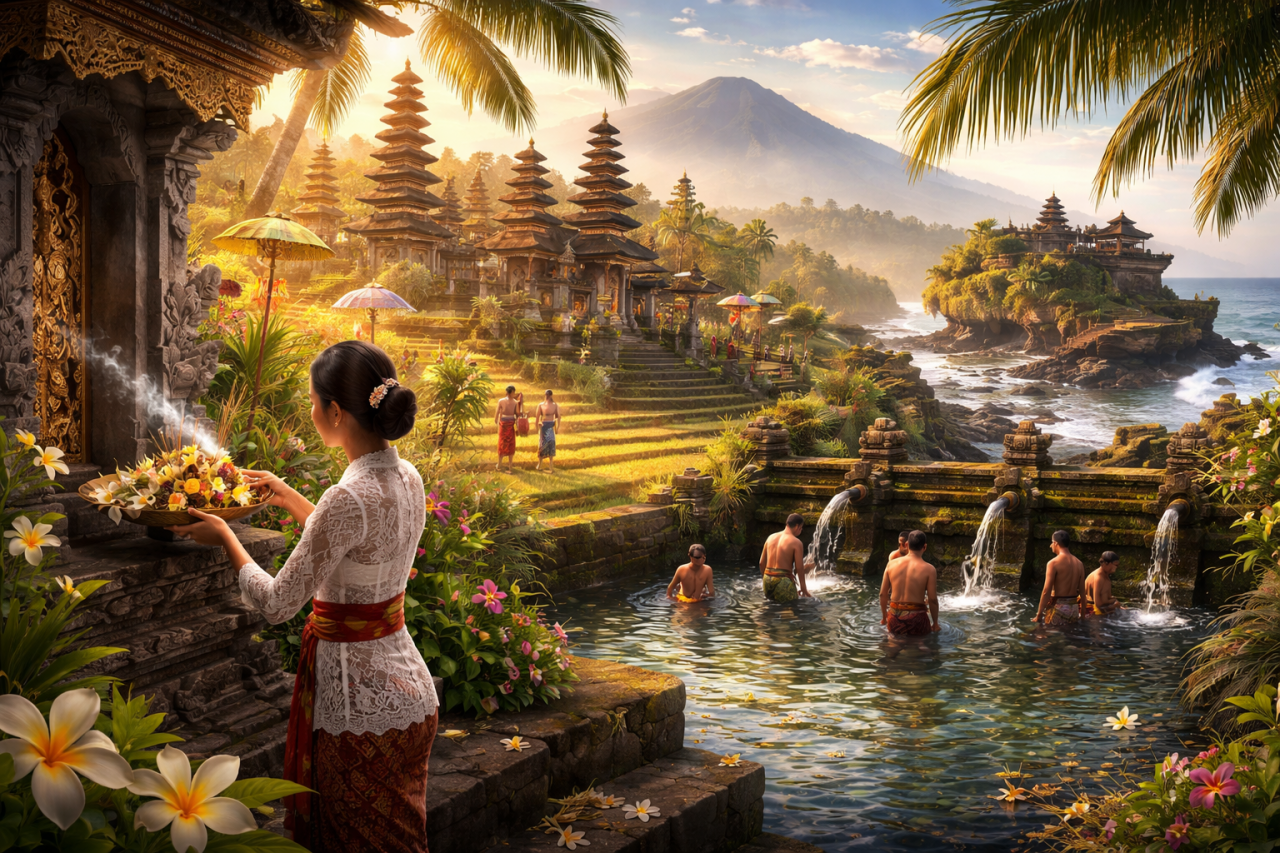
Bali is more than sun-kissed rice terraces and surf breaks; it is a living tapestry of ritual, myth, and quiet devotion. In the voice of Erdenechuluun—part storyteller, part practical guide—I invite you to slow down, listen to temple bells, and follow smoke that carries offerings to the gods. Below are places where Balinese spirituality reveals itself most vividly, with practical tips for respectful immersion and sustainable travel.
Sacred Temples to Visit
Balinese Hinduism is omnipresent in its temples (pura). Each temple has a character: some face the sea, others hide in the jungle, and a few perch on volcanic ridges. Approach them with curiosity and humility.
Pura Besakih (Mother Temple)
Pura Besakih stands on the slopes of Mount Agung and is Bali’s most important temple complex. Pilgrims come from across the island to make offerings here, especially during full moons and temple anniversaries. The complex is large—bring comfortable shoes and a sarong (available at the entrance if you forget yours).
You can search for it on Google Maps by typing: Pura Besakih
Pura Ulun Danu Bratan (Lake Temple)
Floating serenely on Lake Bratan, Pura Ulun Danu Bratan is dedicated to Dewi Danu, the goddess of water. Misty mornings here feel like stepping into a ritual painting. Visit early to enjoy cooler air and fewer crowds, and support local boatmen if you take a short lake trip.
You can search for it on Google Maps by typing: Pura Ulun Danu Bratan
Pura Tanah Lot
Perched on a rocky outcrop and surrounded by tidal seas, Pura Tanah Lot is one of Bali’s most photographed temples. Sunset draws crowds for good reason, but consider visiting at sunrise or on a weekday for a quieter experience. Respect restricted areas and the local guardians who preserve the site.
You can search for it on Google Maps by typing: Pura Tanah Lot
Pura Luhur Uluwatu
High above the crashing Indian Ocean, Pura Luhur Uluwatu is famous for its cliff-top views and traditional kecak dance performances at dusk. The temple is also home to curious monkeys—keep belongings secure and follow signs to protect both you and the animals.
You can search for it on Google Maps by typing: Pura Luhur Uluwatu
Rituals and Ceremonies You Can Observe
Experiencing rituals is best done with respect and discretion. Many ceremonies are open to observers but never assume a photo is permitted—ask or follow the lead of locals.
- Odalan: temple anniversary celebrations often include gamelan music and colorful offerings.
- Galungan and Kuningan: major festivals celebrating the victory of dharma (good) over adharma (evil); streets brim with bamboo penjor and family temples hum with activity.
- Cremation ceremonies (Ngaben): profound and emotional events; visitors should keep distance and show solemn respect.
When you see a ceremony, pause and watch quietly, offer a small donation if asked, and avoid interrupting rituals.
Quiet Places for Meditation and Reflection
If you seek silent contemplation, Bali has many spots where spirituality feels personal rather than staged.
Tirta Empul Temple (Holy Spring)
Tirta Empul is known for its ritual bathing pools where locals perform purification rituals. If you choose to participate, follow local guidance on washing order and attire, and treat the space with reverence. Arrive early to join fewer visitors and enjoy hushed water sounds.
You can search for it on Google Maps by typing: Tirta Empul Temple
Campuhan Ridge Walk
This green ridge in Ubud offers a gentle, meditative walk through rice fields and limestone outcrops. It’s a perfect morning ritual: bring water, wear sun protection, and move slowly to absorb the landscape and village life.
You can search for it on Google Maps by typing: Campuhan Ridge Walk
Goa Gajah (Elephant Cave)
A sanctuary with ancient carvings and a small bathing pool, Goa Gajah is both archeological site and spiritual place. The cave’s carvings invite contemplation of Balinese cosmology—visit respectfully and avoid loud conversations near ritual areas.
You can search for it on Google Maps by typing: Goa Gajah
Spiritual Experiences Off the Beaten Path
Erdenechuluun’s spirit loves the quieter corners where traditions live on away from tourist circuits. Here are lesser-known experiences that reward patient travelers.
- Local temple ceremonies in villages around Ubud, Sidemen, or Munduk—ask a homestay host about nearby events.
- Subak irrigation system visits: join a local farmer or cooperative to learn how water temples relate to rice terraces and community life.
- Offerings-making workshops: small groups taught by Balinese women who have made canang for decades.
Tip: Stay in a homestay or family-run guesthouse to get invitations to local rituals and deeper cultural exchange.
Spiritual Places in Coastal Villages
Coastal communities blend sea rituals with temple life. Visit with respect for fishermen’s livelihoods and marine conservation efforts.
Pura Lempuyang Luhur (Gates of Heaven)
High on Mount Lempuyang, this temple offers dramatic views and a chance to participate in mountain-top devotion. The iconic “Gates of Heaven” photos are popular; remember that the site is first a place of worship—dress modestly and keep noise low.
You can search for it on Google Maps by typing: Pura Lempuyang Luhur
Pura Goa Lawah (Bat Cave Temple)
Built around a cave home to thousands of bats, Pura Goa Lawah is an unusual and sacred site linking life, death, and protection of the sea. Observe quietly and avoid flash photography near the cave entrance.
You can search for it on Google Maps by typing: Pura Goa Lawah
Spiritual Cafés, Restaurants, and Retreats
Food and conversation can be spiritual when shared with intention. Seek places that honor local produce and community.
- Warung Local: small family-run warungs where offerings are made each morning—a chance to see daily piety in action.
- Yoga and meditation centers in Ubud: many centers combine yoga with Balinese cultural experiences and visits to nearby temples.
- Community-run retreats: look for programs that partner directly with village communities and contribute to local projects.
When choosing a wellness center or retreat, ask how they engage with and benefit local communities to ensure sustainable and respectful tourism.
Practical Tips for Respectful Pilgrimage
Respect and cultural sensitivity are the heart of experiencing Balinese spirituality.
- Dress modestly: bring a sarong and sash (selendang) for temple visits. These are often available to rent at major temples, but owning one is kinder.
- Remove shoes when required and follow directional flows within temple courtyards.
- Ask before photographing people, especially during ceremonies or private family rituals.
- Learn a few Balinese or Indonesian phrases—simple greetings and thank-yous go a long way.
- Support local crafts and initiatives: purchasing offerings, textiles, or a coffee from a village stall channels money directly into the community.
Sustainable and Mindful Travel Practices
Balinese spirituality is intertwined with care for land and sea. Honor that connection by traveling lightly and ethically.
- Reduce single-use plastics: carry a reusable bottle and bag.
- Respect wildlife and natural habitats: do not feed monkeys or stray from marked paths.
- Choose locally owned accommodations and guides who give back to their communities.
- Participate rather than perform: let rituals teach you rather than turning them into spectacle.
Final Thoughts: Listening to Bali
Bali speaks softly—in the clink of coins on temple roofs, in the careful placement of petals on a palm leaf, and in the way villagers greet the sea each morning. Travel here with patience and humility, and the island will give more than photographs; it will offer moments that change the shape of your travel heart.
Search for the places mentioned above on Google Maps by typing their full names to plan your visits. Let the journey be slow, and let each temple bell remind you to breathe, observe, and honor the living traditions you encounter.

Comments (0)
There are no comments here yet, you can be the first!