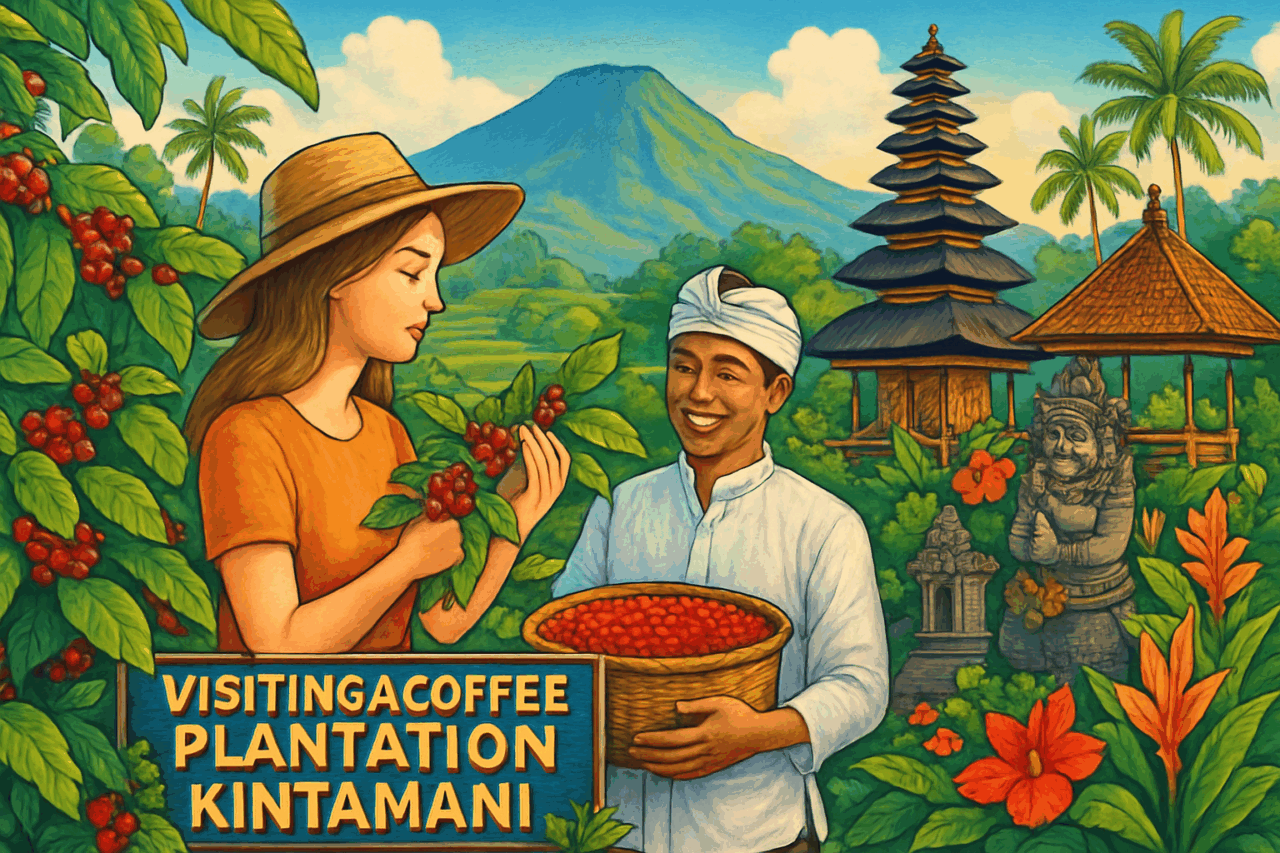
Visiting a Coffee Plantation in Kintamani: Savoring Bali’s Highlands Through Every Sip
There is a gentle mist that clings to the volcanic slopes of Kintamani in the early morning, recalling the veiled peaks of Montenegro’s Lovćen at dawn. It is here, on the undulating highlands of Bali’s northeast, that the story of the island’s famed coffee begins—a journey from fertile earth to aromatic cup, woven into the very fabric of Balinese daily life. Today, I invite you to join me as we meander through the emerald rows of a Kintamani coffee plantation, not merely as observers, but as seekers of the island’s quiet wonders.
The Heart of Bali’s Highlands: Why Kintamani?
Kintamani is more than just a region; it is a living poem, where the land breathes with the pulse of ancient volcanoes and the rhythm of the Balinese calendar. Perched at about 1,500 meters above sea level, the area is blessed by the watchful presence of Mount Batur and the shimmering expanse of Lake Batur. The volcanic soil here is as rich as the traditions it nurtures, lending itself to the cultivation of some of Indonesia’s most distinguished Arabica beans.
Tip for Travelers:
You can search for it on Google Maps by typing: Kintamani Highlands.
The Plantation Experience: From Bean to Cup
As you step onto a plantation—perhaps the renowned Bali Pulina Agro Tourism (search on Google Maps: Bali Pulina Agro Tourism)—the air greets you with a mingling of earth and wildflowers. Sunlight dapples through the coffee trees, whose glossy leaves cradle clusters of ripening cherries. The farmers, with hands seasoned by decades of harvests, are eager to share the story of every bean.
You may be guided along narrow paths, past groves of cocoa and clove, as the gentle hum of cicadas weaves a soundtrack for your exploration. The journey is not rushed; here, time slows, and you are invited to savor each moment—much like the first sip of freshly brewed coffee.
The Art and Ritual of Balinese Coffee
One of the highlights of visiting a Kintamani plantation is the kopi tasting. In the open-air pavilions, overlooking dramatic ravines and distant mountain silhouettes, you are presented with a tray of small cups—each brimming with a different roast or infusion. From the crisp acidity of single-origin Arabica to the bold, earthy notes of Bali’s traditional kopi tubruk, your palate becomes a traveler in its own right.
For the adventurous, there is the fabled kopi luwak, considered the world’s most expensive coffee, produced by civet cats. While its production is controversial and not all plantations use ethical practices, some—like Bali Pulina—claim to prioritize animal welfare. Always inquire and choose plantations that align with your values.
Beyond Coffee: The Spiritual Landscape
The journey to Kintamani is not solely about coffee. The spiritual energy of the region is palpable, with nearby temples like Pura Ulun Danu Batur (search on Google Maps: Pura Ulun Danu Batur) providing a window into the island’s Hindu-Balinese traditions. The temple’s tiered meru towers stand in silhouette against the sky, echoing the sense of reverence that infuses every aspect of local life.
For a moment of quiet contemplation, visit the rim of Mount Batur (search on Google Maps: Mount Batur), where the world seems to expand beneath your feet—a sight as humbling as any Montenegrin peak.
Where to Eat and Stay
After your plantation visit, indulge in a farm-to-table meal at Resto Apung & Bungalow Kedisan (search on Google Maps: Resto Apung & Bungalow Kedisan), where you can dine above the waters of Lake Batur, feasting on freshly caught tilapia and local vegetables.
To linger longer in this tranquil enclave, consider staying at Toya Devasya Hot Spring Wellness Resort (search on Google Maps: Toya Devasya Hot Spring Wellness Resort), where the soothing embrace of natural hot springs offers a restorative counterpoint to your highland explorations.
Planning Your Visit
- Best Time to Go: The dry season (April to October) offers the clearest skies and best views.
- How to Get There: Kintamani is about a 2-hour drive from Ubud. A private driver or organized tour is recommended, as public transport options are limited.
- What to Bring: A light jacket (the highlands can be cool), comfortable walking shoes, and your sense of wonder.
Final Reflections: A Journey Beyond Taste
To visit a coffee plantation in Kintamani is to encounter Bali not merely as a destination, but as a living, breathing world—where every cup of coffee is a dialogue between land and tradition, labor and artistry. Much like the landscapes of my Montenegrin homeland, Kintamani invites us to slow down, to listen, and to let the richness of place seep into our souls.
So, as you cradle that warm cup in your hands, gaze out over the tapestry of green and gold, and let yourself be transported—not just across the world, but into the heart of Bali itself.
For more travel inspiration and poetic journeys through Bali, keep following our adventures. Until next time—sretan put, and selamat jalan!

Comments (0)
There are no comments here yet, you can be the first!