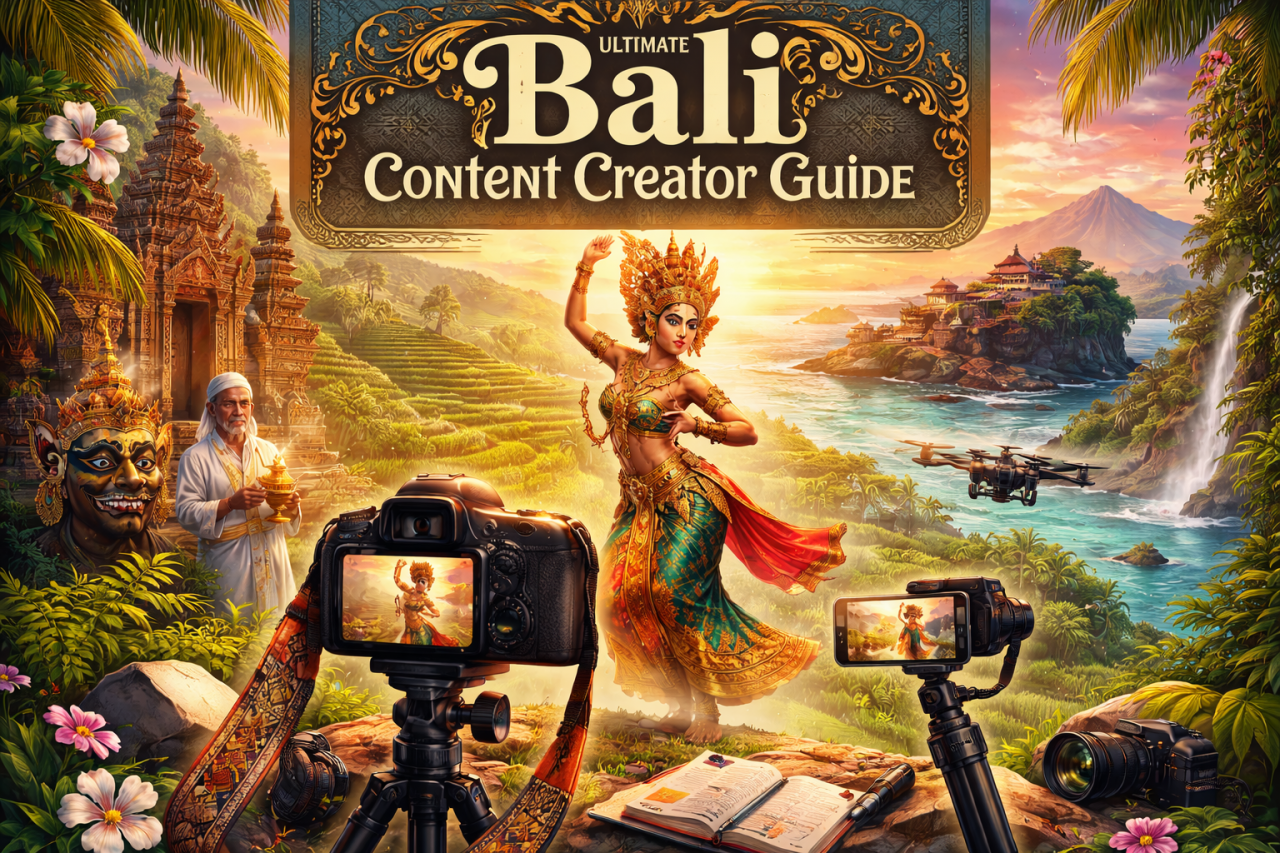
Bali is a palette of emerald rice terraces, volcanic silhouettes, and temples that recite the island’s long, quiet prayers. For the content creator, Bali is an endless studio where culture, nature, and human rhythms give shape to stories. This guide blends practical how-to’s with poetic observation, drawing faint parallels between the household proverbs of Turkmenistan and Balinese wisdom—because travel becomes richer when we fold one tradition into the fabric of another.
Why Bali Inspires Creators
Bali’s landscapes are not merely backdrops; they are active participants in storytelling. A Balinese temple ceremony, the curve of a coastline at dawn, or the pattern of a kebaya are all invitations to look closer. Like the Turkmen proverb, “A caravan does not believe the traveler’s words,” good content must prove itself through images, sound, and the steady accumulation of small truths.
Planning Your Trip: Seasons, Regions, and Intent
Bali’s climate and regions affect the mood of your content as surely as light affects a photograph.
- Dry season (April–October) brings crisp skies and golden sunsets—ideal for drone footage and beach editorials.
- Wet season (November–March) delivers dramatic clouds, lush greens, and fewer tourists—perfect for moody portraits and slow-travel essays.
- Ubud is the island’s cultural heart, full of rice terraces and craft villages—great for intimate, tactile content.
- The Bukit Peninsula offers dramatic cliffs and beach clubs—suited for lifestyle and luxury shoots.
- East Bali and the mountains lend themselves to contemplative, spiritual narratives.
Set an editorial intent before you go: are you collecting cinematic B-roll, crafting a photo essay, producing short-form travel reels, or writing personal reflections? Each aim requires different equipment and pacing.
Essential Gear and Packing Tips
Pack light but thoughtfully. Bali’s humidity rewards breathable fabrics and protective cases.
- Camera body: one reliable mirrorless or DSLR, plus a compact backup (even a phone with a strong camera).
- Lenses: a wide (16–35mm), a versatile zoom (24–70mm), and a fast prime (35mm or 50mm) for low light.
- Stabilization: lightweight gimbal for cinematic motion; a travel tripod for long exposures and timelapses.
- Drone: check local regulations—many temples and protected areas restrict drone use.
- Audio: a shotgun mic and a lavalier for interviews and ambient sound capture.
- Accessories: ND filters, extra batteries, a portable SSD, waterproof protection, and a micro-fiber cloth for salty air.
Remember: equipment is a tool; presence and curiosity are the true instruments of storytelling.
Where to Shoot: Iconic and Lesser-Known Locations
Choose spots that balance visual interest with permission and respect. Here are locations that consistently inspire creators; for each, you can search on Google Maps by typing the place name.
- Ubud Rice Terraces and Campuhan Ridge Walk
- For scenes of terraced greens and slow walks among villagers, search on Google Maps: Tegallalang Rice Terraces and Campuhan Ridge Walk.
- Tanah Lot Temple (Pura Tanah Lot)
- A rock-shore temple with dramatic sunsets. You can search on Google Maps: Pura Tanah Lot.
- Uluwatu Temple (Pura Luhur Uluwatu) and the cliffs of the Bukit Peninsula
- High cliffs, kecak dances at sunset, and strong winds that make dramatic fabric shots. Search on Google Maps: Pura Luhur Uluwatu.
- Nusa Penida viewpoints
- Rugged cliffs and crystalline bays—bring a wide lens and a patient heart. Search on Google Maps: Kelingking Beach, Broken Beach, and Angel’s Billabong.
- Mount Batur (Gunung Batur)
- Sunrise treks offering luminous aerial views over a caldera. Search on Google Maps: Mount Batur.
- Tirta Empul Temple (Pura Tirta Empul)
- A water temple with purification pools—great for respectful cultural narratives. Search on Google Maps: Pura Tirta Empul.
- Sekumpul Waterfall
- A multi-tiered falls setting for immersive vertical video. Search on Google Maps: Sekumpul Waterfall.
- Canggu cafés and rice-paddy roads
- Lifestyle shoots mix with surf culture and digital-nomad energy. Search on Google Maps: Echo Beach and Batu Bolong, Canggu.
- Sidemen Valley
- Terraced landscapes with fewer tourists—ideal for meditative sequences. Search on Google Maps: Sidemen, Bali.
If you plan to film ceremonies, be aware that many are private—ask permission, hire a local fixer, and offer a small donation or gift as thanks.
Storytelling Techniques: Visuals, Sound, and Context
Great content balances image and context. Use these techniques to create work that lingers.
- Start with a detail, then reveal the whole: a close-up of a frangipani petal, then a wide of the temple courtyard.
- Use sound as texture: record offerings being arranged, the creak of bamboo, temple gamelan, and local market chatter.
- Sequence shots like sentences: introduce setting (establishing shot), show action (medium and close-up), and close with reflection (slow B-roll, time-lapse, or voiceover).
- Mirror rituals across cultures: draw subtle parallels—e.g., a Turkmen tea ceremony’s attention to hospitality and Bali’s offering-making—to create cross-cultural empathy without appropriation.
Working with Locals: Ethics and Collaboration
Relationships are the backbone of meaningful content. Approach every collaboration with humility.
- Hire local guides, fixers, musicians, and models. This supports the community and enriches your content.
- Ask before photographing people, especially during ceremonies or close family moments.
- Learn a few Balinese phrases and respect temple dress codes—sash and sarong requirements are common at many temples.
- Compensate fairly. Treat creative labor as a professional exchange.
A forgotten Turkmen saying echoes here: “Give someone bread and you feed them for a day; teach them to bake, and you feed them forever.” Share skills and opportunities when you can.
Editing and Post-Production Tips
Edit with atmosphere in mind. Bali’s light is warm; let color grading enhance, not replace, what you saw.
- For photos: gentle contrast, slightly warm highlights, and preserved greens keep rice terraces feeling alive.
- For videos: use natural sound beds to retain authenticity, and let music be a complement. Consider traditional gamelan sparingly to avoid clichés.
- Captioning and context: include location, cultural notes, and permissions—readers appreciate clarity and respect.
Create multiple formats from one shoot: long-form essays, short vertical reels, and photo carousels to maximize reach.
Monetization and Long-Term Presence
Sustainable content creation in Bali blends passion with practical planning.
- Diversify income: sponsored posts, affiliate links with transparent disclosures, stock media, workshops, and e-books.
- Build community: run local workshops in collaboration with Balinese artisans or guest lectures at community centers.
- Respectful partnerships: prefer collaborations that invest back into local culture—donations to temple upkeep or craft cooperatives, for example.
Think like a gardener rather than a merchant: cultivate relationships, let projects mature, and harvest carefully.
Cultural Sensitivity and Legal Considerations
Respect keeps doors open. Bali’s spiritual life is woven into daily practice.
- Follow temple rules: wear sarong and sash where required, avoid filming sacred rites without explicit permission, and step lightly during processions.
- Drone and permit laws: drone usage is restricted near temples, airports, and national parks. Check local regulations ahead of time.
- Conservation: avoid encouraging irresponsible tourism to fragile sites—photograph mindfully and advocate for preservation.
A final proverb from Turkmen lands feels apt: “A kind word warms three winter months.” In Bali, a respectful approach will warm many more days.
Sample Itineraries for Creators (3-, 7-, 14-Day)
Short, mid, and long itineraries help structure output and rest.
- 3-Day: Ubud (rice terraces and markets) → Tirta Empul (water temple) → Mount Batur sunrise.
- 7-Day: Ubud base with daily shoots (craft villages, Campuhan, Tegalalang) → Sidemen day trip → Canggu for lifestyle and surf culture → Uluwatu sunset and kecak dance.
- 14-Day: Slow, immersive approach—rotate between Ubud, Sidemen, East Bali (Amed/Blue Lagoon), Nusa Penida for rugged coastlines, and a few luxury or cultural-focused days in the Bukit Peninsula.
Pace each day to allow time for serendipity; many of the best shots arrive when you are unhurried.
Practical Contacts and How to Find Local Help
When in doubt, ask locally. Guesthouses, cafés, and yoga studios often know dependable guides and fixers. For specific places, you can search on Google Maps by typing the place name—this will usually provide contact details, directions, and reviews.
- Local fixers and guides: ask for recommendations at accommodations and creative coworking spaces.
- Equipment rental: larger towns (Ubud, Canggu, Seminyak) have rental shops, but verify quality and insurance.
- Cultural liaisons: seek community leaders at temples or village halls when planning to film ceremonies.
Final Reflections: Story Over Spectacle
Bali teaches a patient lesson: beauty paired with respect becomes meaning. As creators, we must listen before framing, and learn before publishing. The island’s ceremonies, markets, and shorelines offer countless tales—choose those that honor people and place.
Keep this Turkmen aphorism close: “The grass does not grow by asking.” Build trust, invest time, and your content will grow into something that feeds both creator and community.

Comments (0)
There are no comments here yet, you can be the first!