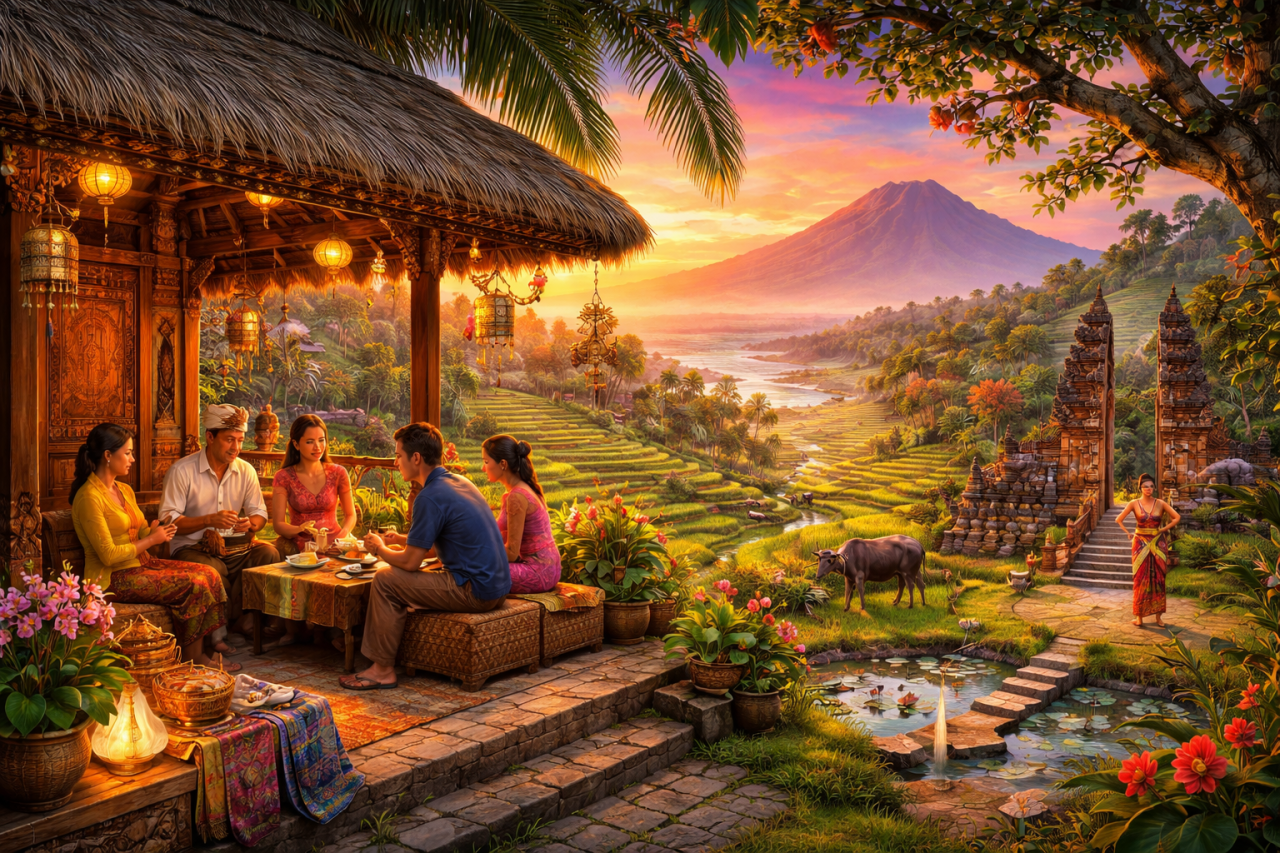
Bali’s soul isn’t in its five-star resorts or Instagrammable rice terraces alone — it’s in the small villages where daily life unfolds with the same ritual and rhythm every generation. Think of these villages as the island’s hidden konobas (Croatian taverns): intimate, full of flavor, and bursting with stories. Here are the best villages for authentic homestays in Bali, written in the warm, curious voice of Zvjezdan — part travel writer, part storyteller, part Adriatic-Balinese matchmaker.
Why choose a homestay in a Balinese village?
Staying in a homestay is the fastest route to understanding local life. You’ll wake to incense and rooster calls, share nasi campur at dawn, join a temple offering ceremony, and learn names of palms and birds that don’t exist back home. Compared to resorts, homestays offer real conversation, cultural exchange, and often a home-cooked meal that will outshine anything you find on a resort menu.
Staying with a family also helps local economies directly. Your rupiah goes to neighborhood artisans, drivers, and market vendors — people who keep Bali’s traditions alive.
Ubud: The cultural heart with quieter corners
Ubud is famous, yes, but venture into the surrounding villages for homestays that feel intimate rather than touristy. Villages like Peliatan, Sayan, and Campuhan are close enough to Ubud Palace and the Monkey Forest, yet they retain a village calm and community spirit.
- What to expect: morning offerings (canang sari), traditional Balinese dance practice in community halls, and rice-field walks.
- Nearby highlights: Ubud Palace (Puri Saren Agung) and Sacred Monkey Forest Sanctuary. You can search for them on Google Maps by typing: Puri Saren Agung, Ubud; Sacred Monkey Forest Sanctuary.
- Homestay tip: Ask your host to introduce you to a local family ceremony — not as a spectator, but as a respectful guest.
Penglipuran: The traditional Balinese village of bamboo gates
Penglipuran Village preserves a classic Balinese spatial layout with immaculate bamboo gates, coconut-lined streets, and neatly arranged houses. The village’s commitment to tradition is visible in its architecture and daily rituals.
- What to expect: pristine compound yards, community-led conservation, and strong village regulations that prioritize culture.
- Nearby highlights: Kintamani for views of Mount Batur. You can search for it on Google Maps by typing: Penglipuran Village; Kintamani.
- Homestay tip: Stay here to experience collective life and learn about bamboo and thatch repair — a craft as important as a Croatian boatwright’s knowledge on the Adriatic.
Sidemen: Verdant valleys and quiet weaving communities
Sidemen feels like the Bali your grandfather would recognize: terraced rice fields, slow river valleys, and weavers who dye cloth with indigo and roots. Homestays here often include guided treks, visits to family looms, and cooking lessons.
- What to expect: panoramic rice terraces, local weaving workshops, and hearty home-cooked food.
- Nearby highlights: Mount Agung views and traditional Balinese temples. You can search for it on Google Maps by typing: Sidemen, Bali.
- Homestay tip: Bring comfortable walking shoes; paths between fields can be muddy and steep.
Amed: Coastal village life and black-sand beaches
Amed is a cluster of fishing villages along Bali’s northeast coast, known for snorkeling, freediving, and slow-paced mornings. Homestays here often belong to fishing families who offer fresh grilled fish and stories about the sea.
- What to expect: sunrise fishing trips, black-sand beaches, and coral gardens close to shore.
- Nearby highlights: Tulamben and USAT Liberty shipwreck for diving. You can search for them on Google Maps by typing: Amed, Bali; USAT Liberty shipwreck Tulamben.
- Homestay tip: Try a morning with fishermen to learn fish names and simple spearfishing techniques — always with respect for local regulations and sustainability.
Munduk: Highland homestays with waterfalls and clove-scented air
Set in the misty north-central highlands, Munduk is a cooler village famed for waterfalls, coffee plantations, and clove trees. Homestays here are often family-run guesthouses surrounded by gardens and trails.
- What to expect: hiking to waterfalls, tasting local coffee, and waking to crisp mountain air.
- Nearby highlights: Gitgit Waterfall and Ulun Danu Beratan Temple. You can search for them on Google Maps by typing: Munduk, Bali; Gitgit Waterfall; Pura Ulun Danu Bratan.
- Homestay tip: Pack a light jacket. Nights can be cool compared with the coast.
Tenganan Pegringsingan: Ancient Bali Aga traditions
Tenganan is one of the few Bali Aga (original Balinese) villages where unique customs, weaving techniques (geringsing double ikat), and social rules endure. Homestays are rare and often arranged through respectful local contacts, but the cultural immersion is unparalleled.
- What to expect: distinct rituals, traditional geringsing textiles, and a strong sense of ancestral identity.
- Nearby highlights: Beaches of East Bali and local weaving demonstrations. You can search for it on Google Maps by typing: Tenganan Pegringsingan.
- Homestay tip: Prioritize cultural sensitivity. Read about Bali Aga customs before you arrive and respect photography requests during ceremonies.
Batuan and Sangeh: Art, temples, and village ceremonies
Batuan is an art village, famous for deeply detailed paintings and temple festivals. Sangeh is renowned for its monkey forest surrounded by giant nutmeg trees. Both offer homestays where art and ritual are part of daily life.
- What to expect: art studios, temple processions, and community performances.
- Nearby highlights: Batuan Temple (Pura Batuan) and Sangeh Monkey Forest. You can search for them on Google Maps by typing: Pura Batuan; Sangeh Monkey Forest.
- Homestay tip: Bring a sketchbook or camera and ask local artists about their techniques — you might learn brush strokes that echo the feeling of a Dalmatian seascape captured on canvas.
Trunyan: A unique rite by Lake Batur (approach with respect)
Trunyan Village, on the eastern shore of Lake Batur, maintains ancient burial practices and a distinct cultural identity. Visiting requires sensitivity and often coordination through tour operators or local hosts.
- What to expect: unique funerary traditions and a different worldview. Many visitors come by boat across Lake Batur.
- Nearby highlights: Batur Caldera and Toya Devasya hot springs. You can search for them on Google Maps by typing: Trunyan Village; Lake Batur.
- Homestay tip: Because customs are delicate, plan your visit through a recommended homestay host who can guide you; approach with curiosity but never intrusion.
Practical tips for choosing a homestay
- Read reviews that speak about hosts’ warmth and local interaction, not just Wi-Fi speed.
- Learn a few Balinese or Indonesian phrases — “selamat pagi” (good morning) and “terima kasih” (thank you) go a long way.
- Ask about ceremonies before you arrive so you can dress and behave appropriately.
- Bring small, eco-friendly gifts like reusable water bottles or kitchen staples; these are often more useful than souvenirs.
- Respect local rules regarding photography, dress (saree or sarong) at temples, and areas off-limits to guests.
How to book and connect
Many homestays are listed on common booking platforms, but the best ones are often found through local networks, community tourism boards, or recommendations from other travelers. Consider contacting the village tourism office or a trusted local guide; they often know hosts who provide genuine cultural exchange rather than staged experiences.
If you want simple directions to a place mentioned above, you can search for it on Google Maps by typing the place name I’ve written — for example: Sidemen, Bali or Amed, Bali.
Final thoughts: the Adriatic-Balinese analogy
As someone with Croatian roots, I can’t help but see parallels between Bali’s villages and the small coastal towns of the Adriatic. Both places are defined by family-run livelihoods, a strong sense of community, and rituals tied to land and sea. In Bali, the rice terraces ripple like terraced vineyards, and in the evening, temple gamelan and clinking glasses of tuak (palm wine) resonate with the same simple happiness you find on a Dalmatian porch.
Choose a homestay with an open heart. Bring patience, curiosity, and a small gift. Leave with stories, recipes, and friendships that will stay with you long after the plane crosses the horizon.

Comments (0)
There are no comments here yet, you can be the first!