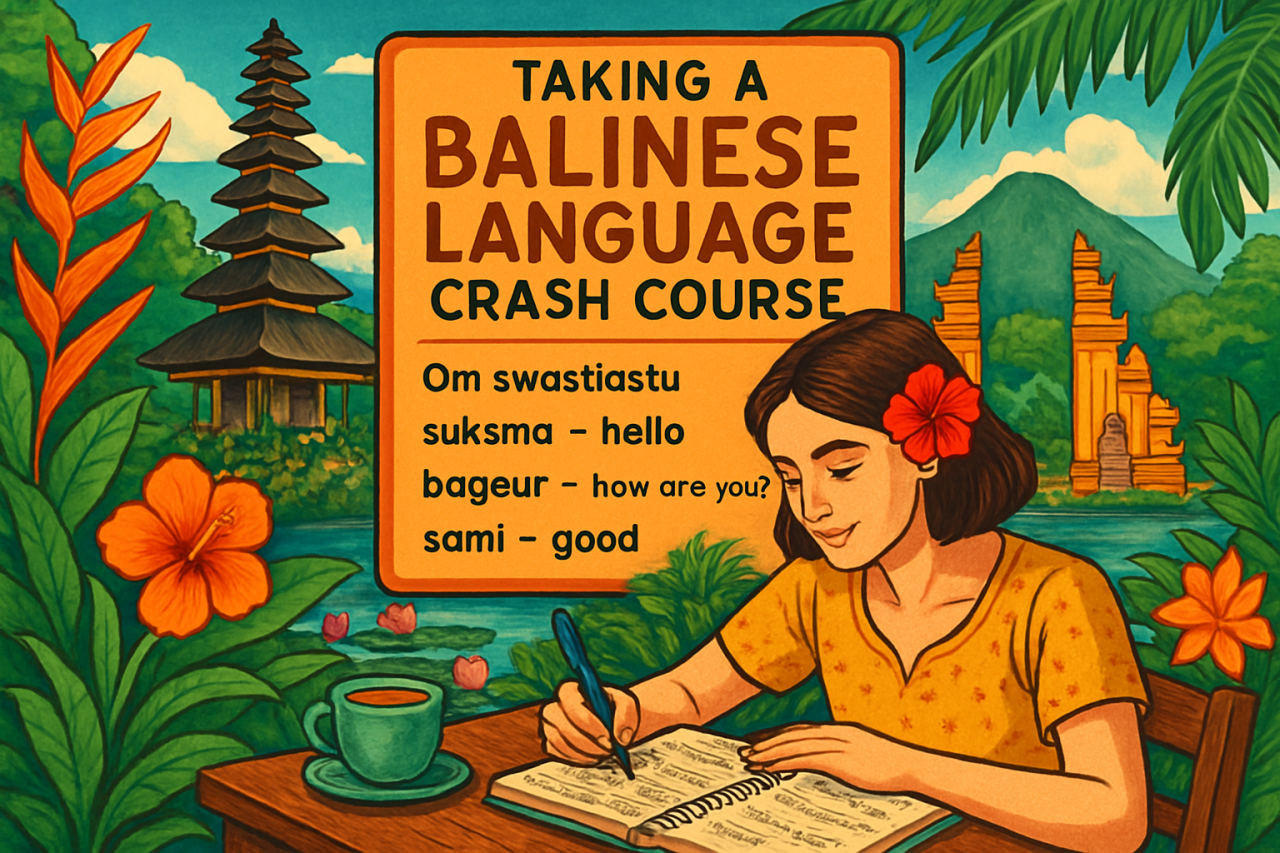
Taking a Balinese Language Crash Course: Unlocking the Island’s Heartbeat
When the golden sunlight dances across the lush rice terraces of Ubud and the incense smoke curls through a morning ceremony at Pura Tirta Empul, you realize that Bali’s magic is more than its landscapes—it’s embedded in the gentle smiles and melodic greetings of its people. During my recent journey through Bali, I discovered that learning a few words of Balinese is not just a practical tool; it’s an invitation into the island’s soul.
Why Learn Balinese? A Key to Authentic Encounters
Most travelers arrive in Bali aware that Bahasa Indonesia is the national language, but few realize that Balinese (Basa Bali) is the heart language of the island. Spoken in homes, ceremonies, and traditional markets, it is a symbol of identity and respect. Even a simple “Swastyastu” (hello) can unlock deeper connections—whether you’re wandering the vibrant stalls of Ubud Art Market or sharing a smile with a priest at Pura Besakih.
Where to Take a Balinese Language Crash Course
1. Cultural Centers in Ubud
Ubud is Bali’s cultural capital, and here, language courses are woven into the fabric of daily life. At the Bali Culture Center, you can sign up for a day-long “Basa Bali for Travelers” workshop. The interactive classes teach you greetings, bargaining phrases, and even the poetic language used in traditional Balinese offerings.
Tip: Search for “Bali Culture Center Ubud” on Google Maps for directions.
2. Community Classes in Denpasar
For a more immersive experience, consider joining a class at Basabali Wiki, an innovative language hub in Denpasar. Their community classes are designed for visitors and locals alike, and you’ll often find yourself practicing with friendly warung owners or schoolchildren.
Tip: Search for “Basabali Wiki Denpasar” on Google Maps.
3. Private Tutors in Sanur
If your itinerary is tight, private tutors in Sanur offer tailored crash courses. Many tutors meet at quiet cafes like Cafe Batujimbar—a beloved local spot with airy gardens perfect for language learning over a cup of Balinese coffee.
What You’ll Learn: Common Phrases for Travelers
Here are a few simple Balinese phrases that I found invaluable on my journey:
- Swastyastu (Hello, may peace be with you)
- Suksma (Thank you)
- Ampura (Excuse me / Sorry)
- Kenken kabare? (How are you?)
- Tiang tusing ngidang (I don’t understand)
You’ll notice the Balinese language’s subtlety and respectfulness—an echo of the island’s gentle spirit.
Language and Culture: Beyond Words
A crash course isn’t just about vocabulary. At the Agung Rai Museum of Art (ARMA), I joined a workshop where we learned phrases through song and dance. Balinese, like Mongolian, is deeply tied to ritual and performance. As I stumbled through a traditional greeting, my teacher smiled, reminding me that effort counts more than perfection.
Where Language Opens Doors
Armed with a few phrases, I found myself welcomed into unexpected corners. At the bustling Jimbaran Fish Market, my attempt at bargaining in Balinese brought laughter and a generous handful of fresh chilies. At Pura Luhur Uluwatu, a temple priest shared the meaning behind a sacred chant, opening my eyes to the subtle poetry of the island.
Responsible Travel: Respect Through Language
Learning Balinese, even at a basic level, is an act of cultural respect. It signals to locals that you see them not as tourist attractions, but as keepers of an ancient and living tradition. This small gesture supports sustainable, mindful travel—values I hold dear and encourage in every journey.
Final Thoughts and Tips
- Combine learning with cultural experiences: Join a cooking class at Paon Bali Cooking Class or a gamelan music workshop to practice your language skills in context.
- Download the BasaBali app: Created by local linguists, it’s an excellent pocket resource for travelers.
- Embrace the challenge: Don’t worry about mistakes; Balinese people are incredibly patient and appreciative of any effort to speak their language.
In Bali, language is more than communication—it’s a bridge to the island’s beating heart. So, before you set out to explore Tegallalang Rice Terrace or relax on the sands of Seminyak Beach, take a moment to learn a few words of Balinese. You’ll find your journey deepened, your encounters richer, and your memories all the more vibrant.
You can search for each location mentioned above on Google Maps by typing its name.

Comments (0)
There are no comments here yet, you can be the first!