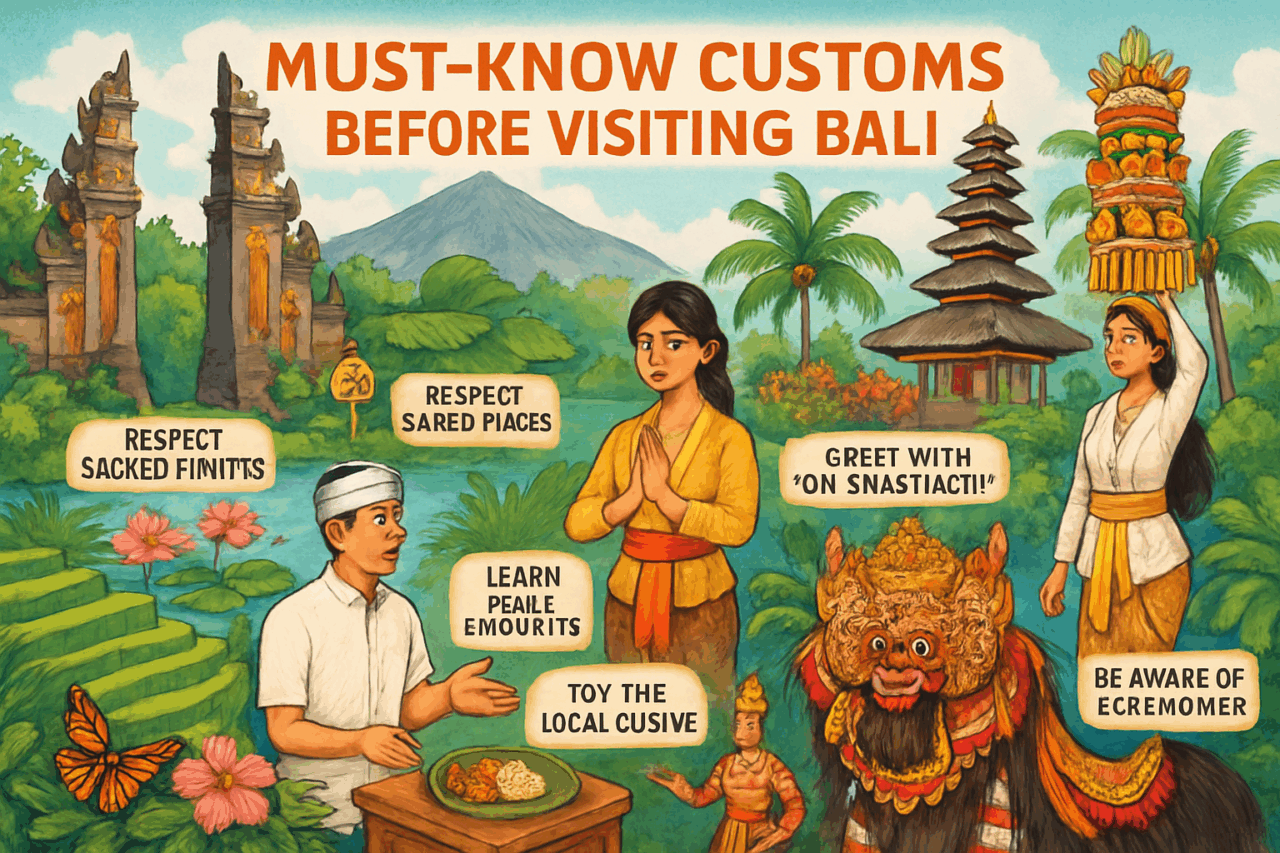
Must-Know Customs Before Visiting Bali: A Guide to Island Etiquette and Cultural Immersion
Bali, the “Island of the Gods,” is a place where lush rice terraces meet sacred volcanoes, and vibrant ceremonies color everyday life. For travelers, the beauty of Bali lies not only in its iconic beaches and temples but also in the rich tapestry of customs that define Balinese culture. Before you set foot on this enchanting island, immerse yourself in these essential customs—your journey will be all the richer for it.
1. Dress Modestly at Temples and Sacred Sites
Balinese Hinduism infuses daily life with spirituality, and you’ll find that temples are not just tourist attractions but living places of worship. Whether you’re exploring the serene Pura Ulun Danu Beratan (search for it on Google Maps by typing: Pura Ulun Danu Beratan) or the dramatic clifftop Uluwatu Temple (search for it on Google Maps by typing: Uluwatu Temple), always dress respectfully:
- Wear a sarong and sash (often provided at the entrance).
- Cover your shoulders and knees.
- Remove hats and sunglasses before entering.
- Women who are menstruating are traditionally not permitted inside temple grounds.
This gesture is more than a dress code—it’s a sign of respect for the local faith and for those who come to pray.
2. Watch Your Head and Feet
Balinese customs draw clear lines between what is considered pure (the head) and impure (the feet). You’ll notice locals never touch another’s head, not even children’s, as the head is believed to be the most sacred part of the body. Conversely, pointing your feet at people or sacred objects, such as offerings (canang sari) or altars, is considered disrespectful.
When visiting a family compound, like the traditional villages in Penglipuran Village (search for it on Google Maps by typing: Penglipuran Village), or sitting in a warung (local eatery), remember to tuck your feet beneath you or rest them flat on the floor.
3. Participate (Respectfully) in Daily Offerings
Every morning, Bali’s streets and doorways bloom with small, woven palm-leaf offerings filled with flowers, rice, and incense. These canang sari are placed to maintain balance between good and evil. If you see a local gently laying one at the entrance of a shop or temple, pause and watch—the ritual is both beautiful and humbling.
- Avoid stepping over offerings, especially those on the ground.
- If you accidentally kick or disturb one, apologize with a gentle smile.
4. Polite Greetings and the “Salam” Gesture
Balinese are warm and welcoming. When greeting someone, a smile goes a long way. You may also notice the traditional “Salam” gesture: pressing your palms together in front of your chest and bowing slightly. This is a respectful way to say hello, thank you, or goodbye—perfect for connecting with locals at places like Ubud Art Market (search for it on Google Maps by typing: Ubud Art Market).
5. Ceremony Etiquette: Embrace the Unexpected
Bali’s calendar is filled with festivals, cremations, and processions. You might find yourself swept up in the energy of Nyepi (the Day of Silence) or a vibrant Odalan temple anniversary. If you happen upon a ceremony:
- Stand back and observe quietly.
- Ask permission before taking photos, especially of people.
- Don’t interrupt or walk through processions.
A memorable experience is witnessing the Kecak Dance at Uluwatu Temple during sunset—a hypnotic performance against the backdrop of the Indian Ocean.
6. Bargaining at Markets: The Gentle Art of Negotiation
Shopping at traditional markets—like Pasar Badung in Denpasar (search for it on Google Maps by typing: Pasar Badung)—is a delightful way to engage with Balinese culture. Bargaining is expected, but always do so with a smile and good humor. Remember, a little banter and laughter can make the experience fun for both you and the vendor.
7. Sustainable Tourism: Respect Nature and Community
Bali’s natural beauty is fragile. When visiting places like Tegallalang Rice Terrace (search for it on Google Maps by typing: Tegallalang Rice Terrace) or the sacred Monkey Forest Sanctuary in Ubud (search for it on Google Maps by typing: Sacred Monkey Forest Sanctuary), tread lightly:
- Refrain from littering and use refillable water bottles.
- Support local businesses and artisans.
- Be mindful of your environmental impact, especially near coral reefs at Padang Padang Beach (search for it on Google Maps by typing: Padang Padang Beach) and Amed Beach (search for it on Google Maps by typing: Amed Beach).
8. Dining Etiquette: Savor, Share, and Learn
Food in Bali is a communal affair. When invited to a local’s home or eating at a traditional babi guling spot like Warung Babi Guling Ibu Oka in Ubud (search for it on Google Maps by typing: Warung Babi Guling Ibu Oka), follow these customs:
- Wash your hands before and after eating.
- Wait for the host to invite you to begin.
- Try eating with your right hand; the left is considered impure.
If you’re vegetarian or vegan, don’t hesitate to ask about ingredients—many Balinese warungs are happy to accommodate.
Final Thoughts: Embracing the Heart of Bali
To visit Bali is to enter a world where every act is imbued with meaning, and every encounter is a chance to learn. By honoring these customs, you’ll not only avoid faux pas but also unlock deeper connections with the people and spirit of the island.
As I wandered through the emerald paddies of Sidemen (search for it on Google Maps by typing: Sidemen), watched the sun slip behind the sea at Tanah Lot Temple (search for it on Google Maps by typing: Tanah Lot Temple), and shared laughter with artisans in the hills of Ubud, I realized that true travel isn’t about ticking off sights—it’s about embracing the customs that make a place unique.
May your Bali journey be filled with respect, curiosity, and countless moments of wonder.
For more travel stories and cultural insights, follow along as we explore hidden corners of Bali and beyond—one respectful step at a time.

Comments (0)
There are no comments here yet, you can be the first!