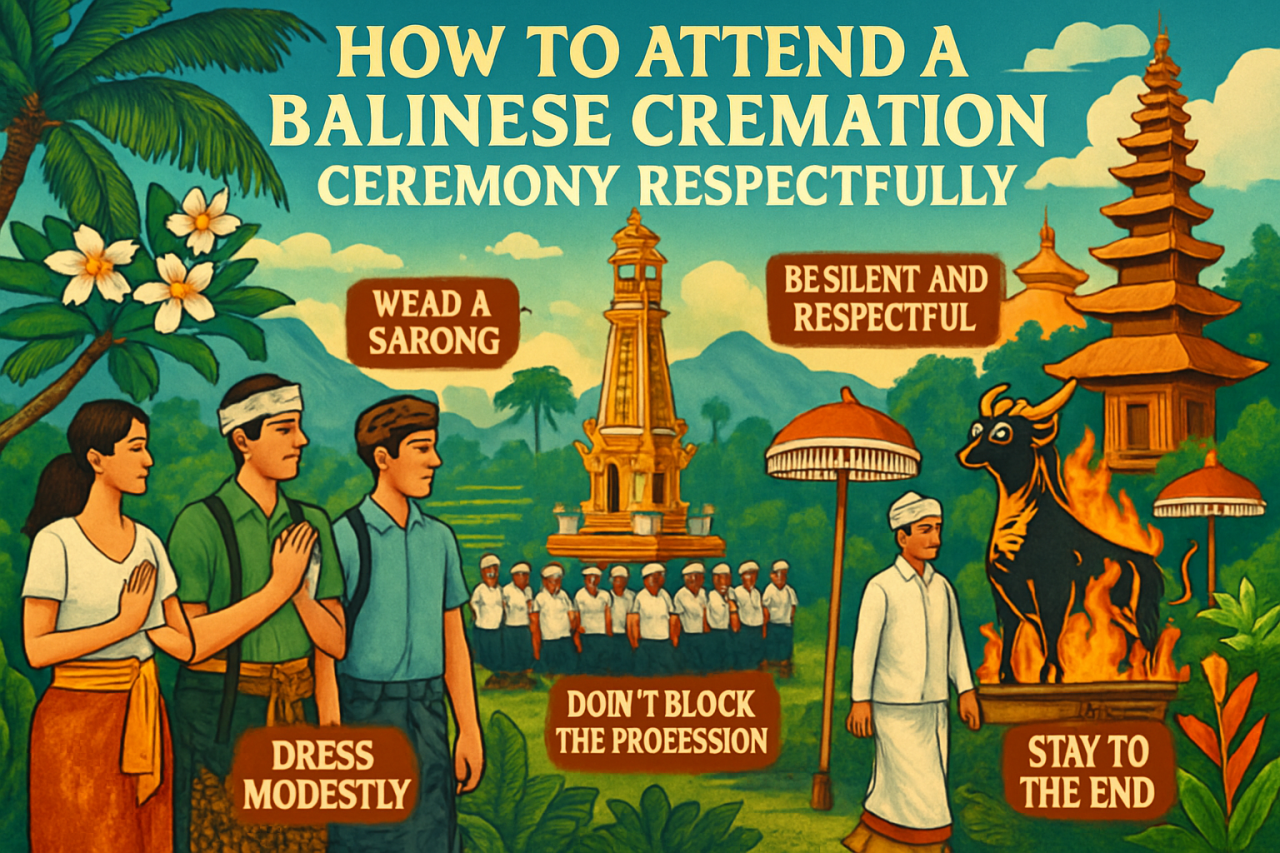
How to Attend a Balinese Cremation Ceremony Respectfully: A Guide for Curious Travelers
By Jayantha
When you’re wandering through the emerald rice terraces of Tegallalang Rice Terraces, or soaking up the volcanic sands of Echo Beach, Bali reveals itself as a tapestry of vibrant rituals and deep spiritual roots. But no experience cuts quite as deep—or feels as electrifying—as witnessing a Balinese cremation ceremony, locally known as Ngaben. It’s a spectacle that’s both haunting and luminous: plumes of incense swirling through the morning mist, the rhythmic clang of gamelan, and colorful processions winding through ancient village lanes.
If your Bali itinerary ever lines up with such a ceremony, you’re in for a profound encounter. But before you whip out your camera, pause—this is not your average tourist attraction. Here’s your guide to attending a Balinese cremation ceremony with respect and awe, while soaking in every vivid moment.
What Is a Balinese Cremation Ceremony?
Let me paint you a picture: Imagine standing in the heart of Ubud, the air thick with the scent of frangipani, as villagers in intricate sarongs carry a towering, paper-mâché bull down the road. This isn’t just pageantry—it’s a sacred rite of passage. Ngaben is the Balinese Hindu ritual of releasing a soul from its earthly body, believed to enable its journey to the afterlife and eventual reincarnation.
These ceremonies are community affairs—sometimes a small, family gathering; sometimes a grand event involving hundreds, especially if a member of the royal family is being cremated at the Puri Saren Agung (Ubud Palace).
Where and When Do Cremation Ceremonies Happen?
Cremation ceremonies don’t stick to a set calendar. They’re usually held on auspicious days, determined by the Balinese calendar and the family’s resources. In villages like Pengosekan, Mas, and Sidemen, you might stumble upon a local procession. But larger-scale ceremonies sometimes make headlines in Ubud or Gianyar.
TIP: Ask your guesthouse staff or check local community notice boards. They’ll know if a ceremony is happening nearby. Remember, you are a guest—never crash a private family affair without an invitation.
How to Attend Respectfully
1. Dress Modestly
Leave your beachwear at the villa. For a cremation, wear a sarong (which you can easily pick up at Ubud Art Market), and a sash tied around your waist. Shoulders and knees should be covered—think temple attire.
2. Observe, Don’t Intrude
Keep a respectful distance unless invited closer. Locals are usually welcoming, but remember: this is a funeral, not a festival. Don’t jostle for photos or block the processional route—let your presence be as gentle as a shadow.
3. No Flash Photography
While the spectacle is mesmerizing, flashing cameras can disrupt the ceremony’s gravity. If you must take a photo, ask for permission first—a smile and a polite “Boleh?” (“May I?”) goes a long way.
4. Follow the Locals’ Lead
When the villagers sit, you sit. When they stand, you stand. If offerings are being placed, step aside. You’ll often find yourself swept up by the rhythm of the crowd—follow it, and you’ll be fine.
5. Be Mindful of Your Energy
Balinese believe that negative energy can disrupt the soul’s passage. Avoid loud chatter, laughter, or animated gestures. It’s all about honoring the solemnity of the occasion.
What to Expect
Attending a cremation at Pura Dalem Ubud or a village banjar is a full-body experience. There’s singing, chanting, and often hypnotic gamelan music. The air is thick with smoke and the scent of burning coconuts as the lembu (bull-shaped sarcophagus) is set alight. You might see relatives weeping, but you’ll also see smiles—death, here, is a transition, not a tragedy.
Personal Anecdote: My First Ngaben in Sidemen
I’ll never forget the day in Sidemen, surrounded by lush rice fields and distant peaks. I was invited by a local friend (always the best way to experience a ceremony), and as fiery orange marigolds rained down on the procession, I felt the collective heartbeat of Bali—equal parts reverence, release, and celebration.
Extra Cultural Tips
- Offerings: If you wish to contribute, bring a small basket of flowers or incense from a local warung.
- After the Ceremony: Don’t ask for photos with the family immediately after. Give them space to grieve and reflect.
- Temple Visits: If you’re inspired, visit Pura Tirta Empul to see how cleansing rituals tie into Bali’s cycle of life and death.
Final Thoughts for the Adventurous Soul
Experiencing a Balinese cremation isn’t just about witnessing a rare cultural event—it’s about stepping into the flow of local life, with all its color, complexity, and compassion. Do it with humility, an open heart, and a dash of curiosity. Bali will reward you with memories that linger—like incense smoke, long after you’ve left the Island of the Gods.
Planning your respectful Bali adventure? You can search for these locations on Google Maps by typing their names as mentioned above. Don’t forget your sarong and your sense of wonder!

Comments (0)
There are no comments here yet, you can be the first!