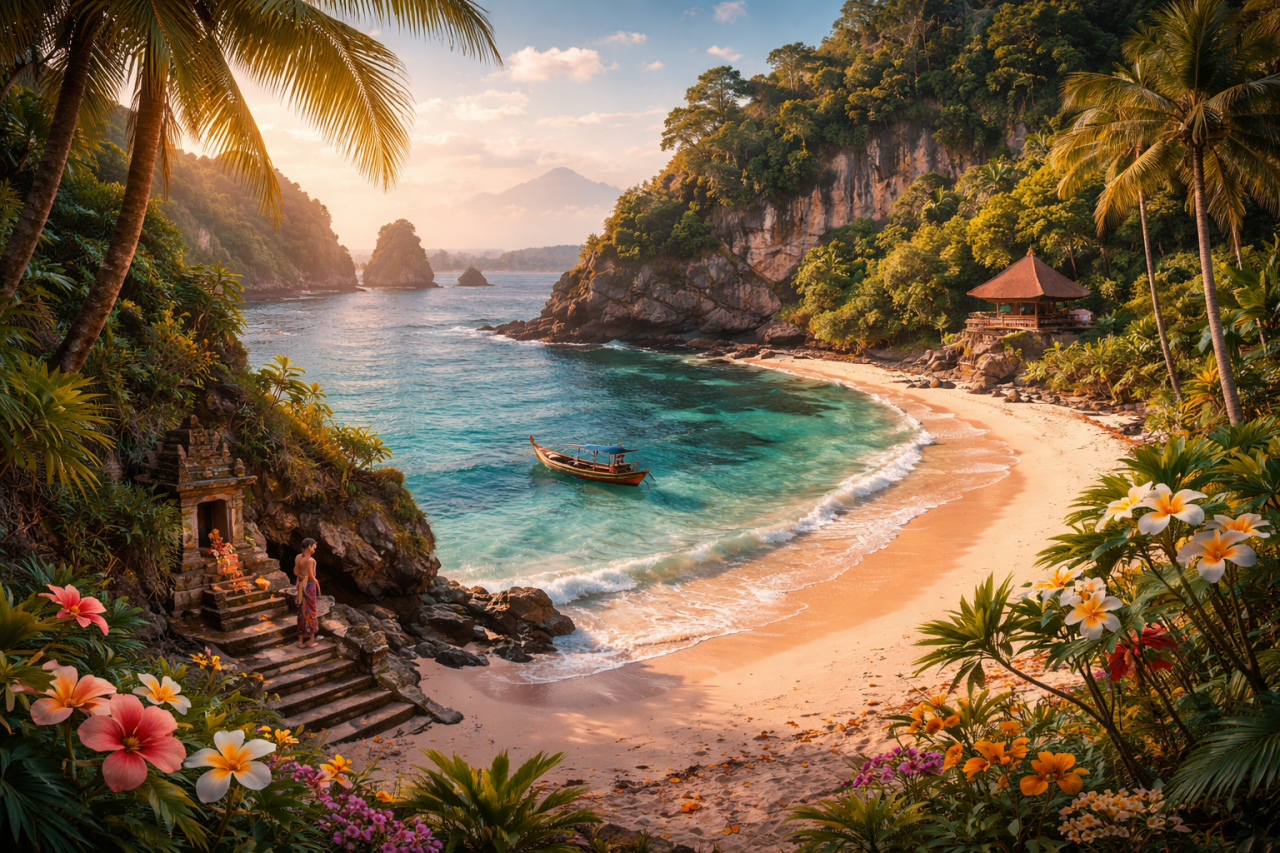
Bali is a tapestry of volcanic black sand, coral-strewn coves, and rice terraces that sigh in the wind. Yet beyond the well-traveled strips of Kuta and Seminyak, there are quiet corners where the sea still seems to keep secrets. Like an old Turkmen proverb that says, “The horse that walks slowly knows every path,” wandering patiently across Bali reveals shores that feel preserved by time. This article guides you to hidden beaches that retain an intimate, almost sacred silence — places to sit, listen, and reflect.
Why these beaches still feel untouched
Many of these beaches are small coves tucked between cliffs, reachable only by narrow steps or short hikes. That limited access has kept crowds away, and local fishing communities still set out their nets at dawn. A few are protected by reef and strong currents, which discourages casual swimmers and mass tourism.
From a cultural angle, Balinese reverence for the sea — used for ritual and daily sustenance — helps protect these places. The sea is not only livelihood but also a spiritual neighbor; small shrines and offerings are often found around secluded bays. This sense of the sacredness of place resonates with a Turkmen saying: “Treat the land as you would a guest” — an apt reminder to approach these beaches with respect.
Green Bowl Beach (Bingin area)
Green Bowl Beach is a small, white-sand cove beneath limestone cliffs on the southern Bukit Peninsula. The descent requires traversing stairs and a short cave tunnel at low tide, which discourages crowds and maintains a quiet atmosphere. It’s popular with surfers in certain seasons, but outside the main swells the shore is blissfully serene.
- How to find it: You can search for it on Google Maps by typing: Green Bowl Beach.
- Tip: Bring water and sturdy shoes for the climb, as there are limited facilities at the beach.
- Nearby cultural note: Watch for small offerings placed near the cliff paths — a reminder of Bali’s coastal rituals.
Nyang Nyang Beach
Nyang Nyang stretches long and sandy with a windswept beauty that feels elemental. The beach is reached via a trail and a grass-covered path down the bluff, and once you arrive the horizon dominates — a place for thought and slow walks. It’s a favorite for those seeking solitude and sunsets that often streak the sky with intense color.
- How to find it: You can search for it on Google Maps by typing: Nyang Nyang Beach.
- Practical info: There’s minimal shade; bring sunscreen and a hat. The surf can be strong, so it’s best for beachcombing or sunbathing rather than casual swimming.
Suluban Beach (Blue Point) — cave-strewn access
Suluban Beach, often called Blue Point, is known for its maze of limestone caves and stairways that lead down to tunnels opening onto a narrow beach. At low tide the caves reveal secret pools and small grottos ideal for quiet exploration. The cliff-top viewpoints provide dramatic vistas and a sense of seclusion.
- How to find it: You can search for it on Google Maps by typing: Suluban Beach (Blue Point).
- Note: There are surf shops and a few warungs near the cliff top, but the beach itself is simple and untamed.
Padang Padang (lesser-known corners)
While Padang Padang is known to many surfers, the beach has small sidings and hidden pockets among the rocks where solitude can still be found, especially early in the morning. The entrance through a narrow gap creates a feeling of entering a private world.
- How to find it: You can search for it on Google Maps by typing: Padang Padang Beach.
- Suggestion: Arrive at dawn to watch fishermen and local worshippers, and to enjoy the place before the midday warmth draws more visitors.
Bias Tugel Beach (near Amed)
Bias Tugel is a small, glittering cove on the east coast near Amed, with calm waters at times and excellent snorkeling close to shore. Local fishermen use traditional boats here, and the beach often welcomes a handful of visitors who come for the clear water and tranquil character.
- How to find it: You can search for it on Google Maps by typing: Bias Tugel Beach.
- Tip: Combine a visit with snorkeling around Amed’s coral gardens and stop for lunch at a local warung to sample ikan bakar (grilled fish).
Green Garden Beach (near Pemuteran)
In northwestern Bali, Green Garden Beach (also called Pantai Lovina area coves) offers a quieter, greener shore framed by coconut trees and small reefs. The region is less visited by international crowds, which preserves a gentle village rhythm.
- How to find it: You can search for it on Google Maps by typing: Green Garden Beach Bali.
- Cultural note: The north of Bali has its own island rhythms — daytime quiet, evening conversations — reflecting long-standing local traditions.
Suwung Beach and Cemara Beach (southern hidden coves)
Along the lesser-developed southern coast are small coves like Suwung and Cemara Beach, often overlooked due to their rugged access. These beaches reward the traveler with wide horizons, dramatic limestone silhouettes, and a sense of being at the edge of the island.
- How to find them: You can search for them on Google Maps by typing: Suwung Beach Bali; Cemara Beach Bali.
- Safety: Strong currents are common; swim cautiously and keep to shallow areas.
Practical tips for visiting hidden beaches
- Respect local customs: Many secluded beaches have small shrines and daily offerings. Keep noise low and avoid disturbing these spiritual markers.
- Pack lightly and responsibly: Carry water, a sun hat, reef-safe sunscreen, and a small trash bag. Leave no trace.
- Time your visit: Early morning or late afternoon often provide the best light for photographs and the quietest conditions.
- Travel with patience: Narrow roads, unmarked paths, and stair descents require steady shoes and a slow pace. A proverb to remember: “A patient traveler eats the sweetest bread.”
- Support local communities: Buy snacks or meals from nearby warungs and respect fishing activities. Your presence should benefit locals, not overwhelm them.
A poetic close: the sea as teacher
Walking a hidden Balinese beach can feel like visiting an elder who remembers the island’s origins. The surf offers lessons in rhythm and humility; the cliffs teach endurance; the fishermen show a dialogue with nature that is practical and sacred. Readers who have crossed Turkmen steppes will find echoes in Bali’s coastal life: both landscapes insist that we move slowly, observe closely, and honor what endures.
If you want to explore these shores, bring curiosity and respect. The beaches listed here remain delicate. As the Turkmen proverb goes, “Do not spoil the pasture you will one day need” — and in Bali, the sea and sand are pastures of the spirit.

Comments (0)
There are no comments here yet, you can be the first!