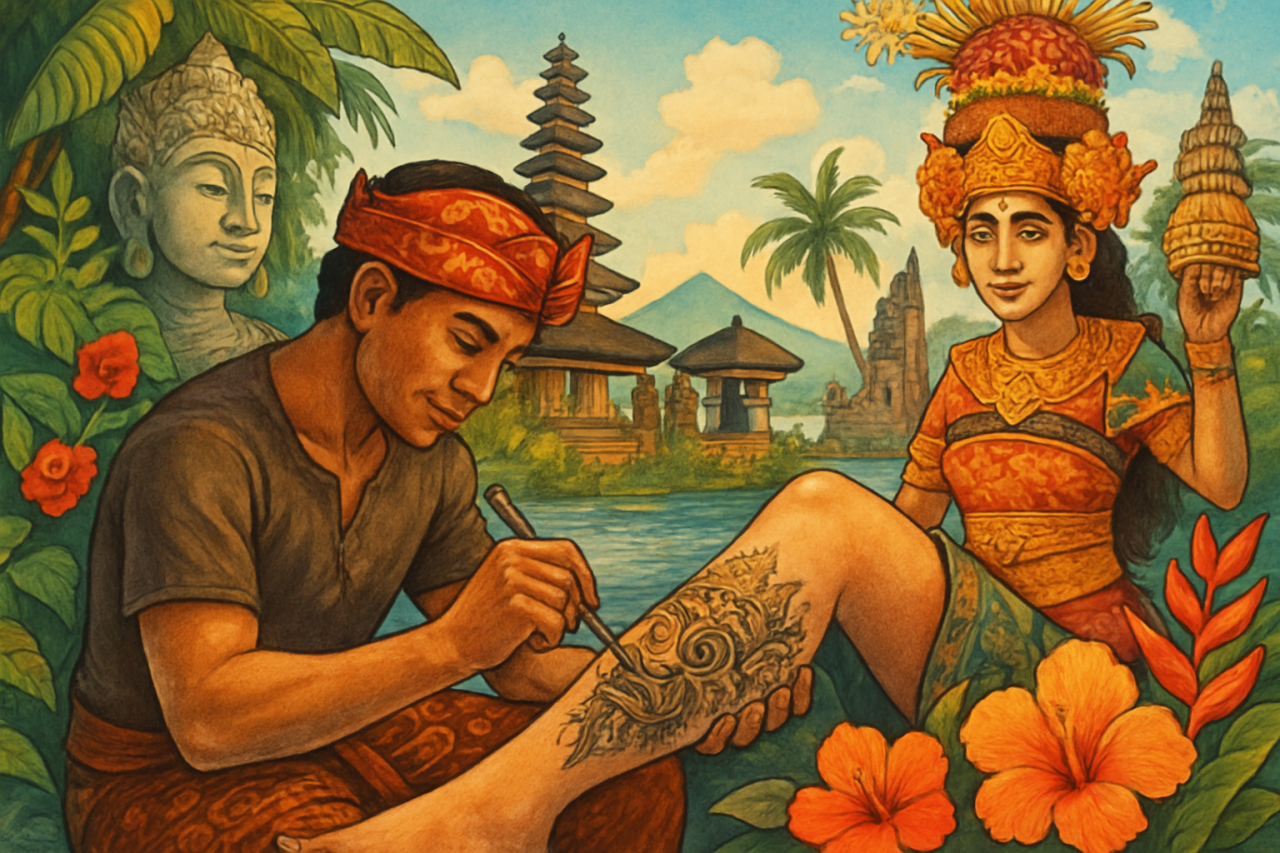
Exploring Bali’s Traditional Tattoo Culture: From Sacred Symbols to Stories Etched in Skin
If you listen closely in Bali, you’ll hear the island’s heartbeats not only in the rhythmic crash of waves upon the sands of Pantai Sanur Beach, or the clangor of gamelan echoing through the corridors of Pura Tirta Empul, but also in the gentle, persistent tap of bamboo needles. Here, amidst rice terraces and incense smoke, tattooing is more than body art—it is an ancient dialogue between spirit and skin, a testament to the island’s living, breathing tradition.
A Dance of Needles and Spirit
Long before the tourist tide brought its Instagrammed infinity pools and smoothie bowls, Balinese tattoo culture wove itself quietly into the island’s spiritual fabric. The practice, known locally as “mencocoh” or “tattoan tradisional”, is not merely decorative. Each pattern, each gentle tap, is a blessing, a protection, a memory made visible. In many villages, tattoos once marked rites of passage, ancestral lineage, or offerings to the gods—a language of ink spoken in spirals and sacred geometry.
It is not uncommon to meet an elderly fisherman in Amed, his forearms swirling with age-old motifs: barong masks for protection, or the fanged kala head, warding away misfortune. Such symbols are not chosen lightly. The stories behind them run as deep as the volcanic soil beneath Bali’s emerald fields.
The Masters of Bamboo and Ink
If you are fortunate (and polite—Balinese tattoo artists value humility and respect as much as artistic skill), you may find yourself welcomed into the humble studio of a traditional tattoo master. Unlike the glossy, neon-lit parlors of Seminyak, these workshops are often tucked away in family compounds or village corners, fragrant with offerings and sandalwood.
The process itself is a mesmerizing ritual. The artist dips a sharpened bamboo stick into hand-mixed ink—often derived from soot, coconut oil, and natural pigments—then taps it carefully into the skin, each movement accompanied by softly murmured mantras. It is a slow art, unhurried by the electric buzz of modern machines. Some say the pain is less sharp, more meditative—a chance to reflect as the needle’s rhythm lulls you into a kind of trance.
You can search for it on Google Maps by typing: Bali Traditional Tattoo Studio Ubud—a number of respected artists, such as Pak Komang in Ubud, keep the tradition alive, welcoming curious travelers and serious seekers alike. But remember: here, the tattoo is a ceremony, not a commodity.
Symbols Steeped in Myth and Meaning
So, what might you find etched on the arms, backs, or chests of the Balinese? Each motif is a chapter from a living storybook:
- Barong: The lion-like protector, symbolizing good, balance, and health.
- Rangda: The fearsome witch, representing chaos and the ever-present tension between light and dark.
- Bali Aga Patterns: Abstract geometric designs from ancient villages like Tenganan Pegringsingan, hinting at a time before Hindu influences swept the island.
- Om Swastiastu Script: Sacred calligraphic blessings, often adorning wrists or collarbones.
- Lotus and Rice Motifs: Emblems of fertility, prosperity, and the cycles of life.
Each piece is a talisman, chosen with care—often after a consultation with a priest or a family elder. Here, tattoos are guardians as much as adornments.
Finding the Real Bali: Off-the-Beaten-Ink
For those seeking to witness (or even participate in) this living tradition, wander beyond the well-worn paths of Kuta’s beach clubs. Instead, lose yourself in the mossy lanes of Sidemen Village, where tattooed elders tend to rice paddies beneath the watchful gaze of Mount Agung. Or attend a festival in Trunyan Village, where ancient customs persist despite the encroachments of modernity. You may not return with a tattoo, but you’ll carry home a story—etched, if not in skin, at least in memory.
A Note on Respect and Sustainability
In true Balinese fashion, remember: approach this culture with reverence. Ask before photographing, listen before speaking, and never treat sacred symbols as mere souvenirs. Many local artists are now blending tradition with contemporary styles, creating a dialogue between past and present—support their work, but honor the roots of their craft.
And if you do decide to receive a traditional tattoo, consider it a commitment, not just a keepsake. You are joining a lineage that stretches back centuries—one tap, one heartbeat, at a time.
Practical Tips for the Tattoo-Seeking Traveler:
– Research your artist thoroughly, and choose studios that prioritize hygiene and respect for local tradition.
– Be prepared for a slower, more contemplative process—traditional tattoos can take hours or days.
– Communicate respectfully: learn a few basic Balinese greetings, and approach with humility.
– Consider the meaning of your chosen symbol; avoid appropriating sacred imagery without understanding its significance.
Final Thoughts: Ink as a Journey
Bali’s tattoo culture is, in many ways, a microcosm of the island itself: layered, mystical, and alive with stories. Whether you seek a permanent mark or simply wish to bear witness, let your journey be shaped by curiosity, respect, and a willingness to listen. For in Bali, even ink has a soul—and every pattern is a prayer.
You can search for the mentioned locations on Google Maps by typing:
– Pantai Sanur Beach
– Pura Tirta Empul
– Bali Traditional Tattoo Studio Ubud
– Tenganan Pegringsingan
– Sidemen Village
– Trunyan Village
Let your adventure be inked not just on skin, but in the memory of those slow, sacred moments where tradition and traveler meet.

Comments (0)
There are no comments here yet, you can be the first!