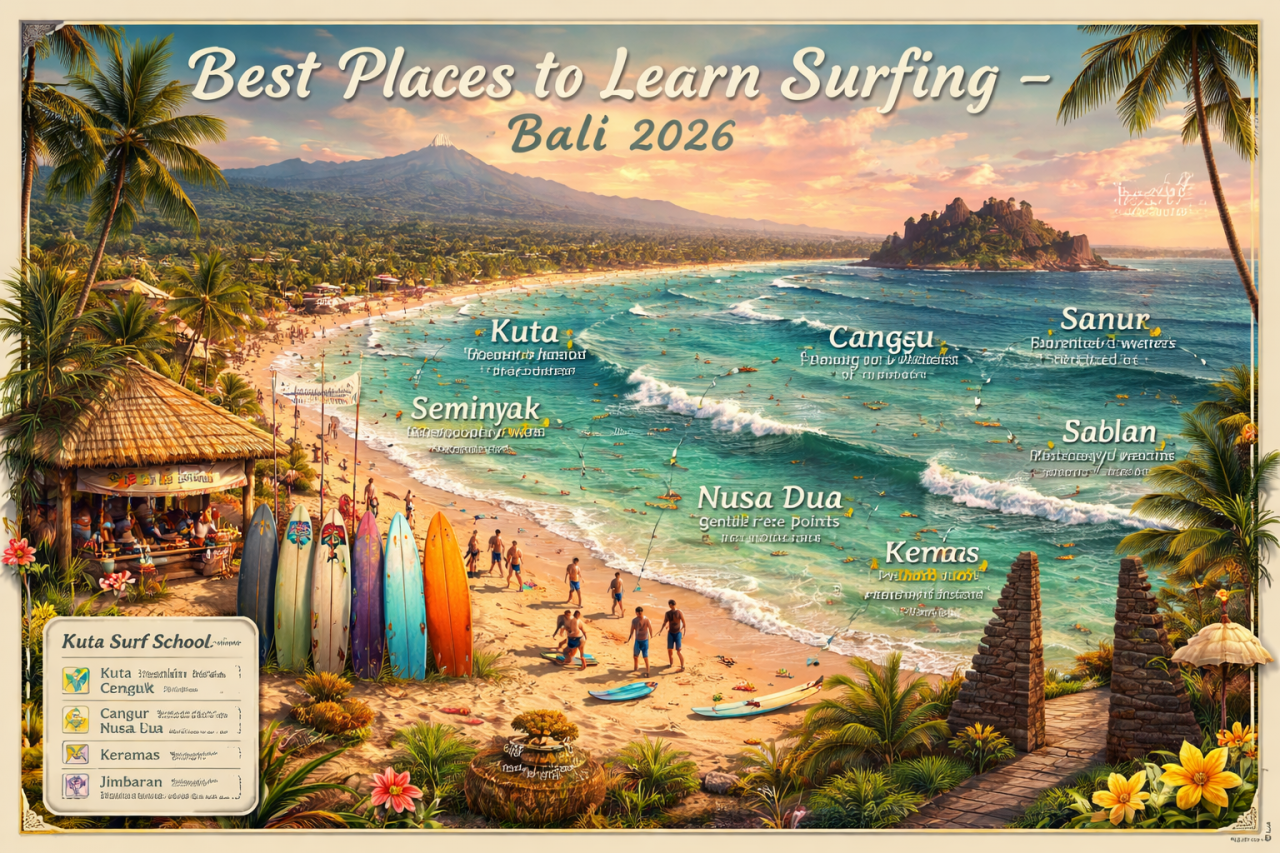
Bali is a living postcard — a place where the sea writes sonnets on the sand and every coconut tree nods like an old friend remembering the names of passing travelers. Learning to surf here in 2026 is less about conquering an element and more about joining a long conversation between reef, wave, and human patience. This guide weaves practical tips, cultural notes, sustainable-minded choices, and a few offbeat recommendations to make your surf-learning chapter in Bali both safe and soulful.
Why Bali in 2026? A Short Prelude
Bali’s surf culture has matured into something respectful and resilient. Communities and local schools have embraced sustainable practices, reef-safe sunscreens are the norm in many beach shacks, and several surf programs now support coastal cleanups and children’s lessons. For beginners, the island still offers forgiving whitewater, friendly local instructors, and a soundtrack of gamelan and laughter that makes every wipeout feel like part of the journey.
What to Pack for a Beginner Surf Trip
- Reef-safe sunscreen and a light long-sleeve rash guard to protect from both sun and coral.
- A soft-top beginner board or lesson rental; many schools provide boards and rashguards.
- Quick-dry clothing, a travel first-aid kit, and biodegradable toiletries for eco-conscious stays.
- Respectful attitude: small gifts, a greeting in Bahasa Indonesia (“selamat pagi” for morning), and a readiness to learn local surf etiquette.
Kuta Beach — The Classic Beginner Playground
Kuta Beach remains the quintessential place to start. Its wide sandy shore and steady whitewater waves make it forgiving for first attempts.
- Why go: Gentle waves, numerous surf schools, and easy access to accommodations and cafés.
- Tip: Choose lessons that emphasize ocean awareness — timing and reading waves matter more than popping up.
- Where to find it: You can search for it on Google Maps by typing: Kuta Beach
Legian Beach — Slightly Quieter, Still Friendly
Just north of Kuta, Legian offers similar conditions with fewer crowds in the early mornings.
- Why go: Still forgiving for beginners, with a slightly more relaxed vibe and family-friendly warungs (local cafés).
- Local note: Sunset here is communal; surfers and locals gather, swap tips, and sometimes pass a plate of satay.
- Where to find it: You can search for it on Google Maps by typing: Legian Beach
Seminyak — Beginner Lessons with a Boutique Twist
Seminyak blends surf lessons with hip cafés and sustainable boutiques. If you want your surf day to end with an organic smoothie bowl, Seminyak is for you.
- Why go: Quality instructors who often tailor lessons to individual learning styles and modern amenities nearby.
- Sustainability angle: Look for schools that offer reusable wetsuit liners and contribute to beach cleanups.
- Where to find it: You can search for it on Google Maps by typing: Seminyak Beach
Canggu — Trendy Yet Genuine Lessons for All Levels
Canggu has grown up since the early 2010s but still keeps a laid-back heart. The black-sand stretches near Batu Bolong are a magnet for learners.
- Why go: Lots of surf schools, strong beginner zones, and a community vibe that welcomes questions from every level.
- Cultural note: Between two sets of lessons, wander to nearby cafés and listen to live acoustic sets — surf stories make the best background music.
- Where to find it: You can search for it on Google Maps by typing: Batu Bolong Beach, Canggu
Jimbaran — Calm Waters and Sunset Feasts
For learners who prefer calm waters and cultural treats post-surf, Jimbaran Bay offers gentle waves and some of Bali’s most famous seafood dinners on the sand.
- Why go: Shallow, easy waves and the promise of a sunset grilled fish dinner — a humble ritual after a day of learning.
- Practical tip: Book lessons in the morning; evenings are prime time for local fish cafés, which can get busy.
- Where to find it: You can search for it on Google Maps by typing: Jimbaran Bay
Sanur — The Gentle School for Careful Learners
Sanur’s protected reef and slower waves favor those taking a careful, methodical approach to learning.
- Why go: Calm seas, good for children, and a slower pace that lets you absorb surf technique and ocean knowledge.
- Community note: Sanur is where many families and elders gather; respect the rhythm and keep noise low near sacred spots.
- Where to find it: You can search for it on Google Maps by typing: Sanur Beach
Nusa Dua — Smooth Entry to Water Confidence
Nusa Dua is known for resort-level comfort and tranquil, shallow waters ideal for absolute beginners.
- Why go: Predictable conditions and professional instructors who often work with hotel guests and families.
- Sustainability angle: Some resorts in Nusa Dua collaborate with marine conservation groups — ask if your lesson supports local coral projects.
- Where to find it: You can search for it on Google Maps by typing: Nusa Dua Beach
Balangan and Bingin — When You’re Ready for a Step Up
These Bukit Peninsula beaches are better suited for students transitioning from whitewater to unbroken waves. They offer a taste of reef surfing with manageable peaks when conditions are mild.
- Why go: Soft reef breaks that reward timing and a bit of bravery; beautiful clifftop views for post-surf contemplation.
- Local etiquette: Respect local lineups and the reef — wear booties if the school recommends them.
- Where to find them: You can search for it on Google Maps by typing: Balangan Beach; Bingin Beach
Nusa Lembongan & Nusa Ceningan — Island Lessons with Turquoise Dreams
A short boat ride away, these small islands provide quieter water and fewer crowds. Lembongan’s mellow spots are excellent for concentrated learning.
- Why go: Clear water, friendly island instructors, and the joy of combining surf with snorkeling and seaweed farmer visits.
- Travel tip: Plan a day trip or an overnight stay to avoid rushing your progress.
- Where to find them: You can search for it on Google Maps by typing: Nusa Lembongan; Nusa Ceningan
Choosing the Right Surf School: Questions to Ask
- Do instructors hold recognized certifications (e.g., ISA) and are they trained in first aid?
- Does the school provide appropriate beginner equipment — soft-top boards, leg ropes, helmets for children?
- Is there a clear focus on ocean safety and reef protection?
- Does the school participate in local conservation or community programs?
Bring these questions up before booking; responsible schools welcome them and will often point to their eco-initiatives with pride.
Cultural Notes and Surf Etiquette
Surfing in Bali is always framed by local customs. Greet with a smile and a “selamat pagi” in the morning. If you paddle past a line of locals, respect the queue and never take someone’s wave intentionally.
Temples like Pura Tanah Lot and Pura Ulun Danu Bratan are staples of Balinese life; treat sacred places and local rituals with reverence when you’re traveling between breaks. You can search for it on Google Maps by typing: Pura Tanah Lot; Pura Ulun Danu Bratan
Food, Warungs, and Post-Surf Rituals
- Warung Makan (local food stalls) are where breakfast nasi goreng becomes a legend. Try local fruit, grilled fish, and turmeric lattes.
- For a memorable seaside dinner, many surfers swear by Jimbaran’s beachside seafood cafés after an evening surf session.
- Coffee culture in Canggu and Seminyak pairs well with surf debriefs: discuss wipeouts, technique, and that cloud-sliced sunset.
If you’re searching for specific places, look them up on Google Maps by typing the official warung or café name — locals are usually delighted to point you to their favorites.
Sustainable Surf Travel in Bali
Bali’s future waves depend on present choices. Use reef-safe sunscreen, support schools that employ local instructors, minimize single-use plastics, and participate in one beach cleanup during your stay.
Consider donating gear to community programs if you upgrade your kit — used boards and wetsuits often find second lives with eager local kids.
A Few Local Recommendations and Places to Search
- Kuta Beach — search on Google Maps by typing: Kuta Beach
- Legian Beach — search on Google Maps by typing: Legian Beach
- Seminyak Beach — search on Google Maps by typing: Seminyak Beach
- Batu Bolong Beach, Canggu — search on Google Maps by typing: Batu Bolong Beach, Canggu
- Jimbaran Bay — search on Google Maps by typing: Jimbaran Bay
- Sanur Beach — search on Google Maps by typing: Sanur Beach
- Nusa Dua Beach — search on Google Maps by typing: Nusa Dua Beach
- Balangan Beach — search on Google Maps by typing: Balangan Beach
- Bingin Beach — search on Google Maps by typing: Bingin Beach
- Nusa Lembongan — search on Google Maps by typing: Nusa Lembongan
- Nusa Ceningan — search on Google Maps by typing: Nusa Ceningan
- Pura Tanah Lot — search on Google Maps by typing: Pura Tanah Lot
- Pura Ulun Danu Bratan — search on Google Maps by typing: Pura Ulun Danu Bratan
Final Thoughts: Learning as a Local Practice
To learn to surf in Bali is to enter a ritual that goes beyond technique. You learn to listen to the sea’s subtle syntax, to respect reef and ritual, and to share the boardline with locals whose memories are threaded with tides. Approach lessons with humility, curiosity, and a little humor — the kind that appreciates a spectacular fall as much as a triumphant ride.
In 2026, the best places to learn surfing in Bali are those that teach more than turns and pop-ups: they teach stewardship, storytelling, and the patient joy of becoming fluent in salt and sun. Take your lessons seriously, but don’t forget to laugh when you wipe out — the sea, after all, is the island’s oldest conversationalist.

Comments (0)
There are no comments here yet, you can be the first!