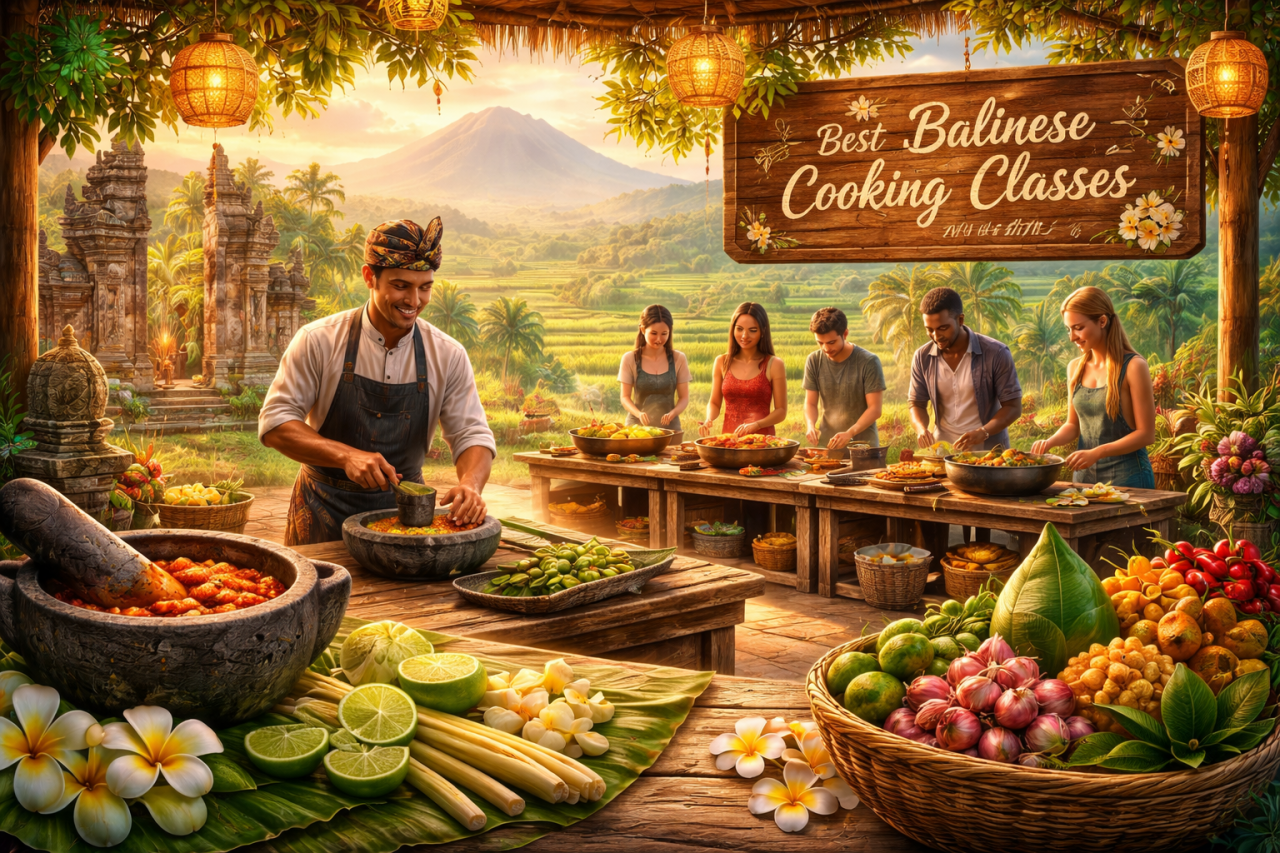
Bali is a place of color, clove-scented markets, and kitchens that sing with turmeric and coconut. Think of a cooking class in Bali as a kind of cultural handshake: you learn to chop like a local, listen to stories about offerings and family recipes, and taste food so fresh it remembers the morning. I write this with a little Croatian nostalgia — the way Balinese curry layers flavors reminds me of my grandmother’s fish stews on the Adriatic — and a nudge to step off the tourist track into kitchens where the real soul of the island is served.
Why take a Balinese cooking class?
A cooking class in Bali is more than a lesson in recipes. It’s an intimate look at rice-paddy rhythms, temple-day calendars, and the philosophy of balance that underpins Balinese cuisine. Food here is tied to religion and family, and many classes begin with a visit to a morning market or a ceremony of offerings. You’ll learn technique, ingredients, and stories — and you’ll eat very well.
How to choose the right class for you
Consider what you want: a fun half-day experience near Seminyak, a hands-on immersion in a rural village, or a luxury farm-to-table workshop. Practical questions matter: do you want a market tour included, are meals vegetarian-friendly, and how small are the groups? Look for classes with experienced Balinese cooks, transparency about ingredients, and reviews that mention authenticity rather than staged photo ops.
Top Balinese cooking classes to consider this year
Below are some excellent and widely recommended options, each offering a distinct flavor of Bali’s culinary scene. For places and temples mentioned, you can search for them on Google Maps by typing their full names.
Casa Luna Cooking School — Ubud
Casa Luna is legendary in Ubud for combining cultural context with tasty, reliable recipes. The class often includes a market walk and lessons in Balinese dishes like ayam betutu and lawar. The venue itself is warm and welcoming, and the instructors explain the meaning behind ceremonial foods.
You can search for it on Google Maps by typing: Casa Luna Cooking School Ubud
Paon Bali Cooking Class — Ubud
Paon Bali runs small, hands-on classes usually set in a traditional Balinese family compound. Expect to pound sambal in a mortar and learn the intricacies of satays and aromatic soups. The family atmosphere makes it feel more like cooking with relatives than attending a formal class.
You can search for it on Google Maps by typing: Paon Bali Cooking Class Ubud
Bumbu Bali Cooking School — Nusa Dua
Bumbu Bali is a favorite for those who appreciate depth and culinary storytelling. Founded by chef Heinz von Holzen, the school blends authentic Balinese recipes with excellent technique. It’s a great choice if you want a slightly more polished experience without losing authenticity.
You can search for it on Google Maps by typing: Bumbu Bali Cooking School Nusa Dua
Paon Bali at Sayan — River-facing village experiences
For an immersive experience that pairs scenic rice terraces with cooking, look for village-based classes in the Sayan area near Ubud. These often include visits to local farms and hands-on sessions in family kitchens, giving you a true sense of rural culinary life.
You can search for it on Google Maps by typing: Sayan, Ubud
Ibu Oka (Babi Guling) workshop — Ubud / Gianyar area
If your travels embrace Bali’s roasted-pig specialty, some workshops and demonstrations focus on babi guling (suckling pig) techniques and the spice pastes that make it famous. Note that these are not suitable for vegetarians.
You can search for it on Google Maps by typing: Ibu Oka Ubud
Cooking with locals in Sidemen — East Bali
Sidemen is a quieter, greener alternative to central Ubud. Cooking classes here often take place in family compounds and are paired with hikes or visits to local weavers. If you want a slower, more pastoral class that echoes the Adriatic’s rural charm, Sidemen is for you.
You can search for it on Google Maps by typing: Sidemen, Karangasem Regency
What you’ll typically learn
- How to use a mortar and pestle (ulek-ulek) properly for sambals and spice pastes.
- Identification and uses of local ingredients: galangal, kunyit (turmeric), daun salam, and kaffir lime leaves.
- The structure of a Balinese meal — spice base (bumbu), proteins, vegetables, and ceremonial sides.
- Techniques for satay, sambal matah, lawar, and coconut-based curries.
A sample day in a class — storytelling with flavor
Morning: A bright market visit where vendors balance baskets of red chilies and lemongrass. Expect bargaining lessons and tips on how to choose the freshest coconut.
Midday: Back to the kitchen for prep, pounding spice pastes and tasting raw ingredients. Expect laughs, a little steam, and the intoxicating aroma of toasted spices.
Afternoon: Cooking, plating, and a communal meal with helpful commentary on when certain dishes appear in temple ceremonies or family gatherings. You leave full and armed with recipes written in your own messy handwriting.
Practical tips and cultural etiquette
-
Respect temple days: some classes may pause or explain offerings used in rituals. If you visit a temple like Pura Taman Saraswati (Ubud), wear a sarong and sash; many sites require them.
You can search for it on Google Maps by typing: Pura Taman Saraswati Ubud -
Dress comfortably and be ready to get hands-on. Most schools provide aprons, but wear footwear that won’t mind a little coconut oil.
-
If you’re vegetarian, specify dietary needs in advance. Balinese cuisine is adaptable, but many classic dishes contain fish or pork.
-
Bring cash for tip jars and small purchases at the market. Vendors appreciate small change.
Hidden gems and offbeat experiences
If you want to channel your inner explorer, look for smaller, family-run classes in villages like Bangli, Tabanan, or the Munduk area. These are often promoted by local hosts rather than big agencies, and the recipes are sometimes the family’s closely guarded treasures. You’ll leave with more than a recipe — you’ll carry a story.
You can search for it on Google Maps by typing: Bangli Regency
You can search for it on Google Maps by typing: Tabanan Regency
You can search for it on Google Maps by typing: Munduk, Buleleng Regency
Pairing your class with nearby attractions
-
Ubud: Pair a class with visits to the Sacred Monkey Forest Sanctuary (you can search for it on Google Maps by typing: Sacred Monkey Forest Sanctuary Ubud) and a stroll along the Campuhan Ridge Walk.
-
Seminyak / Canggu: If you take a coastal class, reward yourself with sunset drinks on Seminyak Beach or a surf session in Canggu. You can search for them on Google Maps by typing: Seminyak Beach and Canggu Beach.
-
East Bali: Combine a Sidemen class with a visit to Tirta Gangga Water Palace for dramatic rice-terrace-and-pool photography. You can search for it on Google Maps by typing: Tirta Gangga Water Palace
Cost expectations and booking tips
Most half-day classes range from budget-friendly group sessions to premium private experiences. Expect to pay more for market tours, private sessions, or when transport from your hotel is included. Book in advance during high season (July–August and December–January), and read recent reviews for quality and authenticity.
Final taste — why this is worth the journey
A Balinese cooking class feeds more than your stomach. It feeds curiosity, a sense of connection, and a portable memory you can remake in your own kitchen. If the Adriatic taught me patience with seafood and a love of communal tables, Bali teaches bold spice, ritual, and generosity of the plate. Take a class, learn a few secret pastes, and return home with a jar of something fragrant and a head full of stories that will outlast any postcard.
Bon appétit — or, as you might hear in Bali during a cooking lesson, selamat makan.

Comments (0)
There are no comments here yet, you can be the first!