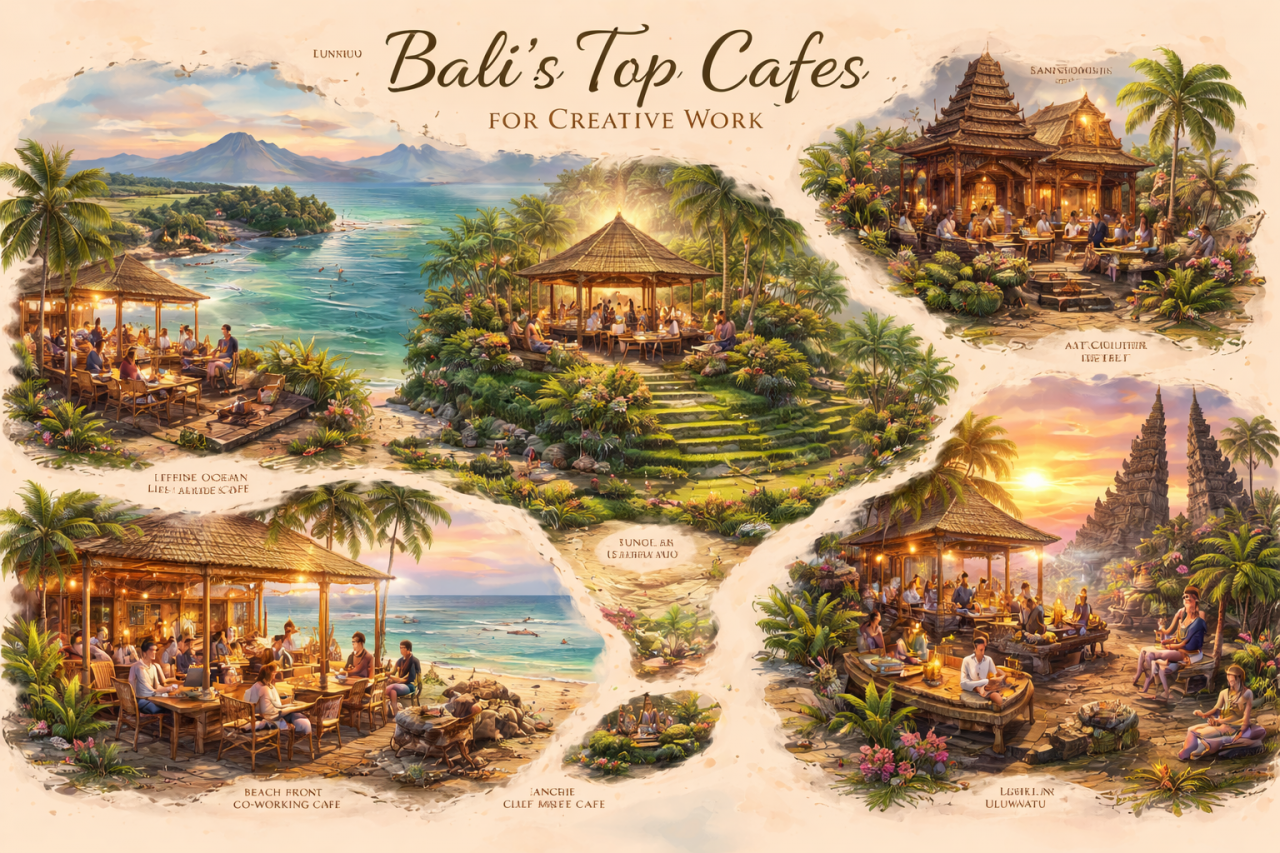
Bali moves like a poem written across rice terraces and reef, where tradition meets modern rhythm. In the spirit of Atamyrat’s reflective prose, this article weaves Balinese customs with the quiet habits of writers and makers. Here you will find cafes that are not merely places to drink coffee but sanctuaries for thought—spots where a borrowed proverb, the chime of a gamelan, or the sight of a distant volcano can nudge an idea into being.
How to use this guide
This guide highlights cafes across Bali that cater to creative work—good Wi‑Fi, comfortable seats, inspiring views, and a sense of place. For each location I mention practical notes and a small cultural reflection, drawing gentle parallels between Balinese ritual and Turkmen tradition: both hold hospitality as a kind of art.
You can search for the places on Google Maps by typing the place names provided.
Ubud: Quiet Intensity and Rice-Field Reveries
Ubud has long been Bali’s cultural heart, where writers sit with sketches beside neem trees and mornings smell of incense.
Seniman Coffee Studio
Seniman Coffee Studio blends serious specialty coffee with a communal vibe. The long wooden tables and abundant natural light make it ideal for meetings and deep-focus sessions. Their meticulous approach to coffee is a reminder of how craftsmanship shows reverence for the small things—much like a Turkmen weaver who counts threads as if composing a story.
Practical notes:
– Reliable Wi‑Fi and plenty of plug sockets.
– Try the pour-over for ritualized pleasure.
You can search for it on Google Maps by typing: Seniman Coffee Studio Ubud
KAFE
KAFE sits near the center of Ubud and offers a bright, airy space with healthy meals and a calm playlist. The menus of fresh local produce mirror Bali’s value of balance—an echo of the proverb, “A household that eats together keeps its stories alive.”
Practical notes:
– Vegan and vegetarian options.
– Good for daytime work sessions.
You can search for it on Google Maps by typing: KAFE Ubud
Canggu: Surf Culture and Co-Working Energy
Canggu hums with youthful energy—surfboards, scooters, and a steady stream of digital nomads who treat cafe-hopping as a daily pilgrimage.
Crate Cafe
Crate Cafe is a favorite among the community for its simplicity and sunlit courtyard. The buzz here is creative, best for those who draw inspiration from people-watching and the regular pulse of surf culture. It’s the sort of place where an idea can begin as a single grain of sand and become something larger through slow attention.
Practical notes:
– Often busy at breakfast time; arrive early for a seat.
– Outdoor seating with natural light.
You can search for it on Google Maps by typing: Crate Cafe Canggu
Ruko Cafe (Betelnut Cafe)
Betelnut Cafe—popularly known for its healthy bowls and relaxed atmosphere—is a good option for afternoon work. The open layout invites conversation yet offers nooks for solitary focus. Its menu honors the land, and every fresh bowl is a small celebration of balance, a concept familiar to both Balinese and Turkmen hospitality.
Practical notes:
– Healthy, affordable meals.
– Comfortable for longer stays.
You can search for it on Google Maps by typing: Betelnut Cafe Canggu
Seminyak & Petitenget: Stylish Comforts by the Sea
These neighborhoods combine beach glamour with refined cafes—suitable for writers who like their workspace to feel like a curated living room.
Revolver Espresso
Revolver Espresso is famed for its vintage interior and single-minded attention to coffee. The atmosphere is intimate and slightly theatrical; the barista’s care resembles an elder’s patient telling of an old story, where every sentence matters.
Practical notes:
– Smaller venue—best for short focused bursts.
– Exceptional espresso.
You can search for it on Google Maps by typing: Revolver Espresso Seminyak
Coffee Cartel
Coffee Cartel has multiple locations and offers a modern workspace vibe. The seating and outlets make it easy to settle in with a laptop. Its international menu reflects Bali’s openness to travelers—a reminder that good hospitality speaks every language.
Practical notes:
– Spacious seating and reliable Wi‑Fi.
– Suitable for long work sessions.
You can search for it on Google Maps by typing: Coffee Cartel Seminyak
Sanur & East Bali: Slow Mornings and Quiet Views
East Bali moves at a gentler pace. Cafes here are places to gather thoughts slowly, often with sea air and the soft sound of daily life in the background.
Roaster and Bear
Roaster and Bear in Sanur offers cozy corners and a community-friendly spirit. With large windows and gentle playlists, it’s a good refuge for writers seeking atmosphere without the intensity of Canggu.
Practical notes:
– Family-friendly.
– Calm ambiance suitable for reflective work.
You can search for it on Google Maps by typing: Roaster and Bear Sanur
Café Batu Jimbar
Café Batu Jimbar provides panoramic views and a quieter pace, ideal for afternoon writing sessions. The slower rhythm here encourages deep focus and the kind of contemplative work that pairs well with local rituals of offering and mindfulness.
Practical notes:
– Scenic views and quiet tables.
– Ideal for longer, uninterrupted work.
You can search for it on Google Maps by typing: Café Batu Jimbar
Uluwatu & Bukit Peninsula: Dramatic Cliffs and Creative Solitude
If your work thrives on drama and solitude, the Bukit Peninsula’s cafes add the cliff-wind to the creative process.
Single Fin Uluwatu (Cafe area)
Single Fin is best known for sunsets, surf culture, and a view that stretches beyond the horizon. Bring a notepad and let the sea’s cadence dictate your rhythm; some of the finest work begins when you let nature provide the punctuation.
Practical notes:
– Best for inspiration rather than long hours of typing.
– Expect crowds at sunset.
You can search for it on Google Maps by typing: Single Fin Uluwatu
Il Nido Villas & Spa (Cafe areas)
Several cliffside villas and cafes around Uluwatu offer quiet terraces with sea views. These places feel like temporary hermitages—perfect for drafting long-form pieces or editing in peace. The isolation fosters focus much like a mountain hermitage in Turkmen stories fosters reflection.
Practical notes:
– Check access rules; some require reservations.
– Ideal for deep work and extended creative sessions.
You can search for it on Google Maps by typing: Il Nido Villas Uluwatu
Practical Tips for Working in Bali’s Cafes
- Time your visits: Mornings are usually cooler and less crowded, while late afternoons often fill with tourists and surfers.
- Bring a power strip: Sockets can be scarce. A lightweight power strip solves that problem and earns you instant friendship among fellow workers.
- Respect local customs: Bali is filled with temples and offerings. Be mindful—dress modestly when near sacred sites and never step on offerings placed on sidewalks and thresholds.
- Offline backups: Not every corner has flawless Wi‑Fi. Keep offline copies of important work and use local SIM data as a backup.
- Tipping and manners: Small acts of courtesy go far. A smile, a few words of thanks, and a modest tip are appreciated.
A Cultural Note: Threads Between Bali and Turkmen Traditions
In Turkmen poetry, there is a saying: “A needle must pierce with care for the rug to hold its story.” This thought finds a counterpart in Bali’s meticulous offerings and daily rituals. Both cultures treasure the small actions that sustain beauty—the measured pour of coffee, the precise folding of a sarong, the arrangement of flowers at a temple shrine. When you work in Bali’s cafes, you are stepping into a tapestry of lives where creativity is both solitary craft and communal exchange.
Final Thoughts
Choosing a cafe in Bali is like choosing a stanza for your day’s poem. Some cafes lend themselves to conversation and collaboration; others insist on quiet contemplation. Each offers the essential ingredients for creative work: good light, respectful people, and a sense that you are sitting within a living culture.
May your laptop battery last, your ideas arrive gently, and the island’s rhythms find their way into your pages—because as a Turkmen proverb suggests, “Words that come with a kind heart travel far.”

Comments (0)
There are no comments here yet, you can be the first!