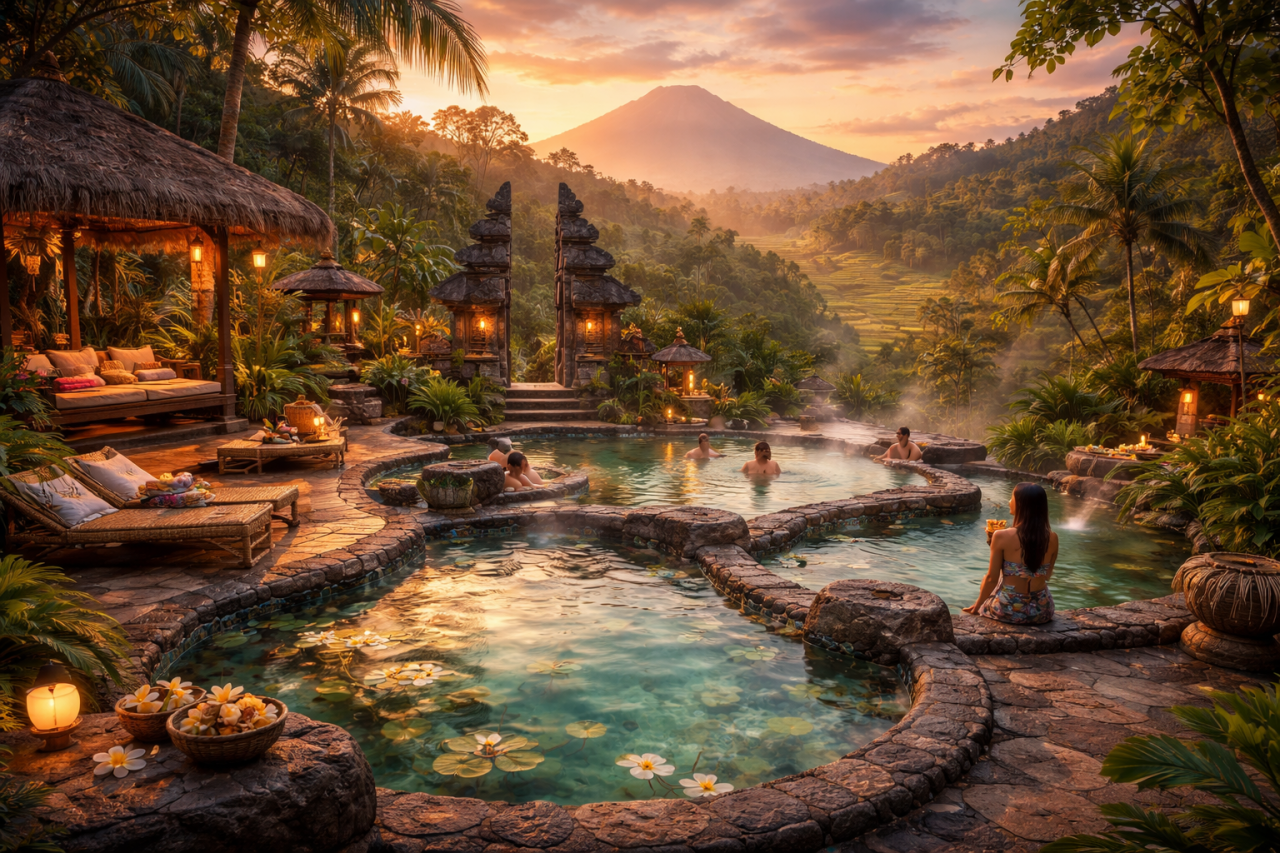
Bali is not only rice terraces, fiery sunsets and temple bells; sometimes the island breathes steam and the earth offers you a warm embrace. Hot springs are where geology meets ritual, and where the chatter of travel fades into the soft hiss of mineral water. Below I guide you through Bali’s most relaxing hot springs with a mix of poetry, practical tips and the kind of local anecdotes that make a plunge feel like a small pilgrimage.
Why Bali’s Hot Springs Matter
Hot springs in Bali are more than warm pools. They are intersections of volcanic geology, local tradition and slow travel. The waters are often mineral-rich and thought to have therapeutic properties, while the surroundings range from jungle pockets to rice-field panoramas. Visiting one is a gentle way to practice sustainable tourism: arrive quietly, respect local rules, and leave the site as you found it.
Quick tips before you go
- Bring a sarong or modest swimwear for temple-adjacent springs; some sites require sarongs for cultural respect.
- Avoid very hot water if you have heart conditions or are pregnant; test temperatures gently.
- Support local: buy snacks and crafts from onsite vendors rather than bringing packaged items.
- Leave no trace: Bali’s hot springs are fragile environments—don’t use soaps or shampoos in the pools.
Toya Devasya Hot Spring (Toya Devasya, Kintamani)
Tucked on the rim of Mount Batur’s caldera, Toya Devasya offers steam, views and a sense of volcanic intimacy. The pools look across Lake Batur toward a softly smoking mountain, and at sunrise the light can turn steam into a kind of watercolor. Locals often pair a soak here with a hike or a kayak on the lake.
You can search for it on Google Maps by typing: Toya Devasya Hot Spring (Toya Devasya)
Practicalities:
– Best time: sunrise or late afternoon to avoid midday crowds.
– Tip: Combine the visit with a short stroll along the lake path for quieter vistas.
Tirta Empul (Holy Spring of Tirta Empul, Tampaksiring)
Tirta Empul is half temple, half social bath, and wholly Balinese in spirit. This 11th-century water temple is known for ritual purification: visitors and worshippers move through carved stone showers and pools, following a sequence of springs to cleanse body and mind. Even if you don’t join the ceremony, the site is filled with chants, incense and solemn calm.
You can search for it on Google Maps by typing: Pura Tirta Empul
Practicalities:
– Dress respectfully: bring a sarong and sash.
– Tip: Observe first, then participate; a local guide can explain the ritual sequence.
Toya Bungkah Natural Hot Springs (Toya Bungkah, near Lake Batur)
A more rustic cousin to the polished resorts, Toya Bungkah offers natural hot pools with fewer frills and more atmosphere. The setting—often framed by smoke from village kitchens and the silhouette of Mount Batur—is quietly authentic. Expect mixed crowds: adventurers after a trek, families seeking warmth and couples looking for simple romance.
You can search for it on Google Maps by typing: Toya Bungkah Hot Springs
Practicalities:
– Bring cash: smaller vendors may not accept cards.
– Tip: Visit on a weekday to avoid minibuses of tourists.
Air Panas Banjar (Banjar Hot Springs, North Bali)
Up in the north near Lovina, Air Panas Banjar is a cluster of warm pools tucked among palms and frangipani. There’s an old-world charm here: carved statues, subtropical greenery and water that feels like a gentle tonic. The site is compact, making it an ideal stop after dolphin-watching in Lovina.
You can search for it on Google Maps by typing: Air Panas Banjar Hot Spring
Practicalities:
– Best time: late afternoon after coastal activities.
– Tip: Enjoy a slow walk through the gardens before soaking.
Yeh Panes Hot Spring (near Singaraja)
Yeh Panes is a lesser-known spring that rewards seekers with solitude. The pools are small and set in quiet surroundings, making them a good choice for travelers seeking a meditative soak without the tourist trappings. It’s the sort of place where a conversation with a fisherman or an old villager can become the highlight of the visit.
You can search for it on Google Maps by typing: Yeh Panes Hot Spring
Practicalities:
– Not heavily commercialized—expect simple facilities.
– Tip: Pack a light towel and water shoes; paths can be rocky.
Banjar Hot Spring vs. Sekumpul Waterfalls — A One-Day Combo
For a day that balances relaxation and adventure, pair a morning trek to Sekumpul Waterfalls with an afternoon soak at Banjar Hot Springs. After the exhilaration of mossy trails and plunging water, the hot springs are restorative—a ritual of warm quiet to conclude the day.
You can search for it on Google Maps by typing: Sekumpul Waterfall (Air Terjun Sekumpul)
Practicalities:
– Start early for Sekumpul to avoid heat and crowds.
– Bring dry clothes to change into for the hot spring visit.
Sustainable Practices at Hot Springs
The way we bathe leaves more than warmth on the skin. Respecting local customs and ecosystems matters:
– Use biodegradable sunscreen if you plan to swim.
– Avoid soaps or shampoos in natural pools.
– Respect dress codes and photography rules inside temple complexes.
– Support local businesses by buying snacks, refreshments or small crafts from vendors.
When to Visit — Season and Timing
Bali’s dry season (April to October) offers more predictable access to mountain springs and clearer views of volcanic ridges. However, the wet season (November to March) can fill the countryside with greening rains and fewer tourists. Morning and late afternoon are ideal for softer light and balanced temperatures; midday tends to be busier.
Final Thoughts: Slow Down Like a Banyan Tree
Soaking in Bali’s hot springs is an exercise in unhurried attention: the steam, the stone, the ritualized rhythms of local life. Each spring is a chapter—some polished, some humble—but all offer a gentle reorientation to time. Treat them as cultural sites, not mere amenities. Respect the waters, listen to the surrounding life, and leave feeling a little lighter, like laundry flapping in a tropical breeze.
Useful searches to plan your trip:
– Toya Devasya Hot Spring (Toya Devasya)
– Pura Tirta Empul (Tirta Empul)
– Toya Bungkah Hot Springs
– Air Panas Banjar Hot Spring
– Yeh Panes Hot Spring
– Sekumpul Waterfall (Air Terjun Sekumpul)
May your springs be warm, your sarong tidy and your journey threaded with small, joyful surprises.

Comments (0)
There are no comments here yet, you can be the first!