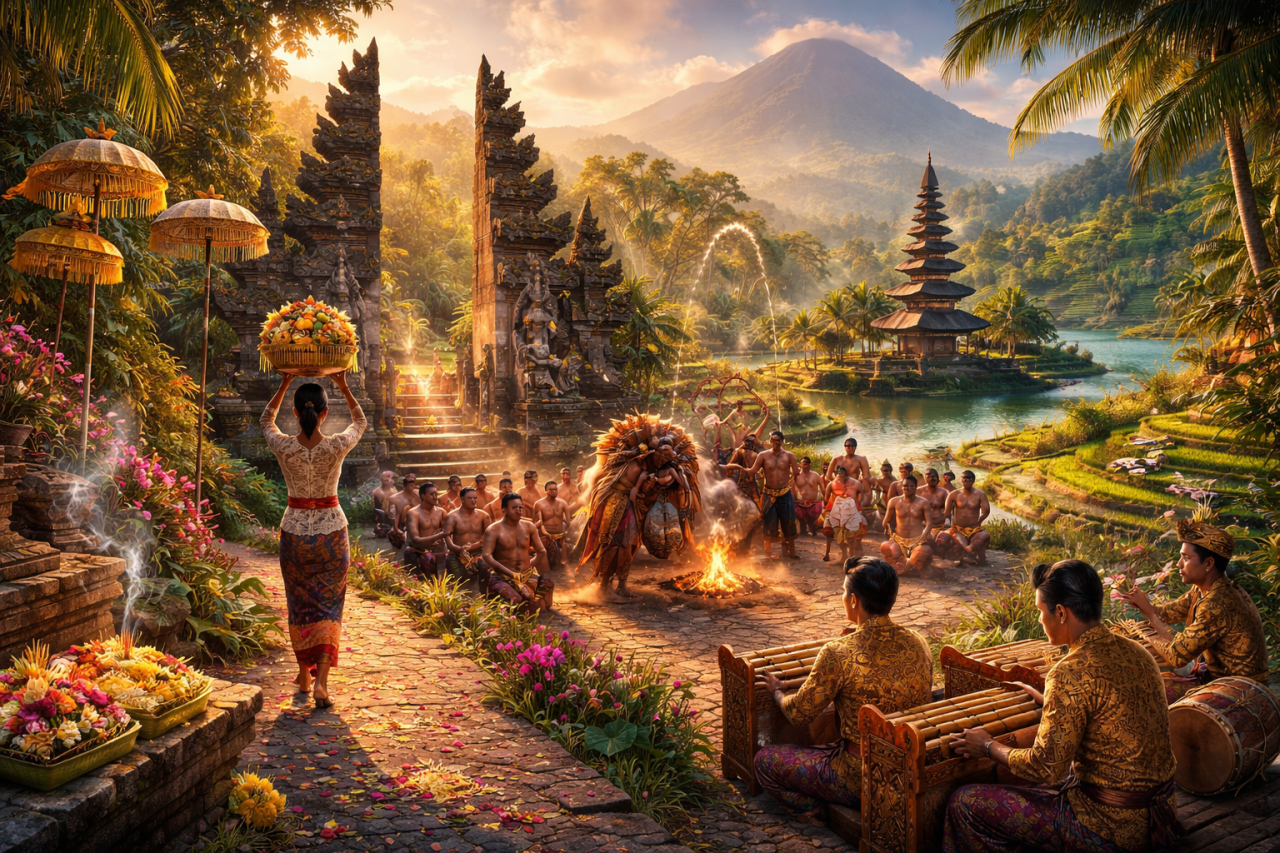
Bali teems with rituals, rice terraces, and coastal villages that feel alive with tradition—like stepping into a living postcard that adds new chapters every day. Drawing from Zvjezdan’s eye for vivid scenes and practical tips, this article blends storytelling, humor, and advice to help you discover Bali’s cultural heart. Expect offbeat treasures, temple blessings, local flavors, and comparisons that sometimes wink toward the Adriatic coast.
Morning: Offerings, Rice Terraces, and Coffee Rituals
Start your day early; Bali’s soul prefers dawn light and incense. The island wakes slowly, but the ceremonies begin at sunrise.
Canang Sari at a Local Warung
You’ll see little square offerings called canang sari everywhere—on doorsteps, scooters, and tiny altars. They’re made from flowers, rice, and a prayer tucked inside. Sit at a local warung (small family eatery) and watch life unfold while eating nasi goreng.
- Tip: Be respectful when photographing offerings; ask permission if someone is performing a private ritual.
You can search for nearby warungs on Google Maps by typing: Warung Bali (or the specific warung name you find).
Jatiluwih Rice Terraces (UNESCO Cultural Landscape)
Jatiluwih offers sweeping emerald terraces that feel like Croatia’s terraced vineyards transposed into tropical light. The Subak irrigation system, a UNESCO-listed cultural landscape, explains Bali’s cooperative farming traditions.
- What to do: Walk the terrace paths, learn about subak with a local guide, and enjoy a slow lunch overlooking the fields.
You can search for it on Google Maps by typing: Jatiluwih Rice Terrace.
Kopi Luwak—Beyond the Gimmick
Coffee culture in Bali is real and layered. If you want authenticity over spectacle, visit a small family coffee farm outside Ubud or in the Kintamani region to learn about roasting and tasting techniques.
- Tip: Ask for Arabica single-origin and try kopi tubruk (hand-brewed) for a genuine local experience.
Search on Google Maps for coffee farms in Ubud or Kintamani for options.
Midday: Temple Visits with Respect and Stories
Bali’s temples are windows into the island’s Hindu practices. Each has a personality—some are theatrical, others contemplative.
Pura Tirta Empul (Holy Water Temple)
Tirta Empul is famed for its purification springs. Locals travel here for ritual baths, and tourists can join respectfully. There’s something deeply human about watching people cleanse, pray, and leave lighter.
- Practical: Bring a sarong (or rent one at the entrance), and observe the order of the pools. Leave your jewelry on shore.
You can search for it on Google Maps by typing: Pura Tirta Empul.
Pura Ulun Danu Beratan (Lake Temple)
Set against Lake Bratan, Pura Ulun Danu Beratan’s floating-like pagoda feels like a misty poem. Its water-centered ceremonies highlight how Balinese spirituality intertwines with nature.
- Best time: Early morning for mist and softer light.
You can search for it on Google Maps by typing: Pura Ulun Danu Bratan.
Lesser-Known: Pura Luhur Batukaru
If you want fewer crowds, head to Pura Luhur Batukaru near the slopes of Mount Batukaru. The mossy stone and forested approach make it a meditative stop, perfect after trekking.
You can search for it on Google Maps by typing: Pura Luhur Batukaru.
Afternoon: Hands-On Crafts and Village Life
Bali’s artisans turn tradition into tangible beauty. Spending an afternoon with makers feels like discovering family heirlooms in the process of being born.
Celuk and Mas: Goldsmiths and Woodcarvers
In Celuk (silversmiths) and Mas (woodcarvers), you can watch craftsmen hammer and chisel for hours, crafting pieces that would make Dalmatian goldsmiths nod in approval.
- How to approach: Visit small workshops, ask about techniques, and consider commissioning a custom piece to support local skills.
You can search on Google Maps by typing: Celuk Village (for Celuk) and Mas Village (for Mas, Ubud).
Batubulan and Barong Dance Workshops
Barong dance is Bali’s epic of good vs. evil, performed with lion-like costumes and theatrical flair. Look for community workshops where you can try simple choreography or mask-making under local guidance.
You can search for Barong dance workshops on Google Maps by typing: Barong Dance Workshop Batubulan.
Evening: Ceremonies, Cuisine, and Sunset Rituals
Bali’s evenings hold slow, sensory-rich moments—temples glow, offerings scent the air, and food tastes like home with a tropical twist.
Kecak Dance at Uluwatu Temple
Watching the Kecak dance at Uluwatu Temple is dramatic: a human chorus creates rhythm while the sunset paints the cliffs. The performance is theatrical and deeply rooted in mythic storytelling.
- Note: Uluwatu is on a cliff—be mindful of strong winds and watch your belongings (monkeys are clever).
You can search for it on Google Maps by typing: Uluwatu Temple (Pura Luhur Uluwatu).
Local Feasts: Balinese Babi Guling and Lawar
Babi guling (suckling pig) is a ceremonial dish that became a regional specialty in parts of Bali. Lawar—spiced vegetable or meat salad—often accompanies festive meals. Seek local warungs in Gianyar or Denpasar to taste these dishes with authentic flavours.
- Tip: If you don’t eat pork, many villages offer ayam betutu (slow-cooked spiced chicken) as a ceremonial alternative.
Search for babi guling warungs in Gianyar or search for “Ayam Betutu” on Google Maps in Ubud or Gilimanuk.
Night: Stay with a Local Family or Join a Ceremony
The most unforgettable cultural moments often come from personal invitations.
Homestays and Community Stays
Staying in a homestay in a village such as Tenganan, Penglipuran, or a lesser-known kampung near Ubud gives you glimpses into daily rituals—from morning offerings to evening gamelan practice.
- What to expect: Shared meals, conversations about family history, and participation in small ceremonies.
You can search for homestays in Tenganan Village or Penglipuran Village on Google Maps.
Melukat and Traditional Healing
Melukat purification ceremonies and traditional Balinese healers (balian) offer spiritual and cultural insights beyond tourism. Approach these experiences with humility and guidance from a trusted local host.
- Advice: Always ask community members for referrals to reputable practitioners.
Search Google Maps for traditional healers or ask your homestay host for recommendations.
Offbeat Cultural Gems
Zvjezdan loves pointing out quieter corners that still sing with authenticity. These are places where you might feel more like an invited guest than a spectator.
- Sidemen Valley: Walk rice terraces with a local family and learn about weaving patterns that echo generational stories. Search for Sidemen Valley on Google Maps.
- Tenganan Pegringsingan Village: An ancient Bali Aga village known for ikat weaving and distinct customs. You can search for it on Google Maps by typing: Tenganan Pegringsingan.
- Penglipuran Village: A meticulously preserved traditional village with tidy lanes and warm greetings from residents. You can search for it on Google Maps by typing: Penglipuran Village.
Practical Tips for Respectful Cultural Travel
- Dress and decorum: Bring a sarong and sash for temple visits. Men and women should cover shoulders and knees in sacred spaces.
- Photography: Always ask before photographing ceremonies or people, and avoid drone use over temples without permission.
- Offerings: Do not step on canang sari or move them. Treat them as humming, tiny borders for spiritual life.
- Guides: Hire local guides and pay fair prices—this supports communities and gives you richer stories than guidebooks.
Final Thought: Bali’s Culture Is a Conversation
Bali’s authenticity isn’t a museum piece; it’s an ongoing conversation between land, gods, and people. Approach it like a curious guest—offer patience, ask questions, and bring humor when things go delightfully sideways. You’ll leave with more than photos: you’ll carry stories, flavors, and a quiet sense of connection that lingers like incense in the air.
Safe travels, enjoy the ceremonies, and don’t forget to compare that last rice terrace to some Croatian cliffside view—you might find more in common than you expect.

Comments (0)
There are no comments here yet, you can be the first!