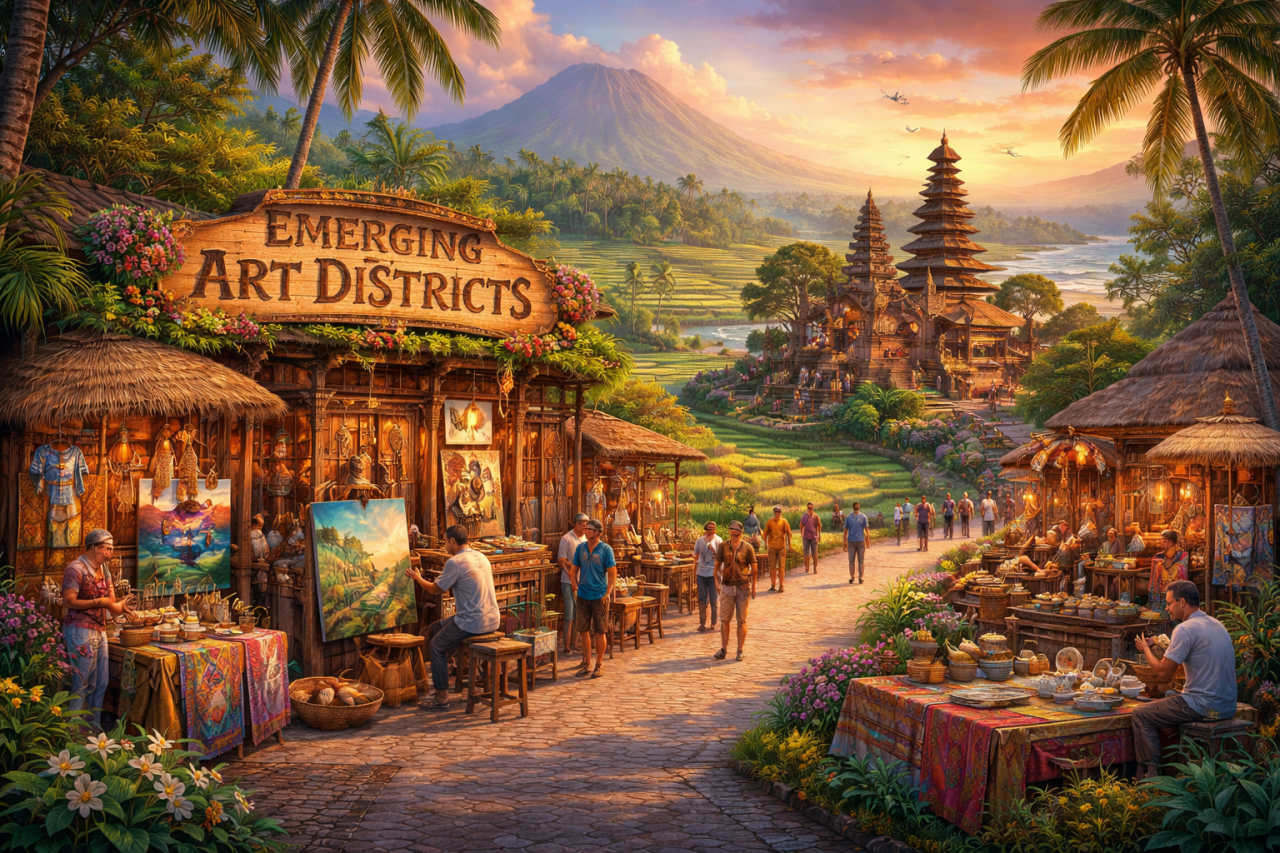
Bali has long been a siren for painters, photographers, and curious souls. Lately, however, the island’s creative heart is redrawing itself: vibrant new art districts are buzzing with galleries, ateliers, street murals, community studios, and cafés where coconut lattés arrive with an artist’s signature. In the spirit of Zvjezdan — part storyteller, part practical traveler with a nod to the Adriatic — this article takes you beyond Ubud’s teak-carved postcards to neighborhoods where Bali’s present-day culture is being painted, molded, and performed.
Why Bali’s Art Scene Is Evolving Now
Bali’s art has always evolved through trade, tourism, and local tradition. Today’s shift springs from a mix of local young creators, returning Balinese from abroad, resident expatriates, and a global audience eager for contemporary work rooted in place. Affordable spaces, community-driven projects, and an appetite for experimental expression have turned forgotten warehouses and rice-field margins into creative hubs.
There’s also a practical reason: as mass tourism matures, visitors seek authenticity and depth. These emerging districts offer both — artworks that speak to local stories and cultural crossovers that feel honest, not manufactured.
Seminyak and Kerobokan: Galleries with a Nightlife Beat
Seminyak and neighboring Kerobokan have long been associated with style and nightlife. Recently, that aesthetic energy has channeled into contemporary galleries and pop-up exhibitions.
- Seminyak’s boutique galleries now pair exhibitions with fashion shows and DJ sets, making art viewings part of a night out.
- Kerobokan has quietly become home to artist studios and small creative incubators where ceramics and experimental sculpture meet daytime workshops.
You can search for specific venues on Google Maps by typing: Seminyak, Kerobokan.
H3: What to See and Do in Seminyak/Kerobokan
– Attend an opening night at a boutique gallery and watch locals and expats mingle over coconut cocktails.
– Look for studio open days in Kerobokan — these are often marketed through local Instagram communities.
Canggu: Street Art, Co‑working, and Collective Energy
Canggu feels like Bali’s youthful creative district: surf culture, rice-field cafés, and murals that stretch across old shophouses. Artists here blend traditional motifs with street-art techniques, making alleyways feel like open-air museums.
- Expect to find mural trails around Batu Bolong, Berawa, and Pererenan.
- Shared studios and artist residencies regularly host community events and skill-sharing sessions.
You can search for it on Google Maps by typing: Canggu.
H3: Practical Tips for Canggu
– Walk or cycle to explore murals; many works are clustered but easy to miss if you drive too fast.
– Visit local cafés that double as mini-galleries — they’re great for spotting emerging talent and picking up zines.
Ubud Reinvented: Beyond Tourist Craft to Contemporary Practice
Ubud’s reputation as the island’s cultural heart remains intact, but its artistic identity is expanding. Beyond traditional wood carving and dance, Ubud hosts contemporary galleries, artist talks, and experimental performance spaces.
- Look for contemporary spaces that curate Balinese artists alongside international names.
- Artist exchanges and residencies here often result in unexpected multimedia shows.
You can search for it on Google Maps by typing: Ubud.
H3: Insider Ubud Suggestions
– Time your visit to coincide with gallery openings or artist talks for deeper context.
– Explore lesser-known museums and private collections tucked down quiet lanes; they often house surprising works.
Denpasar: The Local Pulse and Cultural Institutions
Denpasar — often skipped by tourists — is a vital place to feel Bali’s lived culture and emerging art scene. The city hosts public art projects, community theater, and municipal galleries that showcase local voices.
- Denpasar’s contemporary scene reflects everyday life and regional concerns, offering a different perspective than tourist hubs.
- Cultural centers stage traditional performances alongside new works, highlighting the island’s artistic continuity.
You can search for it on Google Maps by typing: Denpasar.
Emerging Micro-Districts: Sanur, Sidemen, and Amed
Outside the main creative hubs, smaller towns are nurturing artists too. Sanur’s quieter seafront inspires painters; Sidemen’s rice terraces are a draw for textile artists; Amed’s skeletal fishing boats and volcanic views feed photographers and installation artists.
- These micro-districts offer intimate studio visits and art stays where you can learn directly from creators.
- Expect workshops that combine local crafts (weaving, dyeing, carving) with contemporary techniques.
You can search for it on Google Maps by typing: Sanur; Sidemen; Amed.
Notable Venues and Events to Put on Your Map
Rather than invent URLs, search these full official names on Google Maps or their official websites to get accurate times and addresses:
- Museum Puri Lukisan, Ubud — a classic starting point to contextualize modern Balinese art.
- Agung Rai Museum of Art (ARMA), Ubud — often hosts contemporary shows and educational programs.
- Blanco Renaissance Museum, Ubud — houses the distinctive work of Antonio Blanco and occasional contemporary crossovers.
- Bali Contemporary Art Gallery, Seminyak — look for rotating exhibitions and curated evenings.
- Threads of Life workshops (various locations) — for textile arts and traditional techniques taught by local artisans.
You can search for each by typing the full place name into Google Maps.
How to Experience the Scene Like a Local
- Time your visits for weekday mornings to chat with artists and curators in quieter moments.
- Join an artist-led workshop or residency talk to understand intent, materials, and local narratives.
- Learn a few Balinese or Indonesian phrases; even a small greeting opens doors in studios and markets.
- Support local by commissioning pieces, buying directly from makers, or donating to community art spaces.
Where to Eat, Drink, and Rest Between Galleries
Art districts are happiest when paired with good food and rest. Seek cafés that display local art, small restaurants that feel like living rooms, and guesthouses that host informal salon nights.
- Many cafés in Canggu and Seminyak function as gallery spaces; check their social pages for exhibition dates.
- Consider a homestay near SIDEMEN or Amed if you want immersive artistic encounters with rice-field vistas or coastal light.
Tip: For specific café or guesthouse names, search their full official names on Google Maps to ensure accurate directions and current opening hours.
A Croatian Twist: Adriatic Echoes in Bali
Zvjezdan’s perspective finds little parallels between Bali and Croatia: both coastlines write stories of fishermen and festivals, both islands prize community gatherings, and both landscapes contain pockets of unexpected solitude. In Bali, like along the Adriatic, art often springs from daily life — fishermen’s nets, village ceremonies, terrace-side conversations — and the best work captures that hum.
Walking a mural-lined lane in Canggu or visiting a studio near Ubud, you might feel like you’ve stepped into a Mediterranean atelier, where the sea (or rice paddy) becomes a palette and the sun a masterful spotlight.
Responsible Visiting and Cultural Respect
- Always ask before photographing people or inside private studios.
- Be mindful of rituals and sacred sites; even contemporary art can cross with sacred practices.
- Support fair pay for artists and workshops; avoid haggling that undermines artisans’ livelihoods.
Final Notes: How to Plan Your Art-Forward Bali Trip
- Choose a base and take day trips: Canggu for youthful street art, Ubud for curated contemporary practice, Seminyak/Kerobokan for gallery nightlife.
- Allow time for serendipity: some of the best discoveries happen when you follow a painted alley or a handwritten workshop flyer.
- Keep a small sketchbook or camera to record impressions. The real joy of Bali’s emerging art districts is how they invite you into the process, not just the finished piece.
Bali’s creative map is expanding, and its pulses are intimate, messy, and wonderfully human. Whether you’re hunting for a statement piece to hang at home or simply want to sip kopi sambil watching an artist glaze a ceramic bowl, these districts offer a warm, improvisational invitation. Search for the places mentioned by typing their full names into Google Maps, pack an open mind, and let the island’s new artistic neighborhoods surprise you.
Comments (0)
There are no comments here yet, you can be the first!