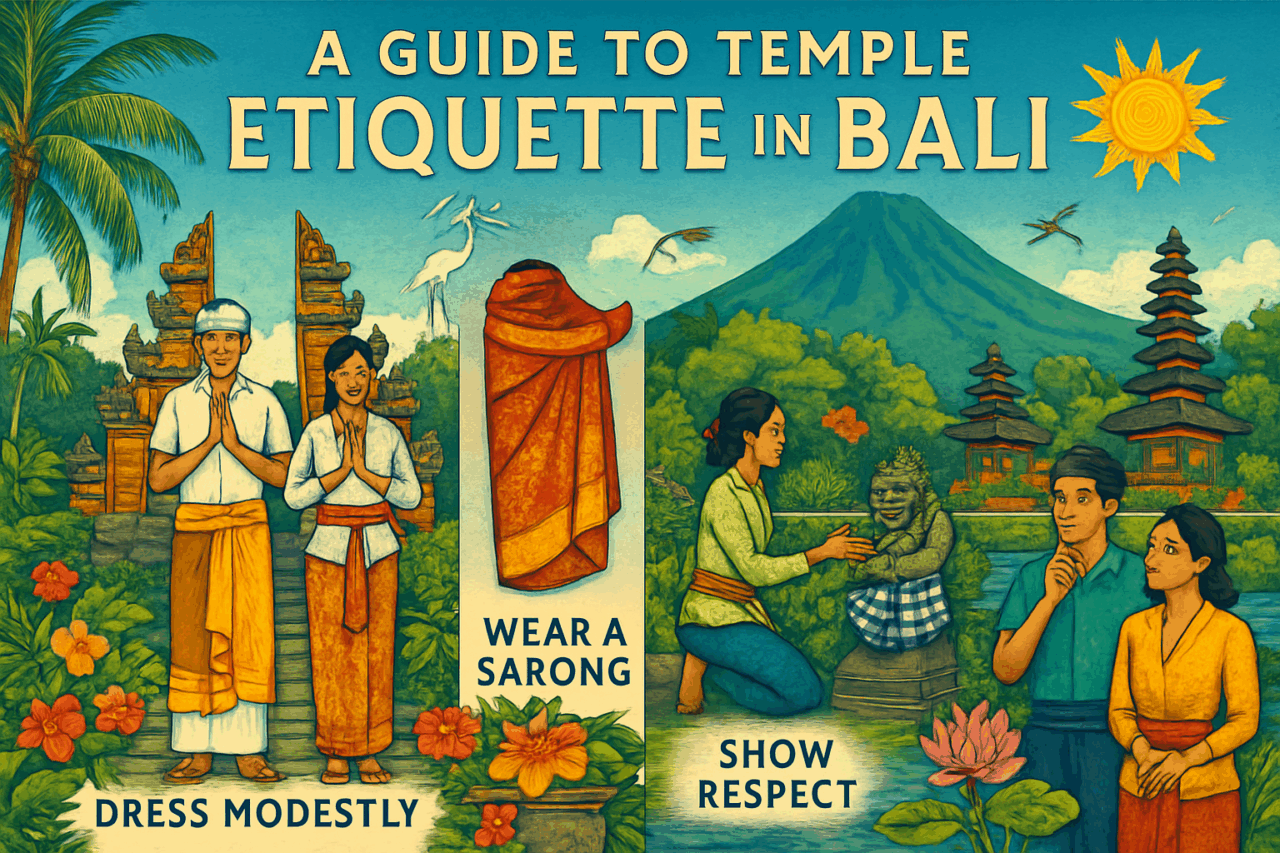
A Guide to Temple Etiquette in Bali: Enter the Island’s Sacred Heart with Respect
If there’s one thing that pulses at the core of Bali’s soul, it’s the rhythm of its temples. Step beyond the surf and smoothie bowls, and you’ll find yourself in a world where incense mingles with ocean breeze, and stone guardians watch over every entrance. But before you wander through the mossy gates of Pura Luhur Uluwatu or catch the sunset dance at Pura Tanah Lot, it’s essential to know: Bali’s temples are not just Insta backdrops—they’re living, breathing sanctuaries. Here’s your ultimate guide to temple etiquette in Bali, woven with stories, tips, and a little of that island magic.
Why Temple Etiquette Matters in Bali
In Bali, temples—known locally as pura—are everywhere. With over 10,000 scattered across the island, these sacred spaces aren’t just for ceremonies or festivals. They’re the heartbeat of daily life. Respecting temple etiquette isn’t just about following rules; it’s about honoring the spiritual traditions that make Bali, well, Bali.
Temple Dress Code: Sarong Up!
The first thing you’ll notice at any temple entrance is a colorful stack of sarongs and sashes. It’s not a fashion statement—it’s a sign of respect. Both men and women are required to wear:
- A sarong (kain kamben) wrapped around the waist, covering the legs.
- A sash (selendang) tied around the waist.
If you forgot to pack your own, don’t worry. At most major temples like Pura Besakih (search for “Pura Besakih” on Google Maps), you can borrow or rent a sarong and sash at the entrance for a small donation.
Pro tip: I once tried to sneak in with my beach shorts at Pura Tirta Empul (search for “Tirta Empul Temple” on Google Maps), only for a kindly temple guardian to point me toward the sarong stand. Lesson learned: When in Bali, always sarong up.
Mind Your Steps: Where You Can (and Can’t) Go
Temples are designed with a series of courtyards. The further in you go, the holier the space. As a visitor, you’re welcome in the outer and middle courtyards, but the inner sanctum (jeroan) is usually reserved for worshippers and priests.
- Stay behind barriers or watch for signs that indicate restricted areas.
- If you see a ceremony in progress—especially at famous spots like Pura Luhur Uluwatu (search for “Uluwatu Temple” on Google Maps)—give worshippers space. It’s mesmerizing to watch the kecak dance as the sun sets and the sea crashes below, but always keep a respectful distance.
Sacred Offerings: Look, Don’t Touch
Balinese daily life is a dance of devotion, and you’ll spot tiny leaf trays with flowers, rice, and incense—called canang sari—at every threshold. Step over them, never on them. These offerings are simple, beautiful expressions of gratitude to the gods and spirits.
I’ll admit, the first time I visited Taman Ayun Temple (search for “Taman Ayun Temple” on Google Maps), I accidentally nudged an offering with my camera bag. The gentle smile of the temple caretaker told me everything: “It’s okay, but please be careful next time.” Lesson two: Respect the little things—they carry big meaning.
Ritual Cleanliness: When Not to Enter
Balinese temple etiquette also honors cycles of purity. Certain conditions mean you should refrain from entering:
- Women during menstruation.
- Anyone who is “impure”—after a recent death in the family, or before certain purification rituals.
If you’re unsure, just ask. The Balinese are warm hosts, and will appreciate your consideration.
Silence is Sacred: Keep the Volume Low
Temples are places for prayer and reflection. While the tropical birds and gamelan music create a natural soundtrack, your voice shouldn’t compete. Keep conversations quiet and phones on silent mode.
At Pura Ulun Danu Beratan (search for “Ulun Danu Beratan Temple” on Google Maps), the mist rolls across the lake and the air hangs with a peaceful hush. It’s a good reminder: some moments are best experienced in silence.
No Climbing, No PDA, No Selfies on Altars
It goes without saying, but here’s a quick list of temple no-no’s:
- Don’t climb on statues or sacred structures—they’re not playgrounds.
- No public displays of affection.
- Selfies are fine, but never pose on altars or during ceremonies.
If in doubt, follow the locals’ lead.
A Few Essential Temples to Visit
Ready to soak up the island’s spiritual energy? Here are a few iconic temples to add to your Bali bucket list:
- Pura Luhur Uluwatu: Perched atop a dramatic sea cliff. Search for “Uluwatu Temple” on Google Maps.
- Pura Tanah Lot: Bali’s legendary sea temple at sunset. Search for “Tanah Lot Temple” on Google Maps.
- Pura Besakih: The “Mother Temple” on the sacred slopes of Mount Agung. Search for “Pura Besakih” on Google Maps.
- Tirta Empul Temple: Known for its holy spring water and purification rituals. Search for “Tirta Empul Temple” on Google Maps.
- Pura Ulun Danu Beratan: Floating temple on Lake Beratan, wrapped in early morning mist. Search for “Ulun Danu Beratan Temple” on Google Maps.
- Taman Ayun Temple: Surrounded by a lotus-filled moat and lush gardens. Search for “Taman Ayun Temple” on Google Maps.
Final Thoughts: Enter with Curiosity and Respect
Bali’s temples are more than historic sites; they’re living symbols of faith, community, and beauty. As you wander their ancient courtyards, remember: a little etiquette goes a long way. Dress modestly, walk mindfully, and soak up the magic with gratitude. The gods—and the locals—will thank you.
So, next time you’re island-hopping and spot a temple gate rising above the rice paddies, tie on your sarong, slow your step, and let Bali’s sacred heart reveal itself, one incense trail at a time.
Safe travels, and selamat jalan!

Comments (0)
There are no comments here yet, you can be the first!