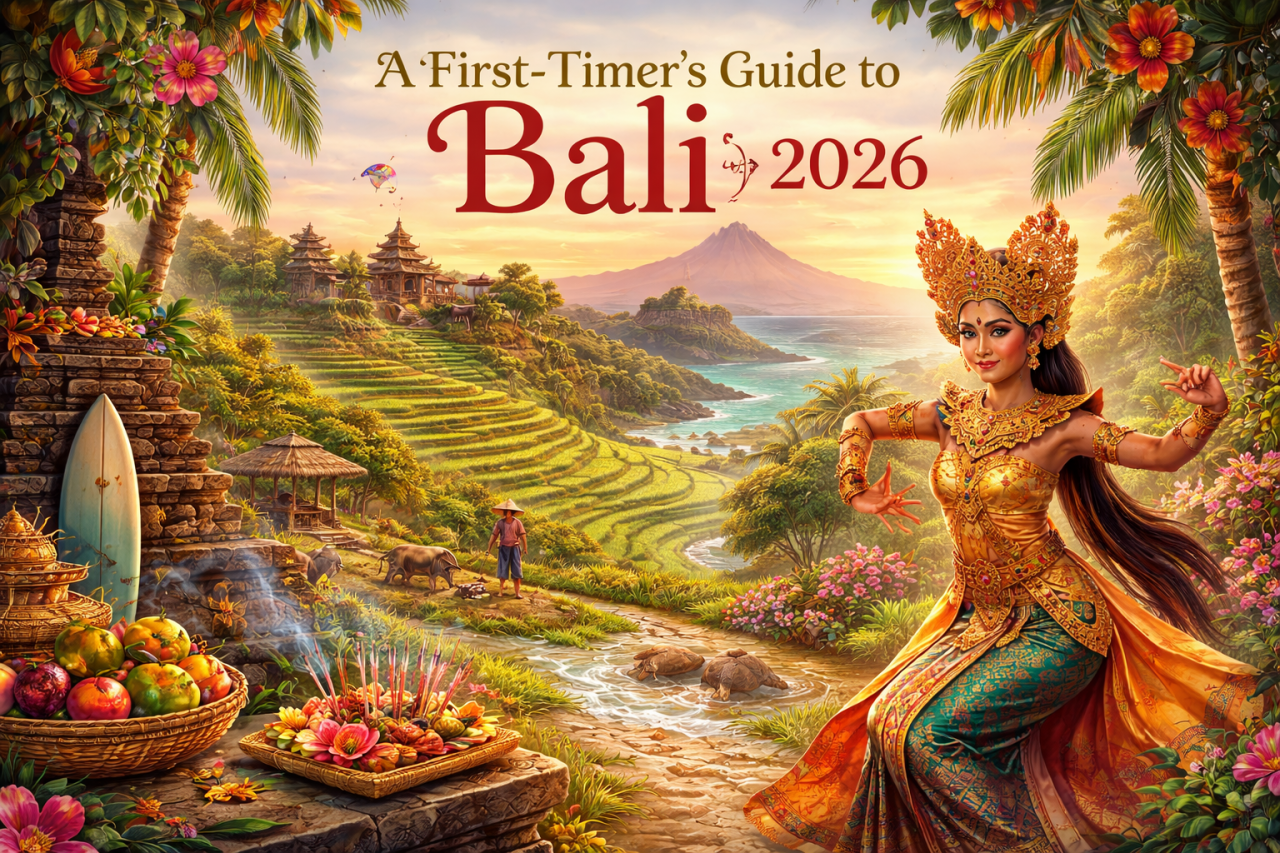
Bali in 2026 is a place that still feels magically familiar and freshly mysterious at the same time. Imagine the Adriatic’s blue meeting the Indian Ocean’s warmth, rice terraces rising like stepped amphitheaters, and temple gates framing dramatic sunsets—this is the island that charms easily and demands curiosity. I’ll take you through practical tips, must-see places, and a few unexpected detours, with the kind of storytelling I’d use over a strong espresso (or two) at a beachside café.
Getting There and Around
Landing at Ngurah Rai International Airport (Denpasar) is usually your first taste of Bali’s bustle. Immigration can be brisk, but give yourself at least an hour for queues and luggage. You’ll find currency exchange counters and SIM kiosks in the arrival hall—grab a local eSIM or a physical SIM for data; it makes maps and rides simple.
Getting around Bali is delightfully flexible. Rent a scooter if you’re confident—traffic is an acquired taste and scooters are the best way to reach hidden viewpoints. If not, hire a driver for the day; it’s affordable and drivers double as informal local guides. Rideshare apps operate in many areas, but in smaller villages it’s easier to book through your hotel or a local driver.
Best Times to Visit
Bali’s dry season (April to October) remains the most popular, offering sunny skies and calm seas. Shoulder months—April, May, September, October—combine good weather with fewer crowds. If you love rain-drenched lushness and dramatic skies, the wet season (November to March) can be atmospheric and far quieter, though expect afternoon showers.
Cultural calendars matter: Nyepi (Balinese Day of Silence) usually falls in March and is a unique experience—airports close for the day and the island observes silence. Check local dates in advance so you’re not stranded or surprised.
Where to Stay: Regions and Vibes
- Seminyak: Stylish boutiques, beach clubs, and sunset bars. Great for dining and nightlife.
- Canggu: Surf culture, rice fields, digital nomads. Think laid-back cafes and creative energy.
- Ubud: Heart of Balinese arts and rice terraces. Perfect for culture seekers and yoga lovers.
- Uluwatu / Bukit Peninsula: Clifftop views and world-class surf breaks—more secluded and dramatic.
- Amed / East Bali: Quiet black-sand beaches, snorkeling and diving gateways for a gentler pace.
Choose a base and plan day trips. Bali is compact but traffic can stretch distances into long drives.
Must-See Sights (and How to Enjoy Them)
Below are classics and lesser-trod treasures—each with a practical note so you can enjoy them like a curious local.
Temples and Spiritual Sites
- Pura Besakih (Mother Temple of Besakih) — perched on the slopes of Mount Agung, this is Bali’s most important temple complex. Arrive early to avoid crowds and dress respectfully (sarong and sash). You can search for it on Google Maps by typing: Pura Besakih.
- Pura Ulun Danu Bratan (Lake Bratan Temple) — a photogenic temple floating on Lake Bratan near Bedugul. Mornings are misty and beautiful; consider combining with the nearby botanical gardens. You can search for it on Google Maps by typing: Pura Ulun Danu Bratan.
- Pura Luhur Uluwatu — famous for cliffside sunsets and kecak dance performances. Watch your step near the cliffs and the cheeky macaques. You can search for it on Google Maps by typing: Pura Luhur Uluwatu.
Tip: Always bring a sarong or rent one at temple entrances; modest dress shows respect and keeps you out of awkward conversations.
Beaches and Coastlines
- Kuta Beach — lively, great for beginner surf lessons and people-watching. Expect a busy scene and sunset energy. You can search for it on Google Maps by typing: Kuta Beach.
- Seminyak Beach — chic beach clubs and polished sunsets. Ideal for a sunset cocktail and long walks. You can search for it on Google Maps by typing: Seminyak Beach.
- Padang Padang Beach — a small but iconic beach near Uluwatu with good waves and cinematic cliffs. Arrive early in high season. You can search for it on Google Maps by typing: Padang Padang Beach.
- Amed Beach — east Bali’s snorkel and diving hub with relaxed fishing-village vibes and black sand. Great for slower days. You can search for it on Google Maps by typing: Amed Beach.
Rice Terraces and Nature
- Tegalalang Rice Terraces (Ubud area) — iconic layered fields perfect for photos and short treks. Support local guides who maintain walking paths. You can search for it on Google Maps by typing: Tegalalang Rice Terrace.
- Jatiluwih Green Land — UNESCO-listed terraces that feel more expansive and less crowded than some central alternatives. Go for a longer walk or bike ride. You can search for it on Google Maps by typing: Jatiluwih Green Land.
- Sekumpul Waterfall — one of Bali’s most dramatic waterfalls, set among dense greenery. It requires a guided or well-prepared trek but rewards with fewer tourists and stunning cascades. You can search for it on Google Maps by typing: Sekumpul Waterfall.
Food and Drink: Where to Eat Like a Local
Balinese cuisine mixes spice, coconut, and aromatic herbs. Try babi guling (suckling pig) where appropriate, lawar (vegetable and meat salad), and nasi campur (mixed rice plates). Don’t shy from warungs—local roadside eateries often serve the best and most affordable food.
Recommended spots:
– Ibu Oka (Ubud) — legendary for babi guling; lines form early. You can search for it on Google Maps by typing: Ibu Oka.
– Menega Cafe (Jimbaran) — beachfront seafood dinners where you pick fresh fish and have it grilled to order; perfect at sunset. You can search for it on Google Maps by typing: Menega Cafe Jimbaran Beach.
– Warung Babi Guling Pak Malen (Seminyak) — a solid local choice if you’re near Seminyak and craving roast pork. You can search for it on Google Maps by typing: Warung Babi Guling Pak Malen.
Coffee culture in Bali is strong—try a kopi luwak if you’re curious, but be mindful of ethical sourcing. There are many specialty cafes serving fantastic single-origin Indonesian beans; Canggu and Ubud have particularly good coffee scenes.
Experiences That Go Beyond the Guidebook
- Attend a local ceremony (with permission): Balinese ceremonies are pageants of color, music, and devotion. Ask politely and observe respectfully—photographs are often fine but always check first.
- Learn a Balinese cooking class: Hands-on cooking classes introduce spices, local markets, and family recipes. It’s a delicious way to take Bali home with you.
- Volunteer or visit community projects: Many small initiatives in Bali focus on education, environment, and cultural preservation. Spending a morning with a project gives perspective and supports local communities.
- Sunrise trek up Mount Batur: Join a guided early-morning climb for a dramatic sunrise above the caldera—bring warm clothes and a good headlamp. Book with a reputable guide company for safety and environmental care.
- Snorkel or dive the USAT Liberty shipwreck in Tulamben: A top site for underwater history and marine life, accessible to divers and snorkelers alike. You can search for it on Google Maps by typing: USAT Liberty Shipwreck Tulamben.
Practical Tips and Cultural Notes
- Respect and dress: Balinese people are deeply spiritual. Cover shoulders and knees at temples and avoid public displays of anger. A friendly smile goes a long way.
- Bargaining: It’s part of the shopping culture in markets. Bargain kindly and know when to stop—if it’s a small local business, don’t push too hard.
- Money: Carry some cash for smaller purchases, warungs, and markets. ATMs are widespread but check withdrawal fees.
- Health: Stay hydrated, use sunscreen, and be cautious with street food if you have a sensitive stomach. Pharmacies are plentiful in tourist areas for common supplies.
- Environment: Bali’s beautiful but strained by tourism. Reduce plastic use, avoid single-use water bottles when possible (many accommodations have refill stations), and support eco-conscious operators.
Sample 5-Day Itinerary for First-Timers
Day 1: Arrive, settle in Seminyak or Canggu, walk on the beach and watch your first Balinese sunset. Dine at a local warung.
Day 2: Head to Ubud—visit the Sacred Monkey Forest Sanctuary, stroll Ubud Market, and watch a traditional dance performance. Stop at a rice terrace (Tegalalang) on the way. You can search for it on Google Maps by typing: Sacred Monkey Forest Sanctuary Ubud.
Day 3: Sunrise Mount Batur trek, then relax at a hot spring. Afternoon spa and slow evening in Ubud.
Day 4: South Bali exploration—Uluwatu Temple for sunset and a kecak dance, then seafood dinner at Jimbaran Bay (Menega Cafe). You can search for it on Google Maps by typing: Jimbaran Bay.
Day 5: East Bali or north coast: snorkel at Amed or visit the USAT Liberty in Tulamben. Finish with a quiet dinner and reflective evening.
Offbeat Finds and Local Flavors
Bali rewards curiosity. Try visiting a lesser-known temple in a village, take a weaving workshop in Tenganan, or cycle through the backroads around Sidemen for rice-field solitude. Seek local markets at dawn for authentic produce and color. These quieter plates of Bali often become the most cherished memories.
Final Thoughts
Bali in 2026 keeps its contrasts intact: waves crash beside emerald terraces; prayer meets surfboard; legacy meets startup. Travel here with respect, curiosity, and a willingness to wander beyond the Instagram postcard. You’ll find that the island offers both easy pleasures and gentle challenges—for every sunset selfie there’s a temple ceremony that humbles you, and for every bustling Kuta beach there’s a quiet cliff-top temple that makes you breathe slower.
Travel tip from my Adriatic roots: take time to savor the small things—an unexpectedly good cup of coffee, a child’s laugh across a rice field, the scent of incense at dusk. Bali is best discovered slowly, with eyes open and shoes off whenever possible.
Safe travels, and may your first Balinese sunset be as surprising as the first time you tasted strong espresso by the sea.

Comments (0)
There are no comments here yet, you can be the first!