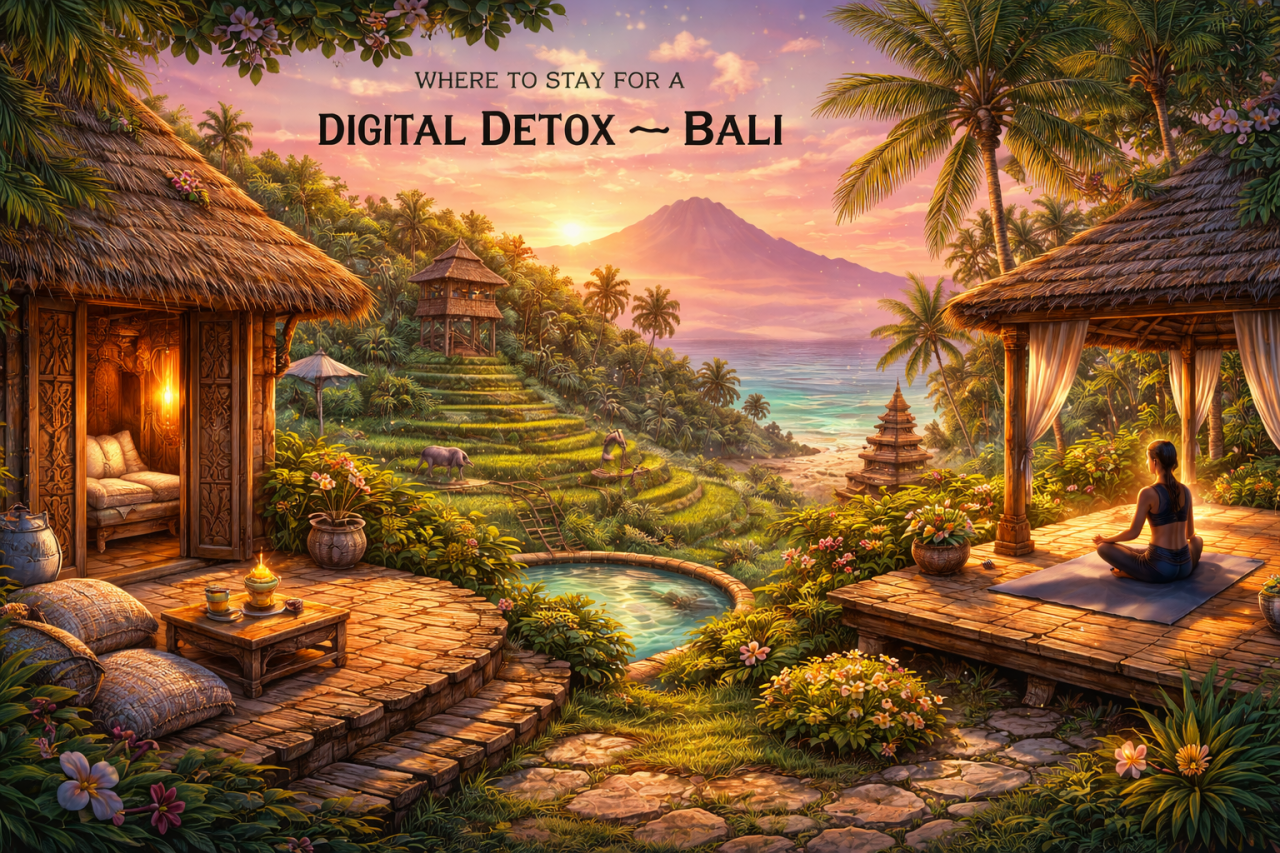
Bali invites the weary traveler to slow down. In the spirit of Satoru’s mindful guides, this article moves deliberately — small sentences, close attention to place, and occasional proverbs that link island quiet to old Japanese wisdom. “Fall seven times, stand up eight” reminds us that retreat and return are part of the journey; a digital detox is the pause that helps you stand taller afterward.
Why choose Bali for a digital detox?
Bali’s contrasts work in your favor: green rice terraces, ocean horizons, and villages where time keeps a gentler pace. The island’s wellness culture—yoga, Ayurvedic treatments, and Balinese healing rituals—offers structured ways to disconnect. Midlife travelers often seek a balance of rest, meaningful movement, and places that encourage reflection without the pull of constant notifications.
Where to stay: quiet resorts and retreat centers
These properties are chosen for intentional silence, nature immersion, and programs that support unplugging. Each has a different temperament: beachfront simplicity, jungle seclusion, or community-focused retreats.
Bali Silent Retreat (Sukawati)
Located near Gianyar, Bali Silent Retreat is explicitly designed for silence and reflection. Programs often include meditation, yoga, gentle walks, and detox cuisine. The grounds are serene, set among rice fields and tropical gardens — an ideal place to practice voluntary quiet.
– You can search for it on Google Maps by typing: Bali Silent Retreat
Fivelements Retreat (Mambal, near Ubud)
Fivelements is a riverside wellness sanctuary rooted in Balinese healing traditions. Its integrative spa, plant-based cuisine, and healing ceremonies create structure for unplugging. Rooms and villas emphasize natural materials and views of the Ayung River valley.
– You can search for it on Google Maps by typing: Fivelements Retreat Bali
The Menjangan (West Bali National Park)
For those seeking nature isolation, The Menjangan sits on the edge of West Bali National Park and offers a quiet marine and jungle setting. Snorkeling, guided nature walks, and minimal evening entertainment encourage you to keep devices tucked away.
– You can search for it on Google Maps by typing: The Menjangan
COMO Shambhala Estate (Near Ubud)
COMO Shambhala Estate is a wellness retreat with a programmatic approach to health: Ayurvedic consultations, guided hikes, and a quiet, restorative setting. Villas and suites are designed to be sanctuaries rather than entertainment hubs.
– You can search for it on Google Maps by typing: COMO Shambhala Estate
Villa Sana (Canggu—quiet villa retreats)
For travelers who prefer private villas, look for properties marketed as “wellness villas” that offer in-house yoga decks, meditation spaces, and staff respectful of quiet hours. Many boutique villa managers will help set no-phone rules for stays.
– Tip: Search for “wellness villa Canggu” on Google to find options that match your needs.
Boutique guesthouses and homestays for slower living
Smaller, family-run accommodations often provide genuine cultural exchange and gentle limitations on digital life. Hosts may welcome guests into village life, cooking classes, or traditional ceremonies.
- Consider staying in a homestay around Ubud’s Penestanan or Sayan neighborhoods to be near rice terraces and local artists.
- In the quieter east (Amed, Tulamben), simple beachfront bungalows naturally encourage early nights and sunrise walks.
You can search for Penestanan, Sayan, Amed, or Tulamben on Google Maps to find guesthouses and homestays.
Practical tips for an effective digital detox stay
- Choose accommodations that explicitly support quiet hours or have “phone check” policies.
- Bring one basic device if necessary (e.g., a phone for emergencies) and place it in airplane mode or a drawer during retreat hours.
- Plan arrival logistics (SIM cards, rides, directions) in advance so you aren’t forced to rely on data.
- Use an analog notebook for journaling; a fountain pen and paper have a special way of slowing thought.
- Book at least 4–7 nights: shorter stays often feel rushed and retain the urge to check in.
“Even a journey of a thousand miles begins with a single step” — apply the proverb to your unplugging: a single day of true silence can reset longer patterns.
Daytime activities that support unplugging
- Morning yoga or meditation at sunrise creates a rhythm that does not depend on apps.
- Rice terrace walks (for example, around Tegalalang) and gentle trekking immerse you in landscape and movement.
- Traditional Balinese purification ceremonies (melukat) at local temples can be arranged respectfully through a retreat.
- Cooking classes focusing on local produce ground you in sensory experience.
- Snorkeling or freediving off Menjangan Island or Amed places attention on breath and body.
You can search for Tegalalang Rice Terrace, Menjangan Island, and local melukat ceremonies on Google Maps or ask your retreat host to arrange them.
Meals, fasting, and mindful eating
Many detox retreats offer plant-forward menus tuned to digestion and energy. If you prefer independent travel, seek warungs (local eateries) that emphasize fresh ingredients: the simple pleasure of mango, grilled fish, or raw coconut water will anchor you to the present.
- For a mindful dining experience in Ubud, search for local organic restaurants and warungs and ask about daily market produce.
- In Canggu and Seminyak you’ll find many cafés that emphasize wellness cuisine; choose quieter hours to eat and savor the flavors.
Cultural etiquette and respectful unplugging
Bali is deeply ritualistic. Part of a respectful digital detox is recognizing sacred spaces where photography may be inappropriate or where devices distract practitioners. When visiting temples such as Pura Tirta Empul or Pura Ulun Danu Beratan, observe local rules and ask permission before photographing ceremonies.
- You can search for Pura Tirta Empul and Pura Ulun Danu Bratan on Google Maps to check locations and visitor guidelines.
Packing list for a Bali digital detox
- Lightweight notebook and favorite pen.
- Comfortable clothes for yoga and temple visits (sarong for temple entrances).
- Refillable water bottle and sunscreen.
- A small daypack and sturdy sandals for walking terraces.
- A simple alarm clock if you want to avoid using your phone as a wake-up device.
Leaving with intention
A proverb Satoru might appreciate: “The bamboo that bends is stronger than the oak that resists.” Think of a digital detox as training the mind to bend rather than breaking under constant stimulation. Before you leave, set one or two sustainable practices to bring home: an evening “digital sunset,” a daily notebook ritual, or a weekly silent morning.
Bali offers places that help you disentangle from the persistent hum of screens. Whether you seek the structured silence of a retreat, the restorative quiet of a jungle estate, or the gentle constraints of a village homestay, the island rewards those who come ready to listen.
Safe travels and gentle silence.

Comments (0)
There are no comments here yet, you can be the first!