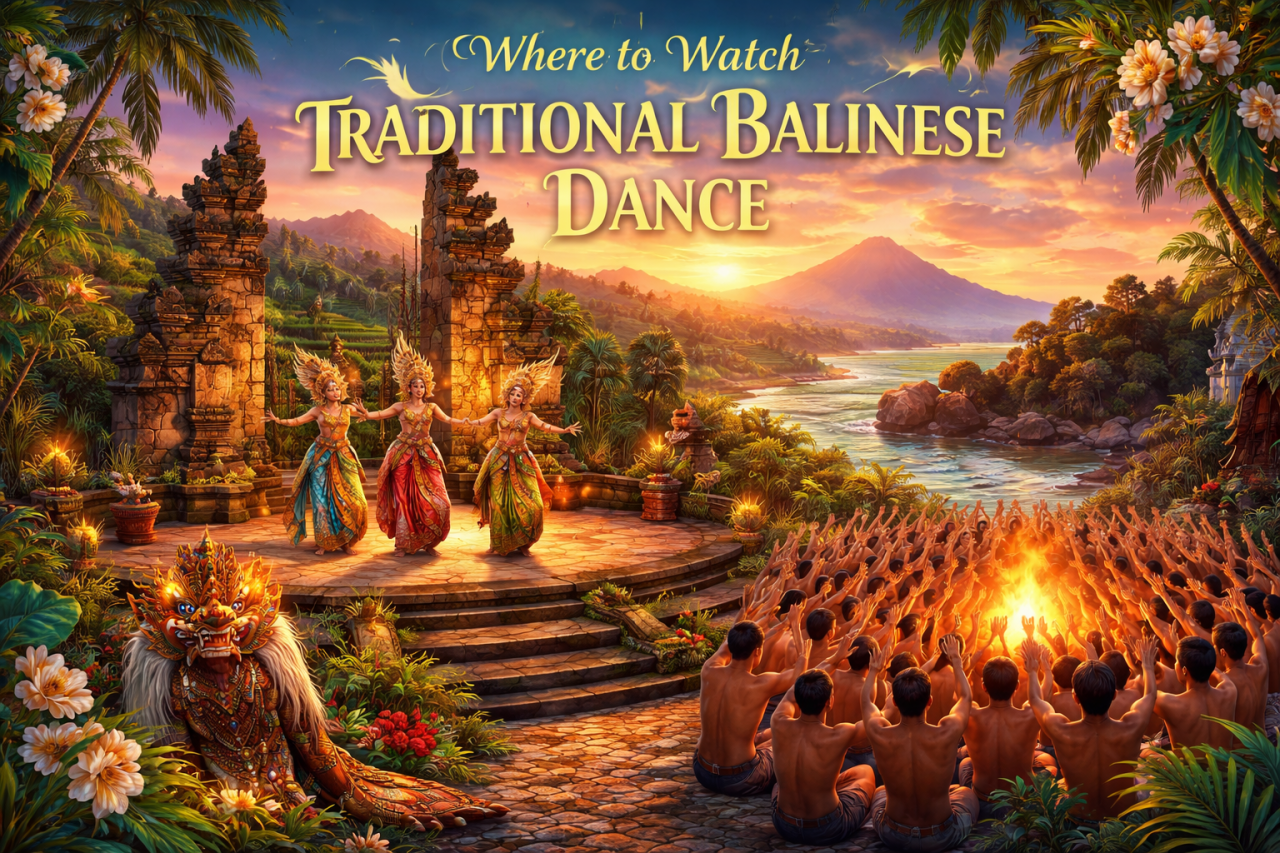
Bali’s dances are living stories—intricate hand gestures, dramatic masks, and rhythms that seem to bend time. From the slow, hypnotic gestures of Legong to the frenzied, trance-driven Kecak, every performance is a window into Bali’s soul. This guide blends practical tips, Fenna-style travel narrative, and a few Dutch-flavored observations to help adventurous travelers find the best places to watch authentic Balinese dance.
Why Balinese Dance Matters
Balinese dance isn’t just entertainment. It is ceremony, history, and community woven into movement. Dances are performed in temples, palaces, and performance halls, often linked to Hindu rituals or mythic tales from the Ramayana and Mahabharata. For a European visitor, the ritual intensity feels both familiar—echoes of medieval pageantry—and utterly otherworldly.
Best Places to See Balinese Dance
Below are tried-and-true venues across the island, ranging from tourist-friendly stages to quieter village performances. For each place, I include what to expect and practical tips.
Ubud Palace (Puri Saren Agung), Ubud
A classic spot in the cultural heart of Bali. Nightly performances often feature Legong, Barong, and other traditional dances, performed in a historic palace courtyard with an atmospheric crowd.
- What to expect: High-quality, well-rehearsed shows, often with a mix of dances in one evening.
- Tip: Arrive early to get a seat near the front for photos and close-up details.
- You can search for it on Google Maps by typing: Puri Saren Agung (Ubud Palace)
Pura Dalem Taman Kaja and Ubud village performances
Outside the palace circuit, Ubud’s temples and community halls host more local, ritual-driven performances—sometimes spontaneous after ceremonies.
- What to expect: Less polished but deeply authentic; opportunities to see villagers take part.
- Tip: Be respectful during ceremonies; ask permission before photographing priestly rituals.
- You can search for it on Google Maps by typing: Pura Dalem Taman Kaja
Pura Beji (Sukawati) and Sukawati Market area
Near the Sukawati market and craft areas, small stages and temple grounds host dances aimed at both residents and curious travellers.
- What to expect: A blend of commercial and community shows—great for combining shopping and culture.
- Tip: Pair a daytime market visit with an evening show for a full Sukawati experience.
- You can search for it on Google Maps by typing: Sukawati Market
Seminyak and Kuta Cultural Evenings
Many hotels, resorts, and beach clubs in Seminyak and Kuta host nightly or weekly Balinese dance performances geared to tourists, often with dinner packages.
- What to expect: Accessible shows with comfortable seating and English explanations; less intimate than village performances.
- Tip: Choose resorts that collaborate with local artists to support authentic practice.
- You can search for it on Google Maps by typing: Seminyak (area) and Kuta (area)
Pura Luhur Uluwatu, Uluwatu (Kecak Fire Dance at Sunset)
One of Bali’s most dramatic settings for the Kecak dance. The cliff-top temple at Uluwatu hosts a fire-and-chorus performance at sunset—sunset hues plus chanting make it unforgettable.
- What to expect: Spectacular sunset backdrop, large cast of male chorus performers (Kecak), and a theatrical retelling of Ramayana episodes.
- Tip: Bring a light jacket; sea breezes can get chilly at sundown. Arrive early to secure a good vantage point.
- You can search for it on Google Maps by typing: Pura Luhur Uluwatu
Goa Gajah (Elephant Cave) and surrounding temple performances
Near Ubud, temple grounds and nearby village stages sometimes present traditional dances aligned with temple festivals.
- What to expect: Often seasonal or linked to religious events; a quieter alternative to main tourist circuits.
- Tip: Check local notice boards or ask your homestay host for upcoming performances.
- You can search for it on Google Maps by typing: Goa Gajah
Bali Arts Festival (Bali Arts Center / Taman Werdhi Budaya, Denpasar)
If your travel dates align, the annual Bali Arts Festival is an explosion of dance, music, and costume. It showcases regional variations and newer interpretations, ideal for cultural deep-dives.
- What to expect: Large-scale festival with multiple stages, workshops, and parades.
- Tip: Look for schedules and highlight performances; some events require separate tickets.
- You can search for it on Google Maps by typing: Taman Werdhi Budaya (Bali Art Center) Denpasar
Local Village Temples (Desa adat) — off the beaten path
My favourite experiences are the impromptu dance offerings in small village temples (desa adat). These are often unadvertised and happen during temple anniversaries or life-cycle ceremonies.
- What to expect: Raw, communal performances with deep spiritual meaning—no stage, just devotion.
- Tip: Make friends with a local guide or your homestay host; invitations to village events are golden.
- Search for local desa adat performances via your homestay host or local cultural centres.
Types of Dances You’ll See
- Legong: Elegant, precise, and traditionally performed by young female dancers; think of delicate fingers and expressive eyes.
- Barong: A mythic animal figure representing good, often in a theatrical battle with Rangda, the witch of chaos.
- Kecak: A male chorus chanting “cak” in trance-inducing rhythms; spectacular at sunset.
- Topeng: Mask dances telling historical and comedic stories with strong character work.
- Calonarang and Sanghyang: More ritualistic, sometimes involving trance; these are often community-bound and deeply spiritual.
Practical Tips for Attending Performances
- Dress respectfully. Temples require sarongs and sashes—often provided for a small fee at entrances.
- Respect photography rules. Some temple rites are private; always ask before taking photos of priests or participants.
- Choose your seat with intent: front rows for detail, back rows for the whole-picture atmosphere.
- Support local artists. Buy tickets from the local community, tip performers, or book through cultural centers rather than anonymous ticket booths.
- Time of day matters. Sunset performances (like Uluwatu’s Kecak) are magical for light, while daytime shows may be part of temple rituals.
Where to Learn or Participate
- Dance schools and workshops in Ubud often offer short courses for travelers. These are fantastic for understanding the precise hand gestures and facial expressions.
- Cultural centers at Udayana University and local arts institutions sometimes host workshops and open rehearsals.
- Ask at community centers (banjar) in villages like Pengosekan, Mas, and Sideman for participatory experiences.
Combining Dance with a Day Out
- Ubud: Pair a palace performance with walks through Campuhan Ridge and visits to art workshops in Mas and Celuk.
- Uluwatu: Combine the Kecak at sunset with a walk along clifftop paths and seafood dinner at Jimbaran Bay.
- Denpasar: Time a local market visit with a day at Taman Werdhi Budaya during the arts festival for maximum immersion.
A Dutch-Eyed Reflection
As a traveller raised on European history and intimate town festivals, I find Balinese dance both familiar and startling. The communal devotion echoes small-town Dutch kermis pageants, yet the choreography and spiritual intensity are entirely Balinese. Watching a village dance after dark—lamps glowing, incense curling—feels like stepping into a living legend.
Final Practical Notes
- Book popular shows in high season (July–August and December–January).
- If you want a quieter, more authentic experience, travel to smaller villages or time your visit with temple anniversaries (odalan).
- Learn a few Balinese words (thank you = suksma) and your invitation to local life will likely be warmer.
Wherever you go in Bali, arrive with curiosity and respect. Sit quietly, watch closely, and you’ll see more than a performance—you’ll glimpse a community’s heartbeat. Safe travels, and bring a camera with a good low-light lens; Balinese dances glow under torchlight in a way that only photographs can half-capture.

Comments (0)
There are no comments here yet, you can be the first!