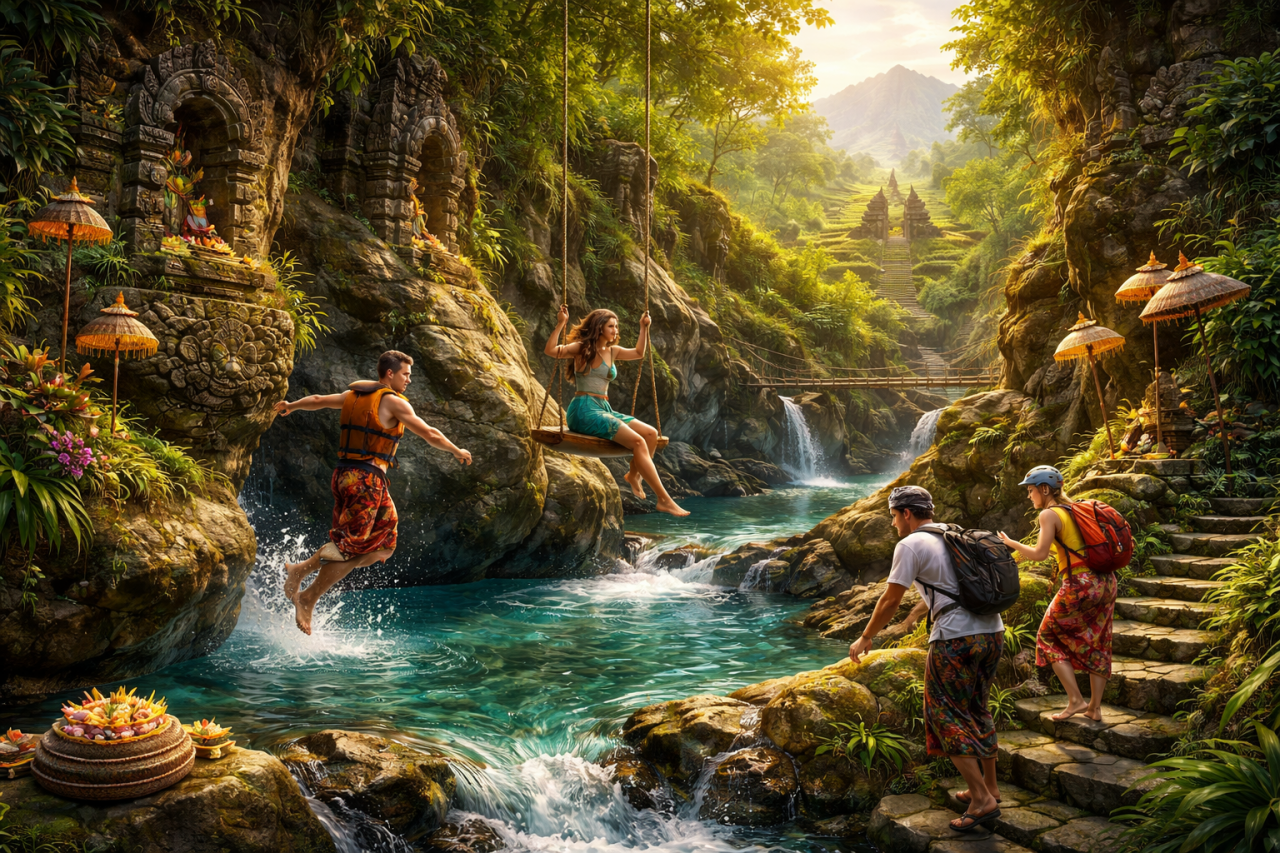
Bali is often imagined as a mosaic of emerald rice terraces, temple spires, and sun-drenched beaches, but tucked into the island’s rugged interior are secretive gorges where water carves its own temples in stone. These hidden canyons—narrow, moss-draped, and humming with the sounds of flowing rivers—offer an intimate way to experience Bali’s elemental beauty. In the spirit of Atamyrat’s writings, I trace these landscapes with an eye for cultural echoes, drawing parallels between Turkmenistan’s reverence for desert passes and Bali’s devotion to river shrines. A Turkmen proverb says, “A traveler who does not ask returns the same,” and so I set out asking the canyon: what do you keep, and what do you reveal?
The Allure of Bali’s Canyons
Hidden canyons in Bali are not one single place but a collection of narrow river gorges, often accessed by local guides, steps of rock, and occasional clambering through water. They are cool and humid, filled with orchids and ferns, and carved into limestone and volcanic rock over millennia. For travelers, these canyons offer a tactile contrast to the island’s beaches: the roughness of stone underfoot, the sharp scent of wet leaves, and the cool, luminous water that invites exploration.
The canyons are also living landscapes. Along the riverbanks you will find small shrines and offerings; Balinese Hinduism honors the spirits of water and stone, and local families maintain sacred spots with daily flowers and incense. Observing these practices links you to a continuity of devotion that feels much like the way Turkmen elders tend to roadside yurt altars—both are intimate acts of respect for place.
Notable Hidden Canyon Experiences
Below are several well-known canyon-style adventures you can seek out in Bali, along with guidance on finding them. For precise navigation, use Google Maps with the place names provided.
- Beji Guwang (also called Beji Guwang Hidden Canyon)
- This limestone canyon near Payangan features dramatic carved walls and narrow passages. It’s popular with photographers for the shafts of light that fall between the rocks.
- You can search for it on Google Maps by typing: Beji Guwang Hidden Canyon
-
Tip: Visit in the dry season for lower water levels and easier scrambling.
-
Yeh Leh Hidden Canyon (Yeh Leh Canyon)
- Located in Sukawati, Yeh Leh is known for its translucent waters and narrow rock corridors. The turquoise pools and steep cliffs create a sense of entering another world.
- You can search for it on Google Maps by typing: Yeh Leh Hidden Canyon
-
Tip: A local guide enhances safety and points out the best photo spots.
-
Kerenkeng Canyon (also listed as Kerenkeng Hidden Canyon)
- Less commercialized than other spots, Kerenkeng offers quiet exploration and mossy walls. It is ideal for visitors seeking solitude.
- You can search for it on Google Maps by typing: Kerenkeng Hidden Canyon
-
Tip: Bring water shoes and a waterproof bag for your camera.
-
Aling-Aling Waterfall and Surrounding Gorges
- While Aling-Aling itself is a waterfall attraction in northern Bali, the nearby gorges and river cuts provide canyon-like routes for adventurous travelers.
- You can search for it on Google Maps by typing: Aling-Aling Waterfall
- Tip: Combine a canyon walk with waterfall swims for a full-day adventure.
Preparing for a Canyon Adventure
Safety and respect are central. Canyons can be slippery, the currents deceptively strong, and the walls unforgiving when unprepared. Pack light but smart.
- Essentials to bring:
- Sturdy water shoes or river sandals with grips.
- A small dry bag for phone and documents.
- Quick-dry clothing and a lightweight sun/ rain jacket.
- A headlamp or compact flashlight if exploring deeper cuttings.
- Local guides and permits:
- Many hidden canyons are on private or village land. Hiring a local guide not only improves safety but supports communities.
- Ask your guesthouse or tour desk to recommend licensed guides and confirm any entrance fees.
- Environment and etiquette:
- Do not leave offerings or remove temple items. If you encounter a shrine, observe respectfully and avoid stepping on woven offerings (canang).
- Carry out any trash and avoid plastic where possible—rivers are the lifeblood of the island and must be kept clean.
A Cultural Thread: Water, Offerings, and Shared Reverence
Walking a Balinese canyon feels like passing through a living prayer. Water in Bali is sacred; rivers are often personified as deities and play a role in purification rituals. You will often spot small woven baskets filled with flowers and rice placed on stones—daily offerings to the spirits.
This practice echoes Turkmen rituals of placing bread or small tokens at crossroads and wells to honor the unseen helpers of journeys. As Atamyrat might note, both cultures channel gratitude into small, visible acts that affirm human dependence on the natural world. In the canyon’s hush, flowers float like tiny boats of devotion—a quiet reminder of how people everywhere mark the gifts of water.
Photography Tips: Capturing Light in the Ravine
Canyons reward patience and sensitivity to light. The walls create dramatic contrasts: deep shadows and intense shafts of light.
- Use a polarizing filter to reduce glare on water and deepen greens.
- Shoot with a wide-angle lens to emphasize scale, and include a person for perspective.
- Slow shutter speeds (with a steady hand or tripod) will render silky water, while faster settings freeze jumping or splashing moments.
- Respect local people and rituals—always ask before photographing offerings or individuals.
Recommended Nearby Stops for a Fuller Day
Pair a canyon trip with local cultural and scenic sites to round out the day.
- Tegenungan Waterfall (Tegenungan Waterfall)
- A well-known waterfall near Ubud with accessible viewing platforms and nearby cafes.
- You can search for it on Google Maps by typing: Tegenungan Waterfall
- Ubud Palace (Puri Saren Agung) and Ubud Market (Ubud Traditional Art Market)
- Explore traditional arts, crafts, and the cultural heart of Ubud before or after your canyon visit.
- You can search for them on Google Maps by typing: Puri Saren Agung and Ubud Traditional Art Market
- Tirta Empul Temple (Pura Tirta Empul)
- A sacred spring temple where purification rituals are held—an excellent complement to the canyon’s water reverence.
- You can search for it on Google Maps by typing: Pura Tirta Empul
Practical Tips and Seasonal Considerations
Timing matters. Bali has a wet season (roughly November to March) when rivers swell and canyons become hazardous. The best months for canyon exploration are typically in the dry season (April to October), when water levels are lower and trails are more accessible.
- Arrive early to avoid crowds and find softer morning light for photos.
- Check with local guides or your accommodation about recent weather and river conditions.
- Bring small denomination cash for local fees, guides, and village contributions.
Final Reflections: Listening to Stone and Stream
Travel in Bali, like travel in the wider world, is enriched when we attend to the small languages of place—how a river smooths a cliff, how a family places a flower on wet stone, how an aging guide names each pool as if it were kin. In the hidden canyons you find a kind of pooled time: slow water, patient rock, and human offerings that stitch the present into a long line of devotion.
I remember a Turkmen proverb that says, “Where the water stops, the road begins.” In Bali’s canyons the road is not only the path through the rocks but the inward route a traveler takes toward reverence. Step lightly, watch closely, and let the canyon speak in its patient language of stone and stream.
Enjoy the journey, and honor the places that receive you.

Comments (0)
There are no comments here yet, you can be the first!