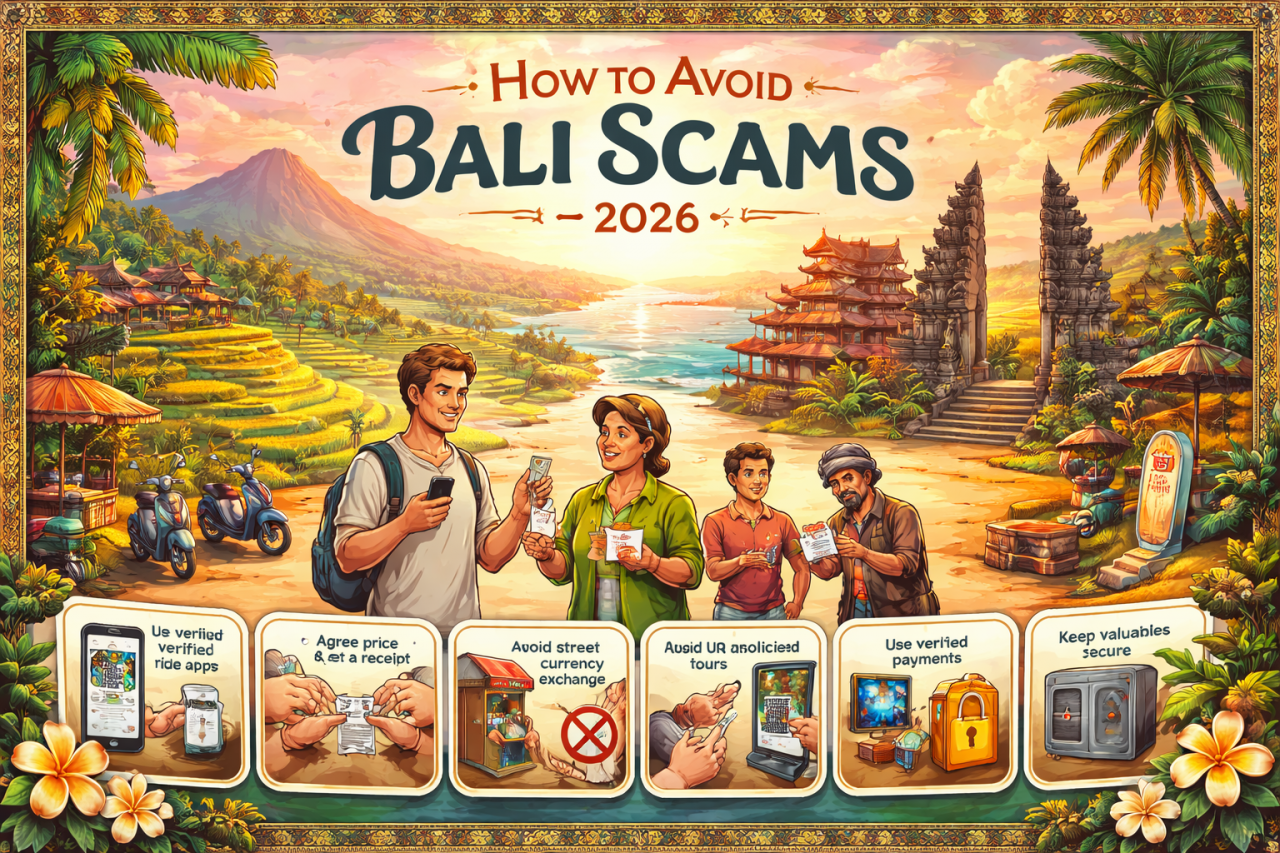
Bali in 2026 still hums with offerings of emerald rice terraces, temples wreathed in incense, and a warmth from locals that feels like an invitation home. As someone who writes with a mix of practical guidance and cultural curiosity, I write this guide to help you keep your journey honest and magical. Scams evolve with tech and tourism, but a respectful mindset and a few simple habits will keep your trip true to the island’s spirit.
Read the Island’s Signals: Common Scams and How They Work
Bali’s scams often rely on surprise, confusion, or kindness turned exploitative. Knowing the common patterns will keep you calm and confident.
- Taxi and ride scams: Drivers may quote inflated fixed fares, take longer routes, or claim meters are broken. Always confirm a price or use reputable apps.
- Fake tickets and entrance scams: From temple donations to attraction tickets, counterfeit or misrepresented fees can surface at busy sites.
- Currency and payment tricks: Short-changing, sleight-of-hand with bills, or pushing unfavorable exchange rates happen at busy markets.
- “Friendly” helpers: Overly helpful porters or guides who later demand unreasonable tips are classic scenarios.
- Booking and online scams: Fake villa listings, phishing messages, or spoofed tour operators can trap travelers who book impulsively.
Understanding these patterns lets you respond with respect rather than suspicion, maintaining that essential bridge between visitor and host.
Practical Steps Before You Go
Preparation is the first line of defense. A few digital and practical habits will save time and stress.
- Research reputable providers: Read recent reviews from varied sources and choose accommodations and tours with transparent cancellation policies.
- Make copies of important documents: Store digital scans of your passport, vaccine card, and insurance in a secure cloud folder.
- Keep multiple payment options: Carry some cash in small denominations (Indonesian rupiah), a chip-and-PIN bank card, and a backup credit card.
- Activate secure phone settings: Use two-factor authentication and a local SIM or reliable roaming plan so you can verify bookings and contacts locally.
- Learn a few phrases in Bahasa Indonesia: Simple words like “Terima kasih” (thank you) and “Berapa harganya?” (how much is it?) build rapport and clarity.
These preparations help you act deliberately and avoid the rushed decisions that scams often prey upon.
Navigating Transport: Taxis, Scooters, and Online Rides
Getting around Bali can be delightful — or disorienting. Use caution and civility.
- Use licensed taxis or reputable ride-hailing apps: Blue Bird Group taxis remain a widely recommended option in Bali. If uncertain, you can search for Blue Bird Group taxi on Google Maps by typing: Blue Bird Group – Taxi. Ride-hailing apps like Gojek and Grab are also popular; confirm driver details before entering.
- Agree on fares for private rides: For private drivers or transfers, get a written rate or confirm via app to avoid disputes on arrival.
- Scooter rentals: Inspect the scooter, take photos of existing damage, verify the helmet, and ensure insurance is included. If you don’t have international experience driving in dense traffic, consider hiring a driver instead.
- Beware of “broken meter” claims: If a taxi driver claims the meter is broken, politely decline and ask for an app ride or another taxi.
Being respectful and clear with drivers often prevents misunderstandings from escalating.
At Markets, Shops, and Warungs: Fair Prices and Smooth Transactions
Bali’s markets and local eateries are part of its soul, not places to rush past. A few habits make transactions fair and pleasant.
- Bargain with warmth: At markets like Ubud Traditional Art Market or Sukawati Art Market, haggling is expected, but keep it friendly and anchored in a fair starting point.
- Use exact change when possible: Vendors appreciate exact bills. Keep smaller denominations and count them out calmly.
- Verify what you’re paying for: At restaurants and warungs, check whether taxes and service charges are included on the menu or bill.
- Prefer registered merchants for high-value purchases: For jewelry, high-end crafts, or equipment, choose shops with clear return policies and receipts.
- Get a receipt: Always ask for a written receipt for larger purchases or services. It’s a simple deterrent against disputes.
These gestures show respect for local livelihoods while protecting your wallet.
Temples, Tours, and Cultural Sites: Respect and Reliable Bookings
Bali’s temples and sacred places deserve sensitivity. Scams at cultural sites often involve confusing entrance fees or unofficial “guides.”
- Confirm official entrance fees: At major temples like Pura Besakih (Mother Temple of Besakih) or Pura Tanah Lot, official fees and dress codes apply. You can search for them on Google Maps by typing: Pura Besakih (Mother Temple of Besakih) and Pura Tanah Lot.
- Use licensed guides: If you want a guide, choose one affiliated with a recognized local cooperative or your hotel, and agree on a written rate beforehand.
- Dress code and offerings: Respect sarong and sash rules; some temples offer sarongs for rent, but confirm pricing before accepting one.
- Beware of “official” staff demanding extra fees: If uncertain, ask for written proof of authorization or consult the main ticket office.
Respectful curiosity and clear agreements keep your cultural experiences authentic and scam-free.
Digital Safety: Bookings, Wi‑Fi, and Payment Security
Digital scams have grown sharper. Protect your data and money with cautious online habits.
- Book through reputable platforms or verified operators: Cross-check listings on multiple sites and read recent guest reviews.
- Verify villas and rentals in person: If you rent a private villa, meet the host, confirm the property, and inspect locks and facilities before paying the full amount.
- Avoid public Wi‑Fi for sensitive transactions: Use a VPN or your mobile data when accessing banking or booking accounts.
- Monitor card statements regularly: Set transaction alerts and check for unexpected charges while traveling.
A little caution online keeps your trip enjoyable and your finances intact.
If Something Goes Wrong: Steps to Take
Even careful travelers can encounter scams. A calm, clear response preserves safety and often resolves issues.
- Stay calm and document: Take photos, note names, license plates, and record conversation details.
- Seek help from your hotel or consulate: Hotels often help mediate disputes, and your consulate can advise on legal steps.
- Report local scams: For incidents involving theft or fraud, visit a nearby police station (Polisi) and request a police report (Laporan Polisi) for insurance claims.
- Share your experience: Leave detailed reviews to warn fellow travelers and help reputable providers improve.
Acting mindfully protects you and supports the wider travel community.
Cultural Notes: Balance Caution with Respect
In Bali, relationships matter. A respectful demeanor often prevents people from taking advantage of you.
- Smile and communicate warmly: Friendly engagement disarms tension and fosters goodwill.
- Tip thoughtfully: Tipping is appreciated but should reflect fair service rather than coerced payment.
- Support local initiatives: Favor community-run tours, cooperatives, and ethical businesses that reinvest in the island.
- Learn local etiquette: Knowing small cultural norms enhances mutual respect and reduces the chance of misunderstandings.
Approach Bali as a guest in a living culture; your manner helps keep tourism honest and humane.
My Favorite Trust-Building Practices on the Island
I travel like many Mongolian storytellers: attentive to gestures, rhythms, and the humanity behind transactions. These personal rituals have kept me safe and welcomed.
- Ask locals for referrals: Hotel staff, small café owners, or a trusted guide often have the best recommendations for trustworthy services.
- Travel with a local driver for a day: A driver familiar with neighborhoods can recommend authentic warungs and avoid tourist traps.
- Visit community tourism projects: Places like local village tours around Sidemen or traditional weaving cooperatives provide cultural depth and transparent pricing. You can search for community-based tourism around Sidemen on Google Maps by typing: Sidemen, Karangasem Regency.
- Practice mindful spending: Support artisans directly and seek transparency about where proceeds go.
These small habits build deeper, ethical connections to the island.
Quick Checklist Before You Step Out
- Copy of passport in cloud and on paper.
- Local SIM or roaming enabled; emergency numbers saved.
- Small rupiah notes and two cards.
- Agreed fares in writing or via app for transfers.
- Photos of scooter or rental condition before use.
A short checklist keeps your day calm and prevents common hustles.
Final Thoughts: Travel Gently, Travel Smart
Bali is a mosaic of sacred places, resilient communities, and vibrant craft. In 2026, scams may wear new faces, but kindness, preparation, and respect remain your strongest safeguards. Travel as you would into a village in the hills—a little cautious, very curious, and always honoring the humanity around you.
If you want to visit specific places mentioned here, search for them on Google Maps by typing the exact place names included, such as:
– Blue Bird Group – Taxi
– Pura Besakih (Mother Temple of Besakih)
– Pura Tanah Lot
– Sidemen, Karangasem Regency
May your Bali journey be unfrauded, full of story, and rich with shared moments.

Comments (0)
There are no comments here yet, you can be the first!